Bone-In Ribeye Steak: Steakhouse Quality
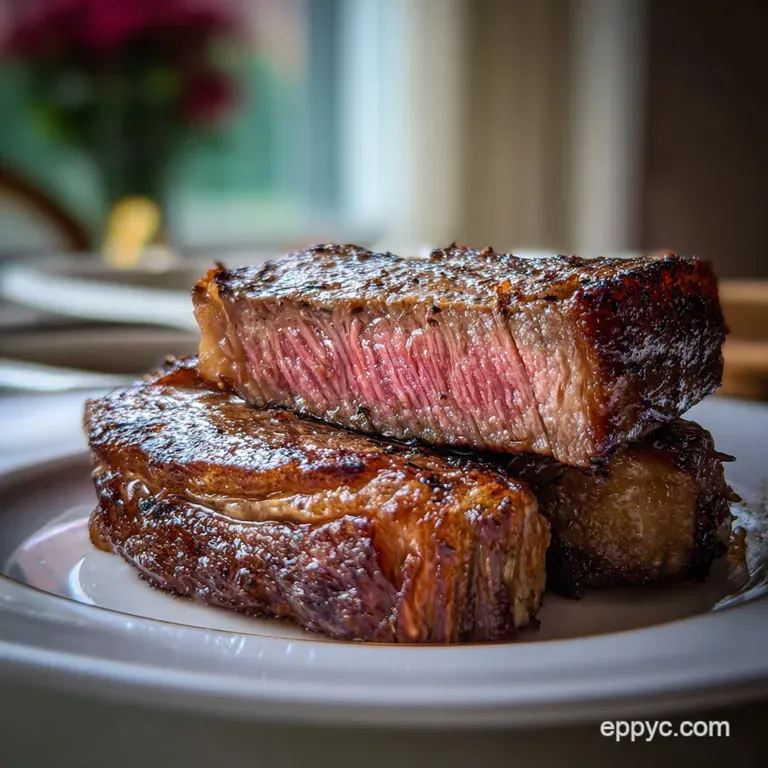
- Time: Active 15 minutes, Passive 5 minutes, Total 20 minutes
- Flavor/Texture Hook: A shatter crisp exterior with a buttery, salt crusted edge
- Perfect for: Date nights or high protein fuel after a long day
- Mastering the Skillet Seared Bone in Ribeye Steak
- Why This Method Succeeds
- Protein Component Analysis
- Selecting the Best Ingredients
- Essential Tools for Searing
- Step-by-Step Cooking Flow
- Solving Common Searing Hurdles
- Scaling for More Guests
- Debunking Searing Myths
- Customizing Your Flavor Profile
- Storing and Reusing Leftovers
- Serving Like a Professional
- Very High in Sodium
- Bone-in Ribeye Steak FAQs
- 📝 Recipe Card
Mastering the Skillet Seared Bone in Ribeye Steak
The kitchen fills with a heavy, primal aroma the second that 1.75 lb ribeye bone steak hits the cast iron. There is a specific, violent sizzle that happens when the cold fat meets a shimmering layer of avocado oil, a sound that tells you a formidable crust is forming.
I remember the first time I got this right; I stood over the stove with my digital thermometer like a hawk, watching the numbers climb until they hit that sweet spot of medium rare.
We aren't just cooking meat here; we are leveraging technology and heat to transform a raw cut into something decadent. You don't need a backyard grill to get that smoky, charred depth. By the time the rosemary and garlic hit the butter like rendered fat, the scent will have you pacing the kitchen floor.
This guide is designed to empower you with the exact technical flow I use every Sunday. We've all made the mistake of cutting into a steak only to find it grey and lifeless inside, but those days are over.
Trust me on this: once you hear that first crackle of the salt encrusted exterior, you'll never go back to basic pan frying again.
Why This Method Succeeds
- The Physics of the Bone In Sear: The bone acts as a thermal insulator, slowing the heat transfer to the center and allowing for a more even gradient of doneness.
- Smoke Point Optimization: Using avocado oil (which has a smoke point of 520°F) allows us to reach the high temperatures necessary for the Maillard reaction without the oil breaking down and becoming bitter.
- Thermal Carryover: Pulling the meat at a specific digital reading allows the internal energy to distribute during the rest, finishing the cook without additional heat.
| Thickness | Internal Temp | Rest Time | Visual Cue |
|---|---|---|---|
| 1.5 inches | 130°F (Medium Rare) | 5 minutes | Deep mahogany crust |
| 1.5 inches | 140°F (Medium) | 5 minutes | Firm to the touch |
| 1.5 inches | 150°F (Medium Well) | 7 minutes | No pink showing |
Understanding how heat moves through a dense protein is the digital edge every home cook needs. If you enjoy the deep, slow cooked flavors of a Beef Short Ribs recipe, you will appreciate how this quick sear mimics that same umami intensity in a fraction of the time.
Protein Component Analysis
| Ingredient | Science Role | Pro Secret |
|---|---|---|
| Ribeye Bone Steak | Fat distribution | Look for white "flecks" of intramuscular fat for the best melt in-mouth texture. |
| Coarse Kosher Salt | Protein denaturant | Salt draws out moisture, then reabsorbs it, seasoning the meat deeply through the fibers. |
| Avocado Oil | Heat conductor | Its high smoke point prevents the kitchen from becoming a "smoke show" while you sear. |
I always recommend using a heavy bottomed skillet for this process. The mass of the pan prevents the temperature from dropping when you drop the steak in, ensuring the sizzle never dies down.
Selecting the Best Ingredients
- 1.75 lb ribeye bone steak (1.5 inches thick): This is the heart of the dish. Why this? Thick cuts allow for a heavy sear without overcooking the delicate center.
- Substitute: Bone in New York Strip (adds a leaner profile but similar cook time).
- 2 tsp Coarse Kosher salt: Vital for building that crust. Why this? Larger grains provide more surface area for the "shatter" effect.
- Substitute: Sea salt (use slightly less as it can be more "salty" by volume).
- 1 tsp Cracked black peppercorns: Adds a pungent bite. Why this? Freshly cracked oils provide a floral heat that pre ground pepper lacks.
- Substitute: White pepper (for a more earthy, less sharp heat).
- 1 tbsp Avocado oil: Our over high heat workhorse. Why this? Neutral flavor profile that doesn't compete with the beef.
- Substitute: Grapeseed oil (another over high heat alternative).
- 2 cloves Garlic, smashed: For aromatic infusion.
- 1 sprig Fresh Rosemary: Adds a piney, woodsy depth.
- 1 sprig Fresh Thyme: Provides a subtle, lemony herb note.
Essential Tools for Searing
To get this right, you really need a cast iron skillet. The way it retains heat is almost digital in its consistency. I also swear by a high-quality instant read digital thermometer; guessing by "feel" is a mistake I made for years, and it usually led to a chewy dinner.
You'll also need a pair of long tongs. When you're dealing with a 1.75 lb bone in ribeye steak, you want leverage so you don't accidentally drop the meat and splash hot oil. Finally, a small spoon for basting is non negotiable for that final flavor infusion.
step-by-step Cooking Flow
- Dry the surface. Pat the 1.75 lb ribeye bone steak with paper towels. Note: Moisture is the enemy of a crisp sear.
- Season heavily. Rub 2 tsp Kosher salt and 1 tsp cracked pepper into all sides. Until the meat is completely coated in a white and black speckled layer.
- Preheat the skillet. Heat 1 tbsp avocado oil over high heat. Until the oil shimmers and barely begins to wisps smoke.
- Initiate the sear. Lay the steak into the pan, laying it away from you. Until a deep brown crust forms (about 3-4 minutes).
- Flip carefully. Turn the steak to the second side. Note: Only flip once to maintain heat concentration.
- Render the edge. Use tongs to hold the steak upright on its fat cap. Until the fat turns golden and starts to sizzle and melt.
- Add aromatics. Toss in 2 smashed garlic cloves, 1 sprig rosemary, and 1 sprig thyme. Until the herbs become fragrant and the garlic turns golden.
- Verify doneness. Insert a digital thermometer into the thickest part. Until it reads 130°F for medium rare.
- Execute the rest. Move the steak to a warm plate. Until 5 minutes have passed to allow juices to redistribute.
Maximizing the Maillard Reaction
The Maillard reaction is the chemical marriage of amino acids and reducing sugars. It only happens effectively when the surface is dry and the heat is high. If your steak is steaming instead of searing, you didn't get the pan hot enough or didn't pat the meat dry.
Leveraging Thermal Insulation
The bone in your ribeye isn't just for show. It protects the meat closest to it, which is why that "near the-bone" bite is always the most tender. Don't be afraid to leave it in the pan slightly longer than a boneless cut.
Solving Common Searing Hurdles
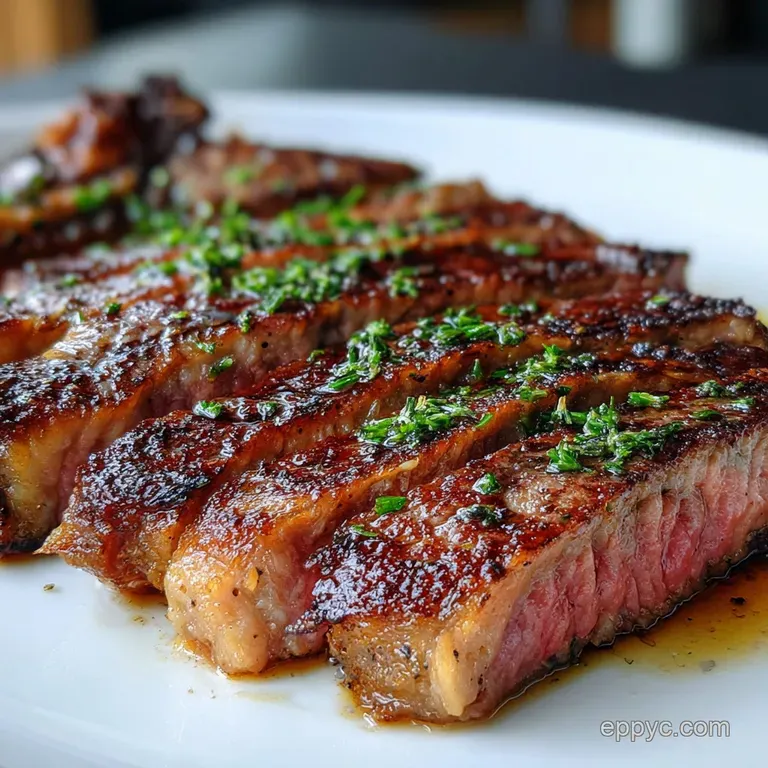
Why Your Crust Is Soggy
The most common mistake is a "cold pan." If the meat doesn't immediately hiss when it touches the oil, it will sit and boil in its own juices. You want a violent reaction the moment they meet.
| Problem | Root Cause | Solution |
|---|---|---|
| Grey Banding | Heat too high/fast | Flip more frequently or use a thicker cut. |
| Bitter Flavor | Burnt spices/oil | Use avocado oil; add herbs/garlic only in the last 2 minutes. |
| Tough Texture | No resting period | Always rest for 5 minutes to let fibers relax. |
Common Mistakes Checklist
- ✓ Never sear a steak straight from the fridge; let it sit for 30 minutes.
- ✓ Use a neutral oil like avocado; butter burns too quickly for the initial sear.
- ✓ Avoid crowding the pan; one large steak per skillet is the rule.
- ✓ Don't skip the fat cap render; that unrendered fat is chewy and unappealing.
Scaling for More Guests
Downsizing (1 serving): If you're cooking for one, you can use a smaller 10 inch skillet. Keep the cook times the same, but you may need slightly less oil to cover the surface.
Upscaling (4+ servings): When cooking two or more bone in ribeye steaks, you must work in batches. If you put two massive steaks in one pan, the temperature will plummet, and you’ll lose your crust.
Keep the first steak in a 200°F oven on a wire rack while the second one cooks. For the seasoning, you can scale the salt and pepper linearly, but be cautious with the garlic and herbs 2.5x is usually plenty for multiple steaks.
| Method | Time | Texture | Best For |
|---|---|---|---|
| Stovetop Only | 15 minutes | Thick, heavy crust | Thick steaks (1.5"+) |
| Stovetop to Oven | 20 minutes | Even, edge to edge pink | Extra thick cuts (2"+) |
Debunking Searing Myths
A very old myth suggests that searing "seals in the juices." Science shows this isn't true; moisture loss actually increases at high temperatures. However, the sear is essential for flavor and texture, creating that "shatter" effect we love.
Another common misconception is that you should only flip a steak once. While my instructions follow the traditional "one flip" method for simplicity, flipping every 30 seconds can actually lead to a more even internal temperature and a faster cook.
Don't be afraid to experiment with your digital tools to see which you prefer!
Customizing Your Flavor Profile
If you want a more adventurous profile, try a "Peppercorn Crust." Simply triple the amount of cracked black pepper and press it firmly into the meat before searing. It creates a spicy, crunchy barrier that is absolutely formidable.
For those looking for a different tech driven approach, you might find that an Air Fryer Ribs recipe provides a similar "set and forget" convenience, though it lacks the heavy pan sear of this ribeye.
Adopting a Paleo Friendly Approach
This recipe is naturally Paleo and Keto. To keep it that way, ensure your aromatics are fresh and avoid adding any sugary basting sauces. The natural fats in the ribeye provide all the richness you need.
Storing and Reusing Leftovers
Storage: You can store leftovers in an airtight container in the fridge for up to 3 days. To keep the meat from becoming rubbery, I suggest slicing it thin and serving it cold on a salad or in a wrap.
Freezing: I don't recommend freezing a cooked ribeye as the texture degrades, but if you must, wrap it tightly in plastic wrap and then foil. It will last about 2 months.
Zero Waste: Don't throw away that bone! Throw it into a pot with some veggie scraps to make a small batch of beef stock. Any leftover rendered fat in the pan (the "liquid gold") can be saved in a jar and used to roast potatoes the next day.
Serving Like a Professional
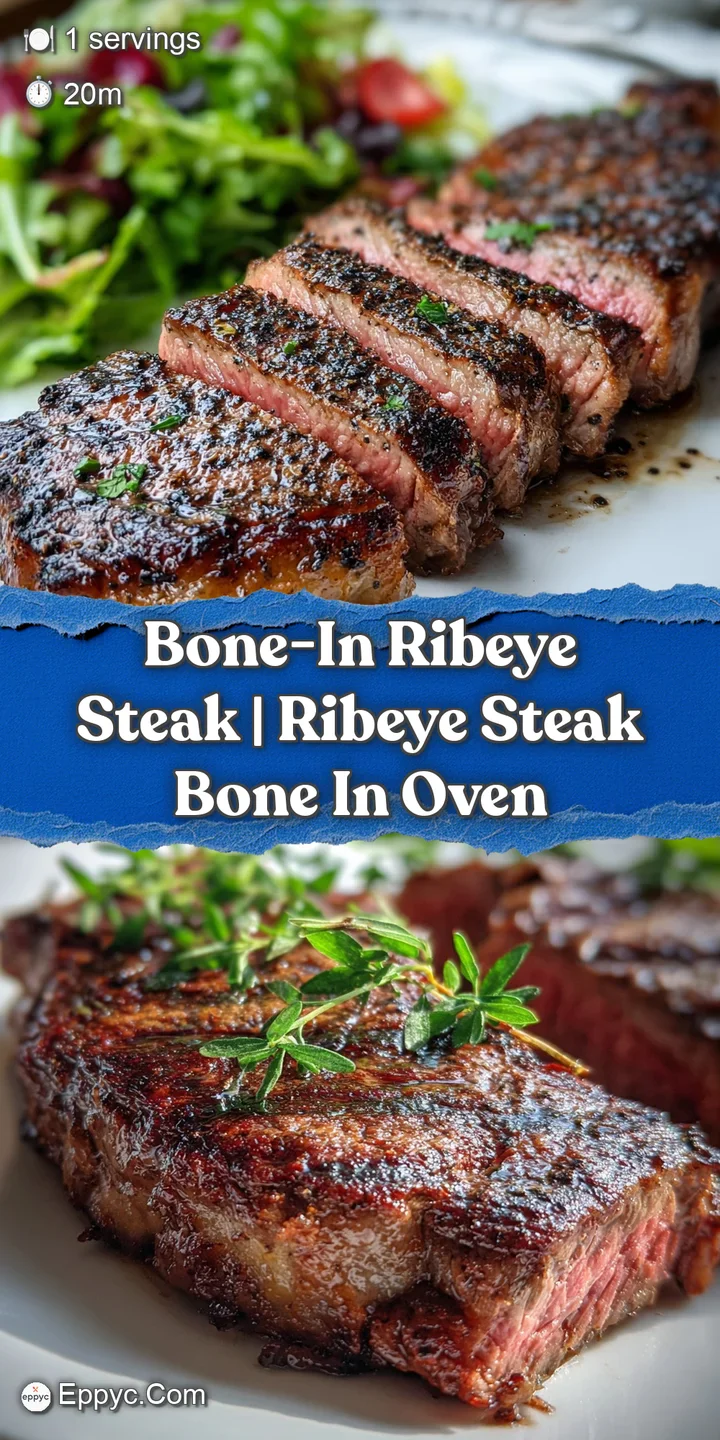
When you're ready to serve, don't just dump the steak on a plate. Slice it against the grain to ensure every bite is tender. I like to fan the slices out and pour any accumulated juices from the resting plate back over the meat.
The salt crusted edges and the velvety interior are the stars here. Serve it with a side of simple roasted greens or a tech perfected mashed potato. This isn't just a meal; it’s an empowered cooking experience that celebrates the science of a good sear. Enjoy the sizzle!
Very High in Sodium
1940 mg mg of sodium per serving (84% % of daily value)
The American Heart Association recommends limiting sodium intake to about 2,300mg per day.
Tips to Reduce Sodium in Your Ribeye Steak
-
Reduce Salt-25%
Reduce the amount of Coarse Kosher salt by half (from 2 tsp to 1 tsp). This simple adjustment significantly lowers the sodium content without sacrificing too much flavor.
-
Skip Salt Prep-15%
Instead of salting the steak hours in advance, season it right before cooking. Pre-salting can draw out moisture and increase salt absorption.
-
Spice It Up-5%
Enhance flavor with more black peppercorns, garlic, rosemary, and thyme. These flavorful additions naturally boost taste and reduce the need for excessive salt.
-
Fresh Herbs Power
Experiment with various fresh herbs like oregano, parsley, or basil to add depth of flavor to your steak without adding any sodium.
Bone-in Ribeye Steak FAQs
What is the best way to cook a bone-in ribeye steak?
Sear it in a hot cast iron skillet. Pat the steak dry, season generously, then sear over high heat until a deep crust forms. Render the fat cap, add aromatics like garlic and herbs, and use a thermometer to check for your desired doneness. Resting is crucial for juicy results.
Is a bone-in ribeye a good steak?
Yes, absolutely. The bone adds flavor and helps insulate the meat during cooking, leading to a more evenly cooked and tender steak. It’s a prime cut known for its marbling and rich flavor profile.
Is a bone-in ribeye the same as prime rib?
No, but they are related. Prime rib is a larger roast cut from the same section of the cow as a bone-in ribeye, typically cooked low and slow. A bone-in ribeye is a single steak cut from that roast, usually cooked hot and fast for searing.
What is the best cooking method for a ribeye steak?
High heat searing is generally best for ribeye. Whether in a cast iron skillet on the stovetop or on a hot grill, a good sear creates a delicious crust while keeping the inside tender and juicy.
If you enjoy deep, slow cooked flavors, consider learning how to achieve similar umami intensity with techniques used in recipes like Beef Short Ribs Slow Cooker: Silky Glaze.
Should I be worried about a grey band on my ribeye?
No, it's usually an easy fix. A grey band often indicates the heat was too high or too fast, or the steak was flipped too infrequently, leading to overcooking the outer layers. Try flipping more often or using a slightly thicker cut for more even cooking.
Can I substitute butter for avocado oil when searing my ribeye?
Not for the initial sear. Butter has a lower smoke point and will burn quickly at the high temperatures needed for a good crust, potentially imparting a bitter flavor. Avocado oil or grapeseed oil are better choices for high heat searing. You can add butter towards the end of cooking for basting.
Do I need to rest my bone-in ribeye after cooking?
Yes, resting is essential. After cooking, juices redistribute throughout the steak. Skipping this step will result in juices running out onto your plate, leaving the meat drier. Aim for at least 5 minutes of rest for a steak of this thickness.
Bone In Ribeye Steak
Ingredients:
Instructions:
Nutrition Facts:
| Calories | 763 kcal |
|---|---|
| Protein | 58 g |
| Fat | 58 g |
| Carbs | 1 g |
| Fiber | 0.4 g |
| Sugar | 0.1 g |
| Sodium | 1940 mg |
