Creamy Garlic Chicken Ramen Recipe
- Time: Active 10 mins, Passive 10 mins, Total 20 mins
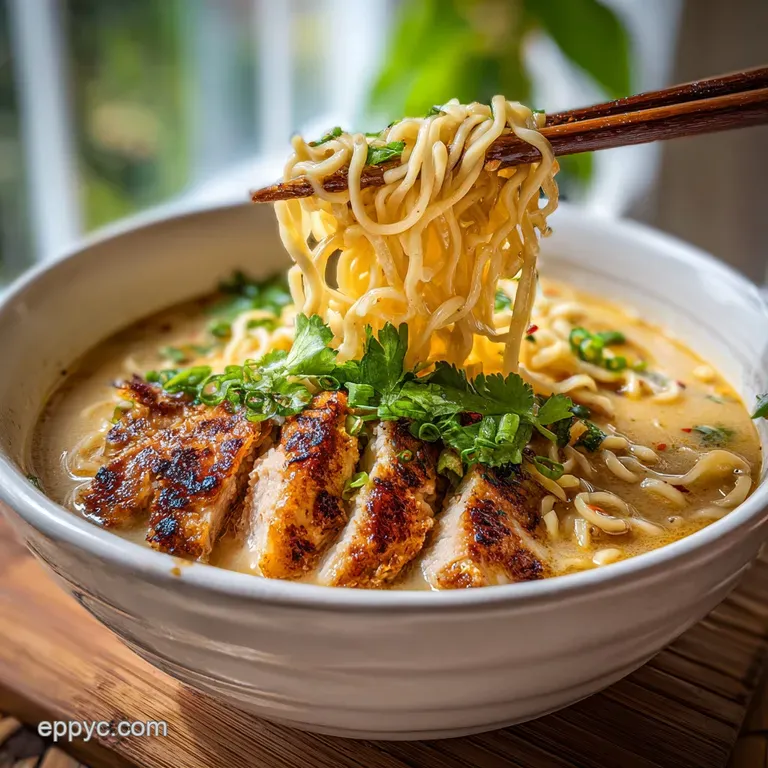
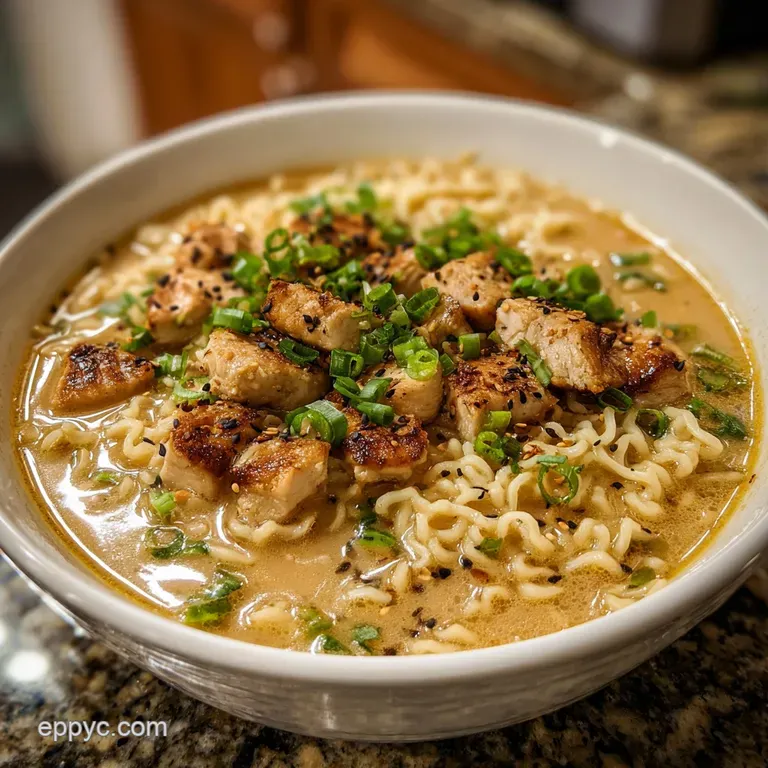
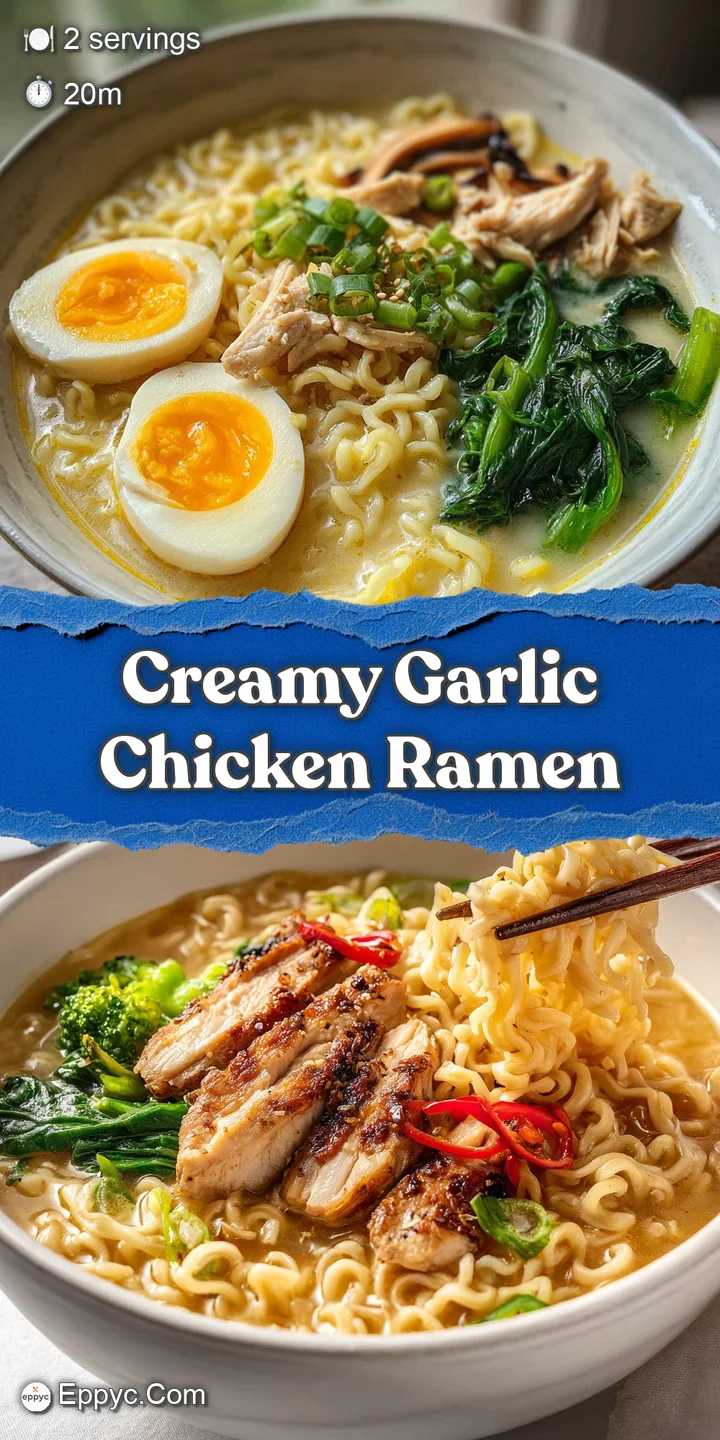
- Flavor/Texture Hook: Velvety, garlic drenched noodles with savory seared chicken strips
- Perfect for: Quick weeknight dinners or a comforting solo midnight feast
- The Heartfelt Comfort of Creamy Garlic Chicken Ramen
- The Secret to the Velvety Noodle Coating
- Smart Budget Alternatives for Premium Results
- Component Analysis for Peak Flavor
- Essential Elements and Smart Substitutes
- Mastering the 20 Minute Process
- Precision Checkpoints for Success
- Solving Common Ramen Hurdles
- Adjusting the Recipe Size
- Dispelling Noodle Misconceptions
- Storage Guidelines and Zero Waste
- Creative Pairing Ideas
- Critical in Sodium
- Recipe FAQs
- 📝 Recipe Card
The Heartfelt Comfort of Creamy Garlic Chicken Ramen
That sharp, rhythmic clack clack clack of my knife hitting the board always signals something good is coming. But nothing quite matches the moment those four cloves of minced garlic hit the melting butter in the pan.
It’s that instant transformation from a cold kitchen to a fragrant, golden sanctuary that gets me every single time. I remember a rainy Tuesday last October when I was starving, tired, and honestly about five seconds away from ordering expensive takeout.
I decided to hack a humble packet of noodles instead, and this creamy masterpiece was born right there in my favorite chipped skillet.
We’ve all been there staring at a packet of instant noodles and wishing it felt more like a "real" meal. This recipe is the bridge between that quick fix convenience and a dish you’d actually be proud to serve to a friend.
We’re using technology in the form of your trusty stovetop and some basic kitchen chemistry to turn 300g chicken breast and heavy cream into something that feels truly indulgent. It’s about empowering yourself to cook something heartfelt, even when the clock is ticking and your energy is low.
What you'll find here isn't just a recipe; it's a method I've tweaked through many late night kitchen experiments. We’re going to talk about why that butter garlic cream trio is the holy trinity of quick sauces and how to ensure your chicken stays juicy while the noodles stay springy.
You don't need fancy equipment just a pan, a pot, and the desire for a bowl of something warm and wonderful. Let's get into how we make this happen without breaking the bank.
The Secret to the Velvety Noodle Coating
The Physics of Fat Emulsification: By whisking room temperature heavy cream into the warm chicken broth and butter, we create a stable emulsion that clings to the noodles. This prevents the sauce from breaking into a greasy mess, ensuring every strand is coated in a velvety, unified layer of flavor.
Chef Tip: Grate your garlic using a microplane instead of mincing it with a knife. This creates a garlic "paste" that melts into the butter instantly, releasing more Allicin (the flavor compound) without leaving behind chunky, potentially bitter bits.
Chef Tip: Save a splash of the noodle boiling water. Even though we use heavy cream, that starchy water is like liquid gold for thinning the sauce if it tightens up too much before you serve it.
Smart Budget Alternatives for Premium Results
Making a high impact meal shouldn't require a high impact budget. While heavy cream and fresh garlic are our stars, there are ways to pivot if your pantry looks a little different today. The goal is maintaining that luxurious mouthfeel while keeping the costs down.
| Premium Ingredient | Budget Alternative | Flavor Impact | Savings |
|---|---|---|---|
| Heavy Cream (0.5 cup) | Evaporated Milk | Slightly less rich but still creamy | Save $2-3 |
| Fresh Chicken Breast | Canned Chicken (drained) | Loses the sear texture but saves time | Save $3-4 |
| Unsalted Butter | Neutral Oil + pinch of salt | Less "nutty" flavor but still adds fat | Save $1-2 |
When we choose these swaps, we have to acknowledge the trade offs. Evaporated milk has a lower fat content, so the sauce won't be quite as "thick on-the tongue" as heavy cream, but it still provides that opaque, silky look we want. Getting that deep, savory base right is key it’s the same principle I use when making my Turkey Neck Gravy recipe, where we coax every bit of flavor out of the components even when using humble ingredients.
Component Analysis for Peak Flavor
Understanding why we use specific ingredients helps you become a more intuitive cook. Every item in this list has a job to do, whether it's providing structure, fat, or a hit of umami to wake up your taste buds.
| Ingredient | Science Role | Pro Secret |
|---|---|---|
| Heavy Cream | Emulsifier & Fat Source | Use room temp to prevent the sauce from "seizing" or curdling. |
| Fresh Garlic | Aromatic Base | Sauté just until fragrant; overcooking creates a sharp, metallic bitterness. |
| Soy Sauce | Umami & Salt | Adds depth beyond just saltiness, giving the broth a "darker" profile. |
| Smoked Paprika | Phenolic Compounds | Adds a subtle wood fired aroma that mimics a slow cooked broth. |
Essential Elements and Smart Substitutes
To get started, gather these specific items. I've listed the exact quantities we need for two hearty servings. If you're missing something, don't panic I've included the swaps that actually work without ruining the vibe.
- 300g chicken breast: Sliced into thin strips. Why this? Lean protein that cooks fast and absorbs the garlic butter beautifully.
- Substitute: Chicken thighs (boneless) for more juice, though they take 2 mins longer.
- 0.5 tsp salt & black pepper: For basic seasoning.
- 0.5 tsp smoked paprika: Why this? It provides a "hidden" depth that makes instant ramen taste expensive.
- 1 tbsp neutral oil: For searing.
- 2 tbsp unsalted butter: Why this? Provides the fat base for our garlic sauce.
- Substitute: Ghee or salted butter (just reduce the extra salt).
- 4 cloves fresh garlic: Finely minced. Why this? The backbone of the entire flavor profile.
- 1.5 cups chicken broth: Why this? Adds more body than just using plain water.
- Substitute: 1.5 cups water + half a bouillon cube.
- 0.5 cup heavy cream: Room temperature. Why this? For that signature velvety finish.
- 1 tbsp soy sauce: Why this? Bridges the gap between the cream and the Asian noodle profile.
- 1 packet ramen seasoning: Why this? It contains concentrated MSG and spices that are hard to replicate quickly.
- 2 packs instant ramen noodles: Approx. 85g each.
- 2 green onions: Thinly sliced for freshness.
- 2 soft boiled eggs: For that classic ramen look and extra protein.
Mastering the 20 Minute Process
The beauty of this dish is the speed, but you have to stay focused. We aren't just boiling noodles; we're building layers of flavor in a very short window. This is where your technology the stove and a good timer becomes your best friend.
- Prep the protein. Season 300g chicken strips with 0.5 tsp salt, 0.5 tsp black pepper, and 0.5 tsp smoked paprika. Note: Coating the chicken before it hits the pan ensures the spices toast in the oil.
- Sear the chicken. Heat 1 tbsp neutral oil in a large skillet over medium high. Add chicken and cook for 5-6 mins until golden and no longer pink. If you love the way we sear the chicken here for texture, you'll definitely appreciate the technique in my Savory Chicken Shawarma recipe.
- Boil the noodles. In a separate pot, cook 2 packs of ramen noodles for 2-3 mins. Stop when they are slightly firm (al dente) as they will finish in the sauce.
- Sauté the garlic. Remove chicken from the skillet. Lower heat to medium and melt 2 tbsp butter. Add 4 cloves minced garlic and cook until fragrant and just turning blonde.
- Build the base. Pour in 1.5 cups chicken broth, 1 tbsp soy sauce, and 1 packet of ramen seasoning. Stir to dissolve.
- Introduce the cream. Lower the heat to medium low and slowly whisk in 0.5 cup room temperature heavy cream. Note: High heat can cause the cream to separate, so keep it gentle.
- Simmer and thicken. Let the sauce bubble gently for 2-3 mins until it coats the back of a spoon.
- Combine everything. Add the cooked chicken and drained noodles back into the skillet. Toss until the sauce looks glossy and thick.
- Garnish and serve. Top with 2 sliced green onions and 2 halved soft boiled eggs. Serve immediately while the steam is rising and the aroma is at its peak.
Precision Checkpoints for Success
- 1. Chicken Temp
- 165°F (74°C) internal temperature for the chicken to ensure safety without drying it out.
- 2. Sauce Reduction
- Reduce the broth and cream mixture by roughly 25% in volume before adding noodles.
- 3. Noodle Timing
- Pull noodles from the water 1 minute earlier than the package directions suggest.
Solving Common Ramen Hurdles
Sometimes things don't go as planned in the kitchen. Maybe the sauce broke, or the noodles turned into a mushy clump. Don't worry; most mistakes are easily fixed if you know what caused them.
My Sauce is Thin
If your sauce looks more like soup than a coating, it usually means the broth didn't reduce enough or the cream was too cold when added. To fix this, simmer for another 2 minutes on medium heat, or whisk in a "slurry" of 1 tsp cornstarch and 1 tsp water to thicken it instantly.
The Garlic Tastes Bitter
This is the most common heartbreak. Garlic burns in a heartbeat. If your minced cloves turned dark brown or black in the butter, the flavor will be acrid. Honestly, if this happens, wipe the pan and start the butter garlic step over. It’s worth the 3 minute setback to save the whole dish.
Why is the chicken dry?
Overcooking is the culprit. Since we slice the 300g chicken breast into thin strips, they cook incredibly fast. Aim for a hard sear to get color, then get them out of the pan. They will finish warming through when you toss them back into the hot sauce at the end.
| Problem | Root Cause | Solution |
|---|---|---|
| Curdled Sauce | Added cold cream to boiling broth | Whisk vigorously and lower heat immediately |
| Soggy Noodles | Overboiled in the first step | Rinse in cold water to stop cooking before adding to sauce |
| Too Salty | Used full seasoning packet + soy sauce | Add a squeeze of lemon or more cream to balance |
Common Mistakes Checklist
- ✓ Ensure the heavy cream is at room temperature before adding it to the skillet.
- ✓ Don't walk away from the garlic; it only needs about 45-60 seconds to reach its peak flavor.
- ✓ Use a large enough skillet so the noodles can be tossed freely without clumping.
- ✓ Drain the noodles thoroughly so you don't accidentally water down your creamy sauce.
- ✓ Save the green onions for the very end to keep their "crunch" and bright color.
Adjusting the Recipe Size
Scaling this recipe is straightforward as long as you keep the ratios in check. It's a forgiving dish, but the liquid to noodle ratio is the one thing you want to watch closely.
Cutting the Recipe in Half
If you're cooking for one, use 150g of chicken and 0.25 cup of heavy cream. Use a smaller 8 inch skillet so the sauce doesn't evaporate too quickly. Since you're using half the noodles, only use half the seasoning packet to keep the sodium in check.
Doubling for a Group
When cooking for four, use a large Dutch oven or a deep wok. Double the chicken (600g) but only use 1.5x the salt and spices for the seasoning to prevent it from becoming overwhelming. You'll need 3 cups of broth and 1 cup of cream.
Work in two batches when searing the chicken so you don't crowd the pan and "steam" the meat instead of browning it.
Dispelling Noodle Misconceptions
There are a few "rules" people think they need to follow with ramen that actually hold them back from a great meal. Let's clear those up so you can cook with more confidence.
- Ramen must be a soup: Not at all! Some of the best ramen dishes (like mazemen) are brothless or have a thick sauce. This recipe leans into that "saucy" style which highlights the creaminess of the garlic and butter.
- The seasoning packet is "trash": While it is high in sodium, that little foil pouch is a concentrated bomb of flavor. Instead of throwing it out, we use it as a base and "empower" it with fresh ingredients like garlic and heavy cream.
- You can't use chicken breast: Many people think only thighs work for ramen. While thighs are great, sliced breast is perfect for this fast method because it cooks in minutes and acts as a canvas for the heavy cream.
Storage Guidelines and Zero Waste
This dish is best served immediately because the noodles will continue to soak up the sauce as they sit. However, if you have leftovers, you can definitely make them work for lunch the next day.
Fridge Storage: Store in an airtight container for up to 3 days. When reheating, add 1-2 tbsp of milk or water to the bowl before microwaving. This helps "re loosen" the sauce so the noodles don't turn into a solid block.
Freezing: I don't recommend freezing this dish. Cooked ramen noodles lose their structure when frozen and thawed, resulting in a mushy texture that isn't very pleasant. The cream sauce can also separate and become grainy.
Zero Waste Tip: Don't toss those green onion ends! Put the white root bases in a small glass of water on your windowsill. They will regrow in about a week, giving you a "digital to analog" hack for infinite garnishes.
Also, if you have leftover chicken broth, freeze it in ice cube trays so you always have the exact 1.5 cups needed for this recipe later.
Creative Pairing Ideas
While this Creamy Garlic Chicken Ramen is a powerhouse on its own, adding a side can turn it into a full blown feast. You want something that provides a "snap" or a "zing" to cut through the richness of the heavy cream and butter.
- Smashed Cucumber Salad: A cold, vinegary cucumber salad provides the perfect acidic contrast to the garlic sauce.
- Gyoza: Frozen potstickers seared until crispy on the bottom add a great texture variation.
- Roasted Broccoli: Toss some florets in the oven while you make the ramen. The charred bits of broccoli are amazing when dipped into the leftover garlic cream.
- Spicy Kick: If you want to transform this into a Spicy Creamy Garlic Chicken Ramen, just stir in 1 tbsp of chili oil or Sriracha during the final simmering step. It pairs beautifully with the richness of the cream.
If you enjoy the combination of garlic and cream in this dish, you'll find a similar flavor profile (with a seafood twist!) in my Creamy Garlic Clam recipe. It's amazing how a few shared ingredients can create entirely different, yet equally comforting, worlds. Honestly, don't even bother with low-fat versions of these ingredients; the joy of this dish is in its unashamed silkiness. Trust me on this one your future self will thank you after that first bite of garlic infused heaven. Let's crack on and get that water boiling!
Critical in Sodium
1758 mg mg of sodium per serving (76% % of daily value)
The American Heart Association recommends limiting sodium intake to no more than 2,300mg per day for most adults.
Tips to Reduce Sodium in Your Ramen
-
Ditch the Ramen Seasoning-30%
Ramen seasoning packets are incredibly high in sodium. Discard the packet and create your own flavor profile using low-sodium ingredients. This simple swap can drastically reduce the sodium content. Start by eliminating the packet entirely.
-
Low-Sodium Broth-30%
Replace regular chicken broth with low-sodium or no-salt added chicken broth. This will significantly decrease the overall sodium content of your dish.
-
Reduce Added Salt-25%
Cut back on the amount of added salt. Start by halving the amount of salt initially used, then adjust to taste. You may find you don't need as much as you think!
-
Less Soy Sauce-20%
Soy sauce is a significant source of sodium. Reduce the amount used, or substitute it with low-sodium soy sauce (tamari) or coconut aminos for a less salty flavor.
-
Add Fresh Herbs & Spices
Enhance the flavor with fresh herbs and spices to compensate for reduced salt. Try garlic powder, ginger, chili flakes, or a squeeze of lemon juice.
Recipe FAQs
What makes creamy ramen creamy?
Heavy cream and fat emulsification. Whisking room temperature heavy cream into the hot broth base creates a stable emulsion that clings evenly to the noodles, giving that luxurious, velvety mouthfeel.
What can I add to my creamy chicken ramen?
Yes, adding contrasting textures or acid helps balance the richness. Try incorporating pickled ginger for tang, chili oil for heat, or crispy baked chicken strips for crunch.
If you enjoy rich savory combinations, you might also appreciate the flavor development in our [Classic Chicken Cordon Bleu recipe] for a completely different take on creamy poultry.
What's the difference between chicken ramen and creamy chicken ramen?
The base liquid and final texture are fundamentally different. Standard chicken ramen uses a clear, savory broth made from water or stock, while creamy ramen incorporates dairy (like heavy cream) or fat-based roux techniques to create an opaque, coating sauce rather than a free flowing soup.
What is in ramen broth that makes it creamy?
It’s usually the addition of a high fat dairy product. In this recipe, the creaminess comes entirely from heavy cream whisked in off the high heat, which incorporates the butter and ramen seasoning into a cohesive, thick sauce.
How can I make the creamy sauce thicker if it separates?
Create a cornstarch slurry and add it slowly. Whisk together 1 teaspoon of cornstarch with 1 teaspoon of cold water until smooth, then slowly drizzle this mixture into the simmering sauce while whisking continuously until the desired thickness is achieved.
Can I use evaporated milk instead of heavy cream for the creamy texture?
Yes, evaporated milk is a viable lower fat substitute. It will provide the opacity needed for a creamy look but results in a slightly thinner final sauce texture compared to full heavy cream.
How do I ensure my chicken strips are tender and not dry?
Sear them quickly over medium high heat and remove them immediately. Slice the chicken thinly and cook until golden brown, then pull the chicken out before adding the sauce ingredients. This prevents overcooking while they await the final toss.
Creamy Garlic Chicken Ramen
Ingredients:
Instructions:
Nutrition Facts:
| Calories | 1024 kcal |
|---|---|
| Protein | 51.5 g |
| Fat | 62.7 g |
| Carbs | 59.5 g |
| Fiber | 2.5 g |
| Sugar | 3.1 g |
| Sodium | 1758 mg |
