Cucumber Radish Salad with Maple Dill Vinaigrette
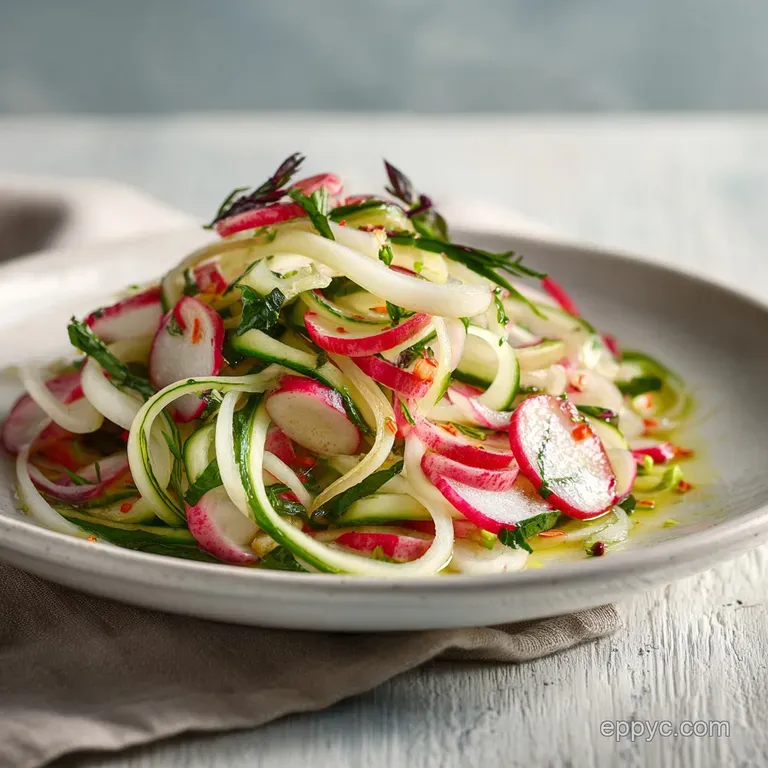
- Time: Active 15 minutes, Passive 5 minutes, Total 20 minutes
- Flavor/Texture Hook: Shatter crisp vegetables with a bright, zingy finish
- Perfect for: Weekend barbecues, light lunches, or a wholesome dinner side
- Why You'll Love This Cucumber Radish Salad
- Vital Recipe Specifications and Timing
- Component Analysis for Peak Freshness
- Essential Items for the Kitchen
- The Sequential Preparation Guide
- Masterful Troubleshooting and Common Fixes
- Precise Scaling for Every Occasion
- Debunking Common Kitchen Myths
- Proper Storage and Zero Waste
- Creative Presentation and Finishing Touches
- Recipe FAQs
- 📝 Recipe Card
Why You'll Love This Cucumber Radish Salad
The first time I made a version of this, I served it at a backyard gathering and, honestly, it was a disaster. By the time we sat down to eat, the cucumbers had released so much water that the "salad" looked more like a lukewarm soup.
I was mortified, but it taught me the single most important lesson in vegetable prep: moisture management is everything. Now, every time I hear that specific, sharp snap of a chilled radish, I'm reminded of how a few tiny tweaks can turn basic produce into something genuinely satisfying.
This recipe is my go to when I want something that feels alive on the plate. We've all had those heavy, mayo laden sides that leave you feeling sluggish, but this is the total opposite. It's inventive because it uses the natural bitterness of the radish to play against the subtle sweetness of maple syrup.
The result is a bold, refreshing bite that cleanses the palate. It's the kind of dish that makes you actually want to eat your greens or in this case, your reds and greens.
I’ve spent a lot of time testing the ratio of vinegar to oil here. Too much oil and the salad feels greasy; too much vinegar and it’s caustic. By landing on this specific balance, we create a velvety coating that clings to the vegetables without drowning them.
It’s a wholesome approach to flavor that relies on the quality of the ingredients rather than heavy fats. Trust me on this, once you master the "salt sweat" method I'll show you, you'll never go back to soggy salads again.
Vital Recipe Specifications and Timing
The Physics of the Snap: Salting the cucumber slices draws out excess water through osmosis, which strengthens the pectin in the cell walls. This ensures the vegetables remain shatter crisp even after they've been tossed in the acidic dressing.
| Method | Prep Time | Texture Result | Best For |
|---|---|---|---|
| Fast Method | 10 minutes | Softer, juicy | Immediate eating |
| Classic Method | 20 minutes | Maximum crunch | Dinner parties/BBQs |
| Pro Method | 30 minutes | Ultra crisp, seasoned | Meal prep/Advanced prep |
Taking that extra ten minutes to let the vegetables rest with a pinch of salt makes a world of difference. If you're in a rush, you can skip the wait, but the salad will become watery within about fifteen minutes of sitting. For the best experience, I always recommend the classic approach.
It's the secret to keeping things wholesome and inventive without much extra effort.
Component Analysis for Peak Freshness
Choosing your elements wisely is the first step toward a successful dish. When looking for a large English Cucumber (approx. 400g), reach for one that feels firm and heavy for its size. If it's soft or shriveled at the ends, it's already lost its structural integrity. Similarly, with the bunch of Red Radishes (approx.
100g), look for bright, smooth skins and greens that aren't wilted. Those greens are a great indicator of how recently they were pulled from the earth.
| Ingredient | Science Role | Pro Secret |
|---|---|---|
| English Cucumber | Provides hydration and base volume | Keep the skin on for extra fiber and a beautiful color contrast |
| Red Radishes | Adds peppery bite and structural density | Slice them paper thin so the "heat" is balanced, not overwhelming |
| Rice Vinegar | Softens vegetable fibers (maceration) | Use unseasoned rice vinegar to control the sugar levels yourself |
| Fresh Dill | Provides aromatic, herbal top notes | Chop it at the last second to keep the oils from oxidizing |
While we are focusing on this specific profile, you might find yourself craving something with a different flair. If you're looking for a bolder, more pungent kick, you can see how I handle similar textures in my Asian Cucumber Salad recipe. That version uses garlic and soy to achieve a different kind of plant based satisfaction.
Essential Items for the Kitchen
To get those perfect, translucent slices, a mandoline slicer is your best friend. If you don't have one, a very sharp chef's knife will do, but it takes a bit more patience. You'll also need a large colander for the "sweating" phase and a medium glass bowl for whisking the dressing.
I prefer glass or stainless steel because plastic can sometimes hold onto old onion scents, which we definitely want to avoid here.
You will also need a clean kitchen towel or some heavy duty paper towels. After the vegetables have sat with the salt, you'll want to pat them dry. This might seem like an unnecessary step, but it’s the difference between the dressing sticking to the vegetables or sliding right off into a puddle at the bottom of the bowl.
The Sequential Preparation Guide
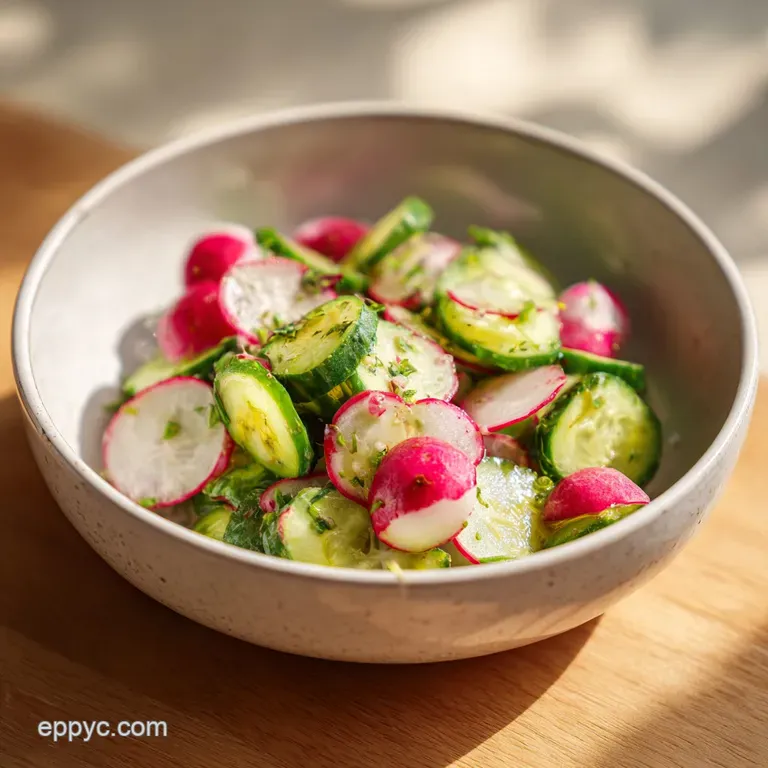
Let's get into the actual work. Follow these steps closely, especially the resting time. It’s the "silent" part of the recipe that does the most heavy lifting for the final texture.
- Slice the cucumber. Cut your 400g English Cucumber into thin rounds (about 3mm). Note: Consistency helps all pieces marinate evenly.
- Prep the radishes. Slice the 100g of radishes into equally thin rounds. Cook until they look translucent and bright.
- Sweat the vegetables. Toss the cucumber and radishes with the 0.5 tsp sea salt in a colander. Note: This draws out the water that causes sogginess.
- Wait 10 minutes. Let the vegetables sit until a pool of liquid collects below the colander.
- Dry thoroughly. Pat the vegetables with a clean towel to remove excess moisture. Note: This allows the oil to emulsify and stick.
- Shave the onion. Thinly slice 30g of red onion into half moons.
- Whisk the dressing. Combine 3 tbsp rice vinegar, 2 tbsp EVOO, 1 tsp maple syrup, pepper, and red flakes. Whisk until the liquid looks cloudy and combined.
- Combine and toss. Add the vegetables and 3 tbsp chopped dill to the bowl.
- Final season. Taste a slice and add more cracked black pepper if needed.
- Serve immediately. Platter the salad until it looks piled high and fresh.
If you enjoy playing with different styles of these cooling dishes, check out my Cucumber Salad Recipe which explores dill, sweet, and spicy variations. It’s amazing how much you can change the vibe just by swapping one or two spices.
Masterful Troubleshooting and Common Fixes
Even with a simple dish, things can go sideways. The most common issue is the "bitterness" of the radishes. Depending on the season, radishes can range from mild to "wow, that’s spicy." If yours are particularly pungent, soaking the slices in ice water for five minutes before tossing them with salt can mellow them out significantly.
To Prevent a Watery Mess
If you notice liquid pooling at the bottom of your serving bowl, it usually means the "sweating" step was rushed or the vegetables weren't patted dry enough. You can't really fix it once the dressing is on, but you can drain the excess liquid and add a tiny splash more vinegar to brighten the flavors back up.
To Manage Radish Bite
Sometimes the red onion and radish together can feel a bit sharp. The maple syrup in the recipe is there to counteract this. If it's still too intense, add another half teaspoon of maple syrup. The sugar acts as a chemical bridge that rounds out the harsh edges of the sulfur compounds in the onions.
| Problem | Root Cause | Solution |
|---|---|---|
| Vegetables are limp | Salted for too long or not chilled | Keep ingredients in the fridge until the very last second |
| Dressing tastes flat | Needs more acidity | Add an extra teaspoon of rice vinegar or a squeeze of lemon |
| Salad is too spicy | Radishes are out of season/too old | Increase the maple syrup by 0.5 tsp to balance the heat |
Common Mistakes Checklist ✓ Never skip the 10 minute salt rest; it's the foundation of the crunch. ✓ Pat the vegetables bone dry after salting to ensure the dressing clings. ✓ Use a mandoline for uniform slices, which ensures every bite has the same texture.
✓ Don't chop the dill too fine, or it will turn into a muddy paste rather than bright flecks. ✓ Add the red pepper flakes last to control the heat levels visually.
Precise Scaling for Every Occasion
Adjusting this recipe is straightforward, but you have to be careful with the seasonings. When I’m making this for just myself (cutting the recipe in half), I use a smaller bowl to ensure the dressing actually coats the vegetables rather than just painting the sides of the bowl.
Scaling Down (½ Recipe) Use half an English cucumber and about 5-6 radishes. Reduce the salt to a large pinch. When measuring the liquids, use 1.5 tablespoons of vinegar and 1 tablespoon of oil.
You might find you need slightly more dill than a strict half measure to keep that bold, herbal flavor.
Scaling Up (2x-4x Recipe) When doubling for a party, do not double the salt immediately. Start with 1.5x the salt and taste. Liquids can be doubled exactly, but work in two separate bowls for the salting phase.
If you pile 2 kilograms of cucumbers in one colander, the ones at the bottom will get crushed and won't drain properly.
Chef's Tip: If you're making a massive batch for a wedding or event, slice the veggies a day early and store them in airtight containers with a damp paper towel. Don't salt them until 20 minutes before serving!
| Original Ingredient | Substitute | Why It Works |
|---|---|---|
| Rice Vinegar (3 tbsp) | Apple Cider Vinegar | Similar acidity but adds a fruitier, more autumnal note |
| Maple Syrup (1 tsp) | Honey | Provides the same sweetness. Note: Honey is thicker and requires more vigorous whisking |
| Red Onion (30g) | Shallots | Provides a more delicate, garlicky flavor that's less "sharp" |
Debunking Common Kitchen Myths
Myth: You shouldn't peel English cucumbers. Truth: While you certainly can peel them, the skin of an English cucumber is very thin and contains most of the fiber. Leaving it on provides a necessary structural "snap" and a beautiful dark green border to your salad.
If you use a regular "slicing" cucumber with waxy skin, then you definitely should peel it.
Myth: Salt makes vegetables soggy. Truth: This is a half truth. Salt draws out moisture, which temporarily makes the vegetable limp. However, once you drain that water and pat them dry, the remaining structure is much firmer and resistant to the vinegar in the dressing.
It actually prevents the salad from becoming soggy later on.
Proper Storage and Zero Waste
This salad is at its absolute peak about 15 minutes after tossing. However, if you have leftovers, they will keep in the fridge for about 24 hours. The radishes will eventually bleed their pink color into the cucumbers, turning the whole dish a soft rose hue.
It still tastes satisfying, but the texture will be softer.
To minimize waste, don't throw away those radish tops! If they are fresh and green, they are completely edible. You can sauté them with a little garlic and olive oil for a quick side dish, or toss them into a pesto. If the cucumber ends are too small to slice safely, I usually just snack on them while I work or chop them finely to add to a morning smoothie for a hit of hydration. For more ways to use up garden produce, you might enjoy my Vibrant Green Goddess Salad recipe, which is another masterclass in using fresh herbs.
Creative Presentation and Finishing Touches
Presentation is where you can let your inventive side shine. Instead of just dumping everything into a bowl, try layering the cucumber and radish slices in a shallow platter. This "shingled" look makes the dish feel like it belongs in a high end bistro.
Sprinkle the chopped dill from a height to ensure it disperses evenly like green confetti.
A final crack of black pepper and a few extra red pepper flakes right before the plate hits the table adds a layer of visual "pop" and tells your guests that this isn't just a boring side dish. It's a thoughtful, wholesome part of the meal that deserves just as much attention as the main course. Enjoy the crunch!
Recipe FAQs
How to make cucumber and radish salad?
Slice cucumber and radish thinly, then toss with salt and let sweat for 10 minutes in a colander. Pat the vegetables thoroughly dry to remove drawn out moisture before whisking and tossing them with the bright maple dill vinaigrette.
What should not be mixed with cucumber salad?
Avoid mixing it with very heavy, mayonnaise based ingredients until serving time. Heavy additions will weigh down the delicate vegetables and mask the crisp, refreshing flavor profile we are aiming for.
Can radish and cucumber be eaten together?
Yes, they pair excellently for texture and flavor contrast. The peppery bite of the radish perfectly balances the cooling, neutral base of the cucumber, creating a dynamic bite.
Are radishes good for cucumbers?
No, radishes are not inherently good or bad for cucumbers, but they are a great textural partner. Pairing them introduces necessary structural density to contrast the high water content of the cucumber, enhancing the overall salad crunch.
What is the secret to keeping the salad from getting watery?
The secret is salting the vegetables to draw out excess moisture before dressing them. This process, called "sweating," strengthens the cell walls so the vegetables stay crisp when the acidic dressing is added.
How do I substitute the dressing ingredients if I don't have rice vinegar?
Substitute rice vinegar with apple cider vinegar or lemon juice for similar acidity. If you use lemon juice, be aware that it imparts a brighter, more citric flavor, similar to how the acid is used to brighten up the layers in a Classic Caprese Salad recipe.
Can I prepare the vegetables ahead of time?
Yes, you can prep the slices up to four hours in advance if you keep them separate from the dressing. Slice and salt them, then store them chilled and covered; assemble just before serving to maintain maximum crispness.
Crisp Cucumber Radish Salad
Ingredients:
Instructions:
Nutrition Facts:
| Calories | 89 kcal |
|---|---|
| Protein | 1.0 g |
| Fat | 7.1 g |
| Carbs | 6.5 g |
| Fiber | 1.1 g |
| Sugar | 3.8 g |
| Sodium | 312 mg |
