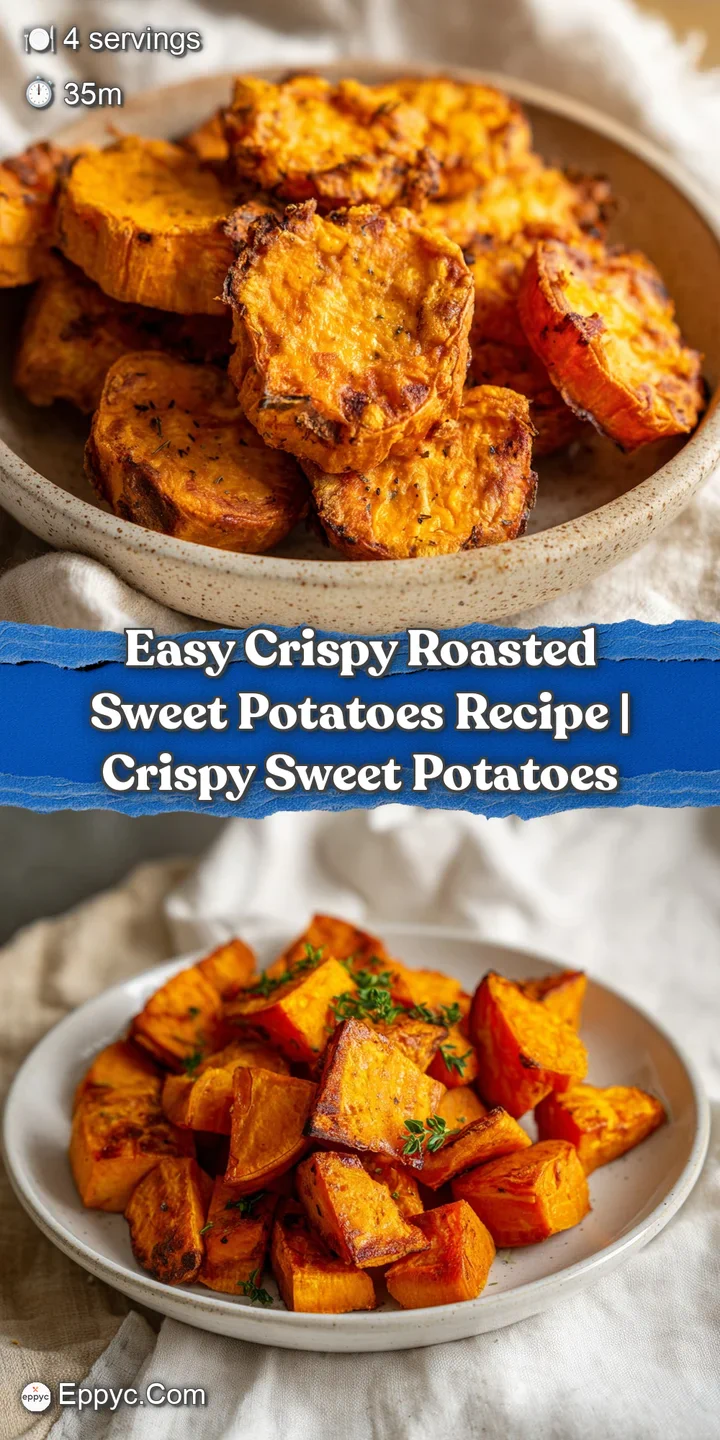
Crispy Roasted Sweet Potatoes: Perfectly Caramelized
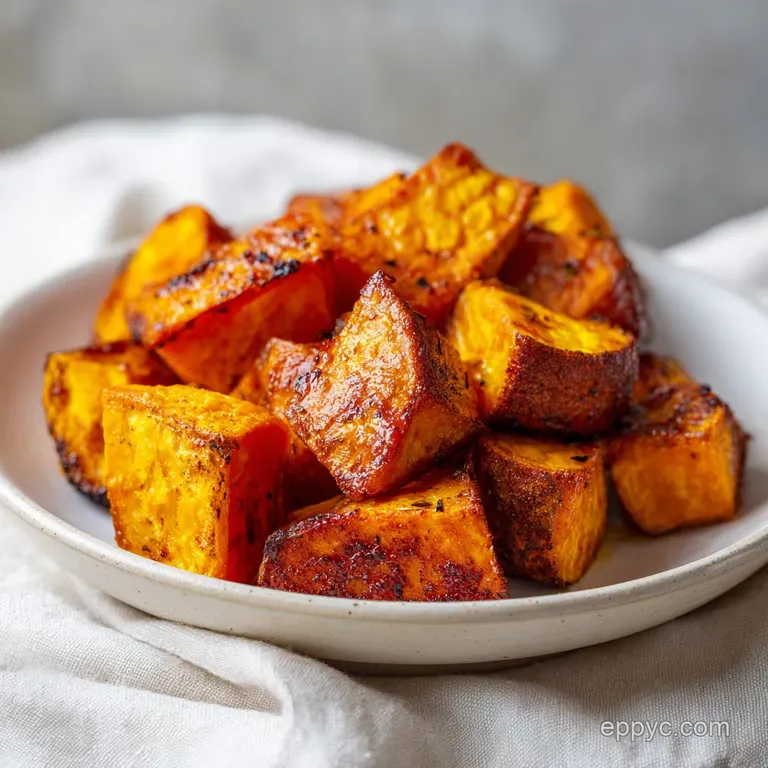
- Time: Active 10 minutes, Passive 25 minutes, Total 35 minutes
- Flavor/Texture Hook: Smoky sweet crunch with a velvety, melt in-your mouth center
- Perfect for: Quick weeknight side dishes or meal prep grain bowls
- Secrets for This Easy Crispy Roasted Sweet Potatoes Recipe
- Why These Stay So Crunchy
- Component Analysis
- Choosing Ingredients for Success
- Tools Every Home Cook Needs
- How to Roast Them Perfectly
- Fixing Soft or Burnt Potatoes
- Simple Swaps and Creative Twists
- Why skip the water soak?
- Storage and Zero Waste Tips
- Plating for a Bold Look
- Recipe FAQs
- 📝 Recipe Card
Secrets for This Easy Crispy Roasted Sweet Potatoes Recipe
There is nothing quite as disappointing as pulling a tray of sweet potatoes out of the oven only to find they have the texture of damp sponges. I remember early in my cooking days, I would toss them in a mountain of oil, hoping the fat would fry them into submission.
Instead, I ended up with greasy, limp cubes that were sad and uninspired. It was a frustrating cycle of high hopes and soggy results until I finally understood how moisture and starch interact on a baking sheet.
This easy crispy roasted sweet potatoes recipe is the result of that frustration turned into a win. The magic happens when the natural sugars in the potato meet a dry coating, creating a rigid crust that protects the soft interior. When you pull these out, you will hear a distinct "clink" as they hit the serving bowl.
That sound is the hallmark of a job well done. We are going for a bold contrast here: the earthy, deep sweetness of the orange flesh against a savory, smoky exterior that actually holds its shape.
The smell in your kitchen will be the first sign that this is working. As the smoked paprika and garlic powder toast in the avocado oil, it creates a scent that is warm, inviting, and honestly, a little bit addictive. It is a wholesome way to get that "fried" satisfaction without the mess of a deep fryer.
Whether you are serving these alongside a roast or just eating them off the pan (guilty as charged), they offer a level of satisfaction that simple boiled or mashed versions just cannot touch.
Why These Stay So Crunchy
Understanding the "why" behind the crunch changed everything for me. It is not just about the heat; it is about managing the water that naturally lives inside the potato.
- Surface Dehydration: Patting the cubes bone dry before adding oil is vital. If water remains on the surface, it turns to steam in the oven, which softens the starch instead of crisping it.
- Starchy Shield: Adding cornstarch creates a microscopic barrier. As the potatoes cook, this starch absorbs any escaping moisture and fries into a thin, rigid film.
- Lower Rack Logic: Placing the tray in the lower third of the oven puts the potatoes closer to the heat source. This mimics the direct heat of a sauté pan, encouraging a dark, caramelized bottom.
- Lipid Layering: Using avocado oil provides a high smoke point. This allows us to crank the heat to 425°F without the oil breaking down or tasting bitter.
| Thickness | Internal Temp | Rest Time | Visual Cue |
|---|---|---|---|
| 3/4 inch cubes | 205°F - 210°F | 2 minutes | Edges are dark and rigid |
| 1/2 inch cubes | 205°F - 210°F | 1 minute | Deeply browned all over |
| 1 inch wedges | 205°F - 210°F | 3 minutes | Skin is blistered and puffed |
When we talk about the chemistry of a great roast, we are really talking about moisture management. If you have ever wondered why some potatoes turn into a "mash" on the pan, it is usually because the steam had nowhere to go. If you are interested in how different potatoes react to heat, you might also enjoy reading about the techniques used in my silky mashed potatoes where we actually want to encourage that softness. For this roast, however, we are fighting against it to build a better crust.
Component Analysis
Choosing the right components is half the battle. Not all fats or starches are created equal when you are dealing with high intensity roasting.
| Ingredient | Science Role | Pro Secret |
|---|---|---|
| Sweet Potatoes | Sugar source | Choose "Garnet" or "Jewel" varieties for the best moisture to sugar balance. |
| Avocado Oil | Heat conductor | Its neutral flavor lets the smoked paprika shine while handling the 425°F heat easily. |
| Cornstarch | Moisture absorber | Sift it over the potatoes to prevent clumps; it’s what creates that signature "shatter." |
| Smoked Paprika | Flavor enhancer | The fine particles provide more surface area for the oil to "fry" the seasonings onto the skin. |
Choosing Ingredients for Success
The foundation of this dish is the sweet potato itself. I prefer using the orange fleshed varieties like Jewel or Garnet because they have a higher sugar content than the white fleshed ones. Those sugars are exactly what we want to caramelize.
When you are at the store, look for potatoes that feel heavy for their size and have smooth, unblemished skin. If they feel light or "corky," they have already started to lose their internal moisture, which leads to a dry, mealy texture once roasted.
For the Base
- 2 lbs Sweet Potatoes: Peeled and cut into uniform 3/4 inch cubes.
- Substitute: Butternut squash. Why this? Similar sugar content and density for roasting.
- 2 tbsp Avocado Oil: A clean tasting oil with a high smoke point.
- Substitute: Grapeseed oil. Why this? High smoke point and neutral flavor profile.
For the Flavor Profile
- 1.5 tbsp Cornstarch: This is the secret to the crunch.
- Substitute: Arrowroot powder. Why this? Great grain free alternative for crisping up edges.
- 1 tsp Smoked Paprika: Adds a bold, woody depth.
- Substitute: Chipotle powder. Why this? Adds heat along with the smoky notes.
- 1/2 tsp Garlic Powder: For a savory, umami kick.
- Substitute: Granulated onion. Why this? Provides similar savory depth without the garlic breath.
- 1/2 tsp Onion Powder: Rounds out the spice blend.
- Substitute: Shallot powder. Why this? A more gourmet, delicate onion flavor.
- 1 tsp Flaky Sea Salt: Added at the very end for texture.
- Substitute: Kosher salt. Why this? Large grains provide a nice crunch and salt hit.
- 1/2 tsp Freshly Cracked Black Pepper: For a subtle, sharp heat.
- Substitute: White pepper. Why this? Milder heat that blends into the colors.
Tools Every Home Cook Needs
You don't need a kitchen full of gadgets, but two specific things make a massive difference. First, a heavy rimmed baking sheet (like a half sheet pan) is non negotiable. Thin, flimsy pans warp in the high heat of a 425°F oven, which causes the oil to pool in one corner and leaves some potatoes dry while others drown.
A heavy pan distributes heat evenly across the entire surface.
Second, a large metal bowl is your best friend here. You need enough space to toss the potatoes vigorously. If the bowl is too small, you won't get that even film of oil and starch. I also highly recommend a fine mesh sieve for sifting the cornstarch.
If you just dump the starch in, it will clump together on the first potato it touches, leaving you with "white spots" and other potatoes that are bare. Sifting ensures every single cube is perfectly coated in a thin, invisible layer of crunch potential.
How to Roast Them Perfectly
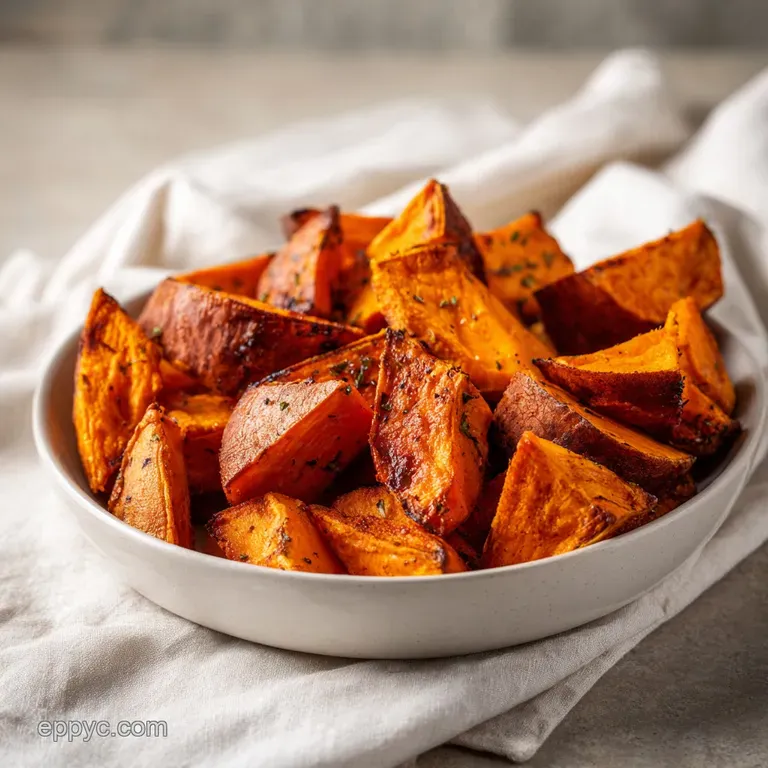
- Preheat the oven to 425°F (220°C) and move your rack to the lower third. Note: This rack position ensures the bottom of the pan gets the most direct heat for browning.
- Pat the 2 lbs of cubed sweet potatoes completely dry with paper towels. Note: Removing surface moisture is the most important step for achieving a crisp exterior.
- Toss the cubes in a large bowl with the 2 tbsp of avocado oil. Continue until every surface is glossy and coated.
- Sift the 1.5 tbsp cornstarch, 1 tsp smoked paprika, 1/2 tsp garlic powder, 1/2 tsp onion powder, and 1/2 tsp black pepper over the potatoes.
- Toss vigorously with a spatula or your hands until the white powder disappears into a thin, orange film.
- Spread the potatoes onto your large rimmed baking sheet in a single layer. Make sure no cubes are touching.
- Roast for 15 minutes without disturbing them. Watch for the bottoms to start turning dark golden.
- Flip the potatoes carefully with a metal spatula to expose the other sides to the hot pan.
- Roast for another 10-12 minutes until the edges are slightly charred and the crust feels rigid.
- Remove from the oven and immediately sprinkle with 1 tsp flaky sea salt while the oil is still shimmering.
Fixing Soft or Burnt Potatoes
Sometimes, even with the best intentions, things go sideways. The most common issue I hear about is the "Steam Trap." This happens when you crowd the pan. If the cubes are touching, the moisture escaping from one potato gets trapped by the neighbor, creating a pocket of steam.
Instead of roasting, they end up braising in their own juices.
Why are my potatoes still soft?
This usually comes down to three things: overcrowding, low heat, or too much oil. If the pan is too full, you'll never get a crunch. If your oven doesn't actually hit 425°F (many are off by 25 degrees), the starch won't dehydrate fast enough.
Finally,, too much oil can actually heavy down the starch coating, making it greasy rather than crispy.
| Problem | Root Cause | Solution |
|---|---|---|
| Soft/Soggy texture | Crowded baking sheet | Use two pans or roast in batches to allow airflow. |
| Burnt spice coating | Spices weren't mixed with oil | Ensure spices are tossed with the oil coated cubes thoroughly. |
| Sticking to the pan | Not enough oil or poor pan | Use a metal spatula and ensure the pan is preheated or well oiled. |
Common Mistakes Checklist
- ✓ Skipping the "pat dry" step (leads to immediate steaming)
- ✓ Using a silicone mat (these actually trap moisture and prevent a hard sear)
- ✓ Forgetting to preheat the oven fully (starch needs an immediate blast of heat)
- ✓ Using "cold" potatoes straight from a fridge (always use room temp for even cooking)
- ✓ Tossing the salt in at the beginning (salt draws out moisture; add it at the end!)
Simple Swaps and Creative Twists
If you want to change things up, this recipe is incredibly flexible. While the smoked paprika and garlic are a classic savory combo, you can lean into the sweetness or go for a more "fresh" vibe. I often tell people that once they master the cornstarch technique, the flavor possibilities are endless.
If you are looking for a more "hand held" version of this, you might want to try my air fryer potatoes. The air fryer uses even more aggressive convection, which works wonders if you are only cooking a small batch. However, for a full 2 lb batch, the oven is still king for consistent results.
High Heat Foundation
Roasting at 425°F is the sweet spot. Any lower, and you're just baking them; any higher, and the natural sugars in the sweet potato might burn before the starch has time to set. This temperature ensures the "Maillard reaction" (that beautiful browning) happens in tandem with the internal softening.
The Dry Coat Trick
The cornstarch is the "inventive" part of this wholesome recipe. It creates a rough surface area that catches the heat. Think of it like a very thin batter that doesn't require the mess of flour and eggs. It is a satisfying shortcut that yields professional results every single time.
| Method | Time | Texture | Best For |
|---|---|---|---|
| Fresh (As written) | 35 mins | Shatter crisp, fluffy inside | Maximum flavor and best texture |
| Pre cut (Shortcut) | 25 mins | Slightly drier edges | Busy weeknights; prep the night before |
| Frozen (Shortcut) | 30 mins | Softer, less crunch | Emergency side dishes only |
Why skip the water soak?
Many people suggest soaking potatoes in cold water to remove starch. While that works for French fries, sweet potatoes are different. They have more sugar and less surface starch than Russets. Soaking them often just adds more internal moisture, making it harder to get that crispy exterior we are after.
In this recipe, we are actually adding starch (cornstarch) to get the result we want, so washing away the natural starch is counterproductive.
Storage and Zero Waste Tips
Roasted sweet potatoes are definitely best eaten fresh out of the oven, but you can save them. Keep leftovers in an airtight container in the fridge for up to 4 days. When you want to eat them again, do not use the microwave! The microwave will turn them into a gummy, sad mess.
Instead, throw them back onto a baking sheet at 400°F for 5-8 minutes or use an air fryer to bring back that crunch.
For zero waste, don't throw away those peels! If you have a compost pile, great, but you can also toss the peels with a little oil and salt and roast them separately until they turn into "sweet potato skin chips." They are packed with fiber and make a great crunchy snack while you wait for the main batch to finish roasting.
If you have leftover cubes, they are incredible the next morning tossed into a breakfast hash with some peppers and a fried egg.
Plating for a Bold Look
To make these look as good as they taste, I love to serve them on a wide, flat platter rather than a deep bowl. This keeps them from steaming each other while they sit on the table. Sprinkle a little extra flaky salt from up high it looks great and ensures even coverage.
I often pair these with a bright, herbaceous sauce to cut through the richness. A quick lime crema or a cilantro garlic oil adds a pop of color that looks stunning against the deep orange.
This contrast of the bright green sauce and the charred orange potatoes makes for a satisfying, inventive presentation that feels much more expensive than a simple sheet pan side dish. Enjoy the crunch!
Recipe FAQs
Why did my sweet potatoes turn out soft instead of crispy?
You likely skipped patting the cubes dry or used a silicone baking mat. Moisture is the enemy of crispiness, and silicone mats trap steam under the potatoes instead of allowing the dry heat of the oven to create a rigid crust.
How to reheat leftovers to keep them crunchy?
Place the potatoes on a baking sheet and roast at 400°F for 5 to 8 minutes. Avoid the microwave at all costs, as it will destroy the texture and turn your potatoes into a gummy mess.
Is it necessary to add salt before roasting?
No, this is a common misconception. Salt draws moisture out of the vegetable while it is in the oven, which prevents the potatoes from browning properly. Always wait to sprinkle your flaky sea salt until the moment you pull them out of the oven.
How to ensure even browning on every side?
Spread the cubes in a single layer on your baking sheet so that no two pieces are touching. If the potatoes are crowded, they will steam in their own juices rather than roast, preventing the charred, rigid edges you want.
Why is the oven temperature set to 425°F?
A high initial blast of heat is essential to set the cornstarch coating into a crisp exterior. If you mastered this technique of using high heat to achieve texture here, you can apply similar logic to our crispy sourdough dressing to ensure the surface stays golden and firm.
Can I use a different type of oil?
Stick with avocado oil because of its high smoke point. Since the oven is preheated to 425°F, oils with lower smoke points may burn and impart an acrid, bitter flavor to the sweet potatoes.
How to tell when they are perfectly done?
Look for visibly charred, dark edges and a rigid crust that resists a metal spatula. The potatoes should be tender on the inside but show enough structural integrity that they don't collapse when you flip them at the 15-minute mark.
Crispy Roasted Sweet Potatoes
Ingredients:
Instructions:
Nutrition Facts:
| Calories | 268 kcal |
|---|---|
| Protein | 3.6 g |
| Fat | 7.1 g |
| Carbs | 48.4 g |
| Fiber | 6.8 g |
| Sugar | 9.5 g |
| Sodium | 582 mg |
