Melt in Your Mouth Easy Baked Chicken Breast
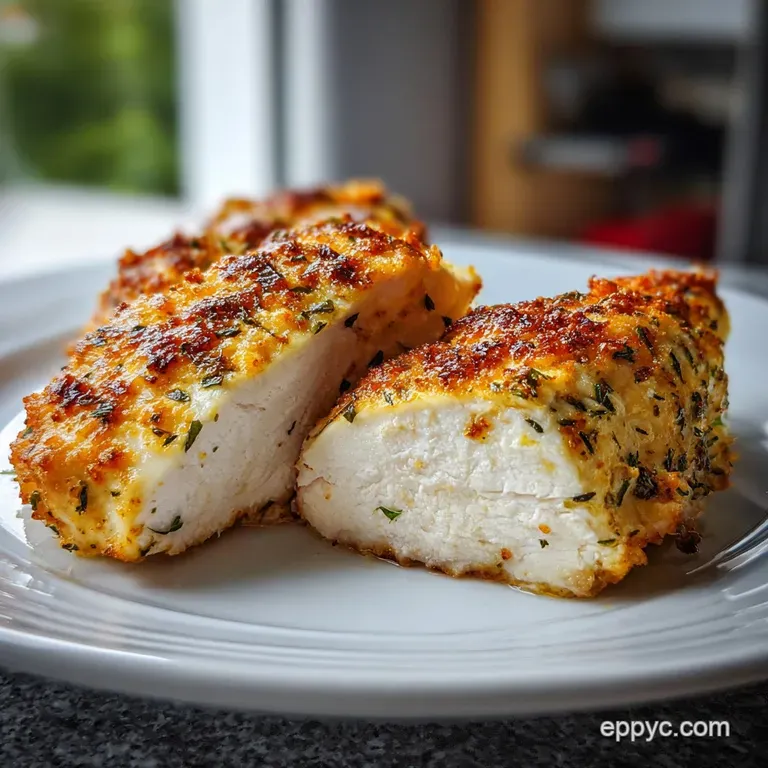
- Time: Active 10 minutes, Passive 15 minutes, Total 25 minutes
- Flavor/Texture Hook: Velvety interior with a salty, Parmesan shatter
- Perfect for: Stress free weeknight dinners or high protein meal prep
- The Science of Why it Works
- Essential Recipe Specifications
- The Best Ingredient Selections
- Necessary Kitchen Technology
- Step-by-Step Cooking Process
- Pro Techniques and Avoidable Mistakes
- Creative Variations and Easy Substitutes
- Freezing and Effective Reheating Guide
- Beautiful Presentation Ideas
- Scaling for Any Occasion
- Debunking Common Chicken Myths
- Recipe FAQs
- 📝 Recipe Card
Have you ever pulled a baking sheet out of the oven only to find that your dinner looks more like a parched piece of driftwood than a meal? We've all been there, and honestly, it's frustrating when you're trying to feed your family something heartfelt.
This melt in-your mouth easy baked chicken breast recipe promises tender poultry perfection by using a few digital age kitchen tricks and a heavy dose of culinary logic.
I remember my first few attempts at baking chicken; I used to just toss them in with some salt and hope for the best. The result was usually a rubbery mess that required a gallon of water to swallow.
But after some experimentation with thermal barriers and moisture locking emulsions, I discovered that the secret isn't just in the heat, it's in the protection you provide for the protein.
Right then, let's get into the nitty gritty of why this works. We're going to empower your cooking process by focusing on what actually happens at a molecular level when that heat hits the pan. Trust me on this, once you understand the tech behind the texture, you'll never go back to boring, dry chicken again.
The Science of Why it Works
The Emulsion Barrier: The mixture of mayonnaise and sour cream creates a thick lipid shield that prevents water from evaporating out of the meat fibers. This ensures the interior remains juicy even as the exterior hits high temperatures.
Lactic Acid Tenderization: Sour cream contains mild acids that gently break down the tough connective tissues in the poultry. This chemical process softens the protein structure before the heat even begins to set it.
Maillard Reaction Acceleration: The proteins in the Parmesan cheese and the sugars in the dairy react under heat to create that characteristic golden brown crust. This adds a complex, savory depth that salt alone cannot provide.
Thermal Insulation: The thick coating acts as a buffer, slowing down the heat transfer to the center of the breast. This creates a wider window of "perfectly cooked" time, preventing the meat from overshooting into the dry zone.
Essential Recipe Specifications
When we talk about achieving that specific texture, we need to look at the numbers. Precision is your best friend in the kitchen. I always use a digital scale for my ingredients because volume measurements can be so misleading.
For this dish, we're targeting a very specific internal temperature to ensure safety without sacrificing the velvety mouthfeel we're after.
The beauty of this method is how it bridges the gap between traditional roasting and modern moisture retention techniques. While a stovetop sear provides great color, it often leaves the middle unevenly cooked. In the oven, we get 360 degree heat, but without protection, that heat is an enemy to lean poultry.
| Feature | Stovetop Searing | Oven Baking (This Recipe) |
|---|---|---|
| Heat Distribution | Direct bottom heat only | Consistent ambient circulation |
| Moisture Retention | High risk of surface drying | Sealed by the fat rich coating |
| Effort Level | High (requires constant flipping) | Low (set it and forget it) |
Using a digital thermometer is the single most important piece of technology you can bring into your kitchen. It's the difference between guessing and knowing. If you've enjoyed my Baked Chicken Divan recipe, you know how important that creamy to protein ratio is for a balanced bite.
The Best Ingredient Selections
To get the most out of this recipe, we need to talk about the quality of our components. Not all mayonnaise is created equal, and honestly, don't even bother with the low-fat versions here. We need those healthy fats to do the heavy lifting of protecting the meat.
- Chicken Breasts (2 large, approx. 1 lb / 450g): Look for air chilled poultry if possible; it hasn't been soaked in brine, so it holds its shape better.
- Full Fat Mayonnaise (1/2 cup / 120g): This is our primary fat source for the emulsion. Why this? It has a high smoke point and creates a stable moisture barrier.
- Sour Cream (1/4 cup / 60g): Adds tang and acid for tenderizing. Why this? The lactic acid breaks down tough proteins more gently than vinegar.
- Freshly Grated Parmesan (1/2 cup / 50g): Skip the green shaker bottle for this one. Why this? Fresh cheese melts and browns into a much more complex crust.
- Garlic & Onion Powder (1 tsp each): Provides the savory backbone.
- Smoked Paprika (1/2 tsp): For that subtle, "cooked over wood" aroma.
- Kosher Salt & Cracked Pepper: To taste, but 1/2 tsp salt and 1/4 tsp pepper is the standard starting point.
| Original Ingredient | Substitute | Why It Works |
|---|---|---|
| Full Fat Mayonnaise | Plain Greek Yogurt | Similar thick consistency but adds more tang and less fat. |
| Sour Cream | Heavy Cream | Provides the fat but lacks the acid; add a squeeze of lemon. |
| Parmesan Cheese | Pecorino Romano | Saltier and sharper. Note: Use slightly less to avoid over salting. |
Necessary Kitchen Technology
You don't need a professional kitchen to pull this off, but a few specific tools will empower you to get better results. I always recommend a heavy rimmed baking sheet. It prevents warping in the high heat of the oven, which keeps your chicken level and ensures the sauce doesn't slide off to one side.
A digital meat thermometer is non negotiable for me. I used to think I could "feel" when chicken was done by poking it, but that's just a recipe for disaster. Using technology to track the internal temp to exactly 165°F (74°C) is how you get that professional consistency every single time.
Chef's Tip: Place your baking sheet in the oven while it preheats. When you drop the chicken onto the hot surface, you'll hear a slight sizzle that helps jumpstart the browning on the bottom.
step-by-step Cooking Process
Preparing the Protein
First, take your 2 large chicken breasts and pat them bone dry with paper towels. This might seem like a small step, but it's vital. If the surface is wet, the mayo mixture will just slide right off like a water slide. Season both sides with 1/2 tsp Kosher salt and 1/4 tsp Cracked black pepper.
Whipping the Insulation Sauce
In a small mixing bowl, combine the 1/2 cup mayonnaise, 1/4 cup sour cream, 1/2 cup Parmesan, and the garlic powder, onion powder, and smoked paprika. Stir it until it's a thick, pale orange paste. It should be thick enough to hold its shape on a spoon.
Applying the Golden Coating
Place the chicken on your prepared baking sheet. Using a spatula or the back of a large spoon, spread the mixture evenly over the top of each breast. You want a thick layer, about 1/4 inch thick. This is the "blanket" that keeps the meat from drying out.
Roasting to Precise Temperature
Slide the tray into an oven preheated to 400°F (200°C). Bake for 15 minutes until the tops are bubbly and golden brown.
Check the internal temperature; you are looking for 160°F on the thermometer, as it will climb to 165°F while resting.
Pro Techniques and Avoidable Mistakes
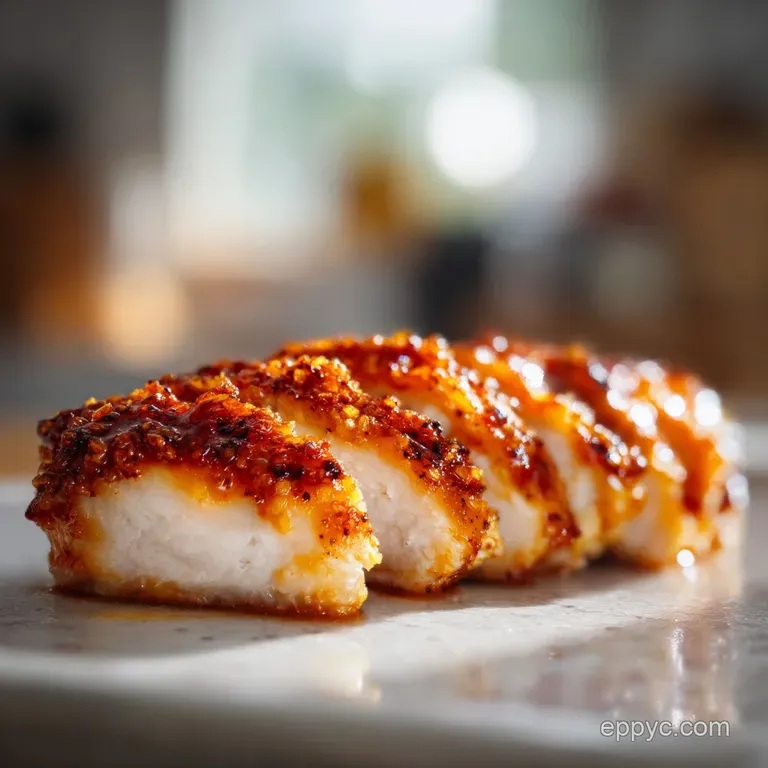
One mistake I once made was overcrowding the pan. If the chicken breasts are touching, they'll steam each other instead of roasting, and you'll end up with a soggy mess. Give them at least two inches of space so the hot air can circulate and crisp up the edges of that Parmesan crust.
Preventing the "Soggy Bottom"
If you find the bottom of the chicken is too wet, it's usually because the chicken released too much water. This happens with "enhanced" poultry that has been injected with saline. Buying high-quality, air chilled meat is the digital age solution to this old school problem.
Avoiding the Rubber Texture
The "rubber" feel comes from overcooking. Once the internal temperature hits 165°F, the muscle fibers contract violently and squeeze out all the moisture. By pulling the chicken out at 160°F and letting it rest, you use carryover cooking to reach the safety zone without the texture penalty.
| Problem | Root Cause | Solution |
|---|---|---|
| Sauce Slid Off | Surface moisture on meat | Pat chicken extremely dry before coating. |
| Crust is Pale | Oven temp too low | Ensure oven is fully preheated to 400°F. |
| Meat is Tough | Overcooked or no rest | Pull at 160°F and rest for 5 minutes. |
Creative Variations and Easy Substitutes
If you want to shake things up, this recipe is incredibly adaptable. I've found that adding a teaspoon of Dijon mustard to the mayo mixture adds a sophisticated sharp note that pairs beautifully with the Parmesan. It's similar to the technique used in our Chicken Casserole recipe where we balance fats with bright acidity.
Creating a Zesty Herb Twist
Add 1 tablespoon of freshly chopped parsley and a teaspoon of lemon zest to the coating. This cuts through the richness of the mayonnaise and makes the dish feel much lighter, perfect for a summer evening.
Swapping for a Low Dairy Profile
If you need to avoid heavy dairy, you can use a dairy-free mayonnaise and replace the sour cream with a thick cashew cream. For the Parmesan, a sprinkle of nutritional yeast provides that same "umami" hit without the lactose.
- If you want a crunchier top, mix 1/4 cup of Panko breadcrumbs into the cheese mixture.
- If you want more heat, add 1/2 teaspoon of cayenne pepper or a swirl of Sriracha.
- If you want a deeper flavor, grate a little fresh nutmeg into the cream sauce.
Freezing and Effective Reheating Guide
You can definitely freeze this, but there's a trick to it. If you freeze the chicken with the sauce already on it, the emulsion might break when it thaws, leaving you with a watery mess. It's much better to freeze the cooked chicken and the sauce separately, or just freeze the leftovers.
Storage: Keep leftovers in an airtight container in the fridge for up to 4 days. The sauce actually stays quite stable once it's been baked.
Reheating: Avoid the microwave if you can. It turns the crust into a rubbery layer. Instead, pop the chicken back into a 350°F oven for 10 minutes. This will revive the Parmesan shatter and keep the interior velvety.
Zero Waste: If you have leftover coating sauce, don't toss it! It makes an incredible spread for a turkey sandwich the next day. Any leftover chicken can be sliced and tossed into a salad; the Parmesan crust acts like built in croutons.
Beautiful Presentation Ideas
We eat with our eyes first, so don't just toss this on a plate. The golden crust is the star of the show, so let it shine. I like to serve this over a bed of vibrant green sautéed spinach or alongside some roasted asparagus to provide a color contrast to the rich, creamy chicken.
Mastering the Side Pairing
Because this dish is quite rich, it pairs perfectly with something acidic or bright. A simple arugula salad with a lemon vinaigrette works wonders. If you're looking for more inspiration, check out my How to Make recipe for a different take on the crispy crust technique.
Adding a Final Texture Contrast
Just before serving, hit the plate with a final sprinkle of fresh herbs or a crack of fresh black pepper. The visual of the green herbs against the golden brown crust immediately signals to your guests that this meal was made with a heartfelt touch.
Scaling for Any Occasion
Scaling this recipe is straightforward, but there are some "innovator" rules to follow to ensure the quality doesn't drop as the quantity increases.
- Scaling DOWN (1 breast): Use half of all ingredients. You can use a smaller toaster oven to save energy, but keep the temperature the same. The cook time might drop by 2-3 minutes because there is less cold mass in the oven.
- Scaling UP (4-8 breasts): You can double or quadruple the sauce easily. However, do not double the salt and spices linearly. Use 1.5x the salt for a double batch and taste. Spices can become overwhelming when scaled 1:1 in large batches.
- Baking for a Crowd: If you are filling a whole tray, lower the oven temp to 375°F and extend the time by 5-8 minutes. This prevents the outside from burning before the centers of all those breasts have a chance to reach temperature.
Debunking Common Chicken Myths
Searing meat "seals in" juices. This is a classic myth. Science shows that moisture loss is actually higher in seared meat because the high heat causes fibers to contract more. The reason we sear is for the Maillard reaction (flavor), not for juiciness.
In this recipe, the coating does the sealing, not the heat.
Chicken is only safe at 165°F. While 165°F is the "instant kill" temperature for bacteria, safety is a function of both time and temperature.
Chicken held at 150°F for 3 minutes is just as safe as chicken that hits 165°F for one second. By pulling at 160°F and letting it rest, you achieve safety while maintaining a much better texture.
Washing chicken makes it cleaner. Please, stop doing this! Washing poultry just splashes bacteria all over your sink and countertops. The only way to truly "clean" your chicken is to cook it to the proper internal temperature.
Trust your technology (the thermometer) and skip the sink.## Melt In Your Mouth Easy Baked Chicken Breast Tender Poultry Recipe
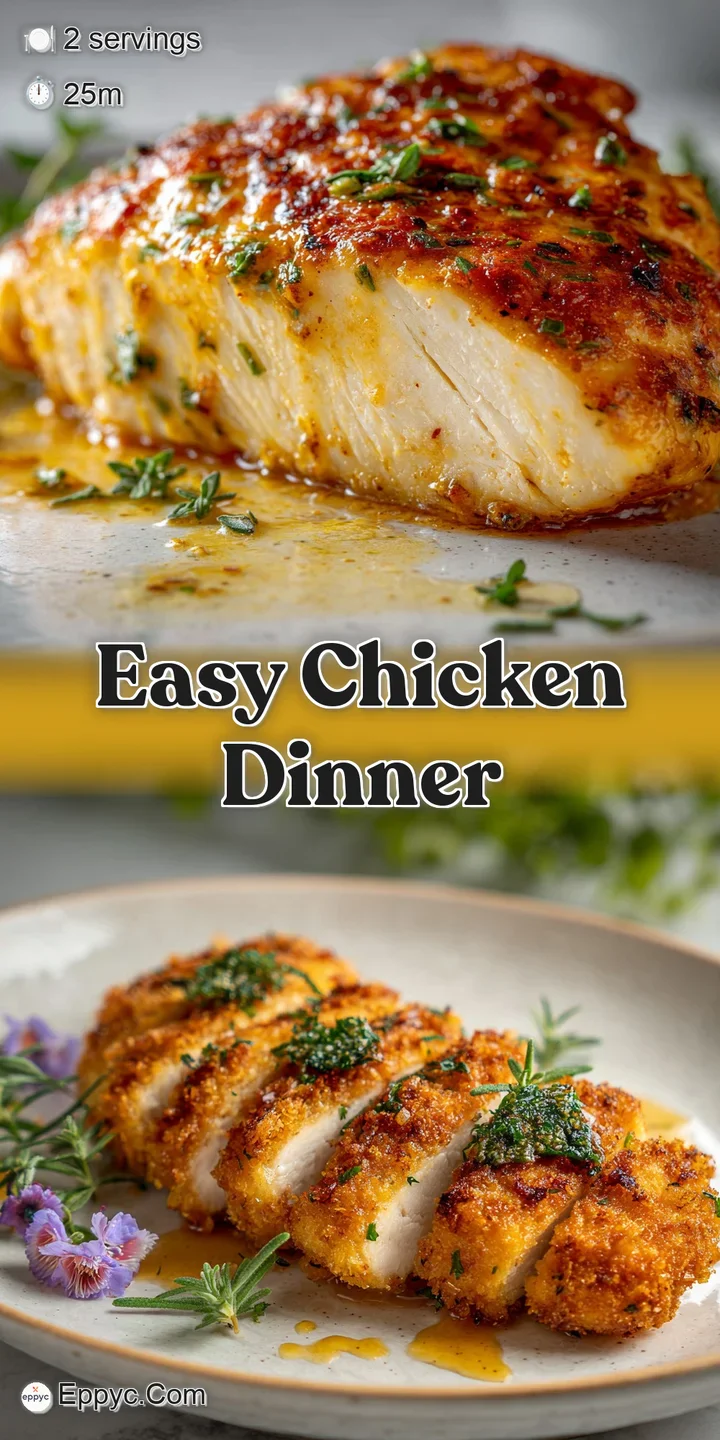
Recipe FAQs
How to cook chicken breasts so they are very tender?
Pat the chicken completely dry and coat it generously. A thick coating of mayonnaise and Parmesan cheese acts as a barrier, trapping moisture inside the breast during baking. This ensures the interior stays juicy while the exterior browns beautifully.
How to make melt in your mouth chicken?
Use a fat-based coating and bake at the correct temperature. The mayonnaise and sour cream mixture creates a tenderizing emulsion that prevents moisture loss, while the Parmesan creates a delightful crust.
Aim to pull the chicken from the oven when the internal temperature reaches 160°F, allowing carryover cooking to finish the job.
Is it better to bake chicken at 350 or 400 in the oven?
For this recipe, 400°F is better. The higher temperature, combined with the protective coating, allows for quicker cooking and better browning of the Parmesan crust without drying out the interior. If you were baking plain chicken, 350°F might be used for longer, slower cooking.
How do you make Mama's cooking melt in your mouth chicken?
Embrace the science of moisture retention. The secret lies in creating an insulating layer, much like the emulsion in our Creamy Dreamy Chicken Enchiladas with White Sauce Recipe, to shield the chicken from direct, drying heat.
Precise temperature control, pulling the chicken slightly before it's fully done, and allowing it to rest are key.
What is the secret to tender baked chicken?
Protect the moisture with a rich coating. The mayonnaise and sour cream mixture creates a thermal barrier, preventing the chicken's natural juices from evaporating. This technique is similar to how fats are used to create a rich texture in dishes like Chicken Pot Pie Filling, ensuring tenderness.
How long should chicken breasts bake at 400°F?
Bake for approximately 15 minutes. This time is crucial for achieving a bubbly, golden brown crust while ensuring the chicken reaches an internal temperature of 160°F, allowing for safe carryover cooking to the final 165°F. Overcooking is the enemy of tender chicken.
Can I use plain yogurt instead of sour cream?
Yes, plain Greek yogurt is a good substitute. It offers a similar tangy flavor and thick consistency, though it may contain slightly less fat. Ensure it's full fat plain Greek yogurt for the best results in creating that tenderizing emulsion.
Easy Baked Chicken Breast Recipe
Ingredients:
Instructions:
Nutrition Facts:
| Calories | 429 kcal |
|---|---|
| Protein | 31 g |
| Fat | 32 g |
| Carbs | 2.4 g |
| Fiber | 0.3 g |
| Sugar | 1.1 g |
| Sodium | 585 mg |
