Pioneer Woman Sausage Gravy

- Time:5 minutes prep + 15 minutes cook = 20 minutes total
- Flavor/Texture Hook: Savory, peppery, and incredibly velvety
- Perfect for: Weekend family brunch or busy holiday mornings
- Mastering This Pioneer Woman Sausage Gravy Recipe
- Essential Statistics and Success Metrics
- Core Elements and Flavor Bases
- Necessary Tools for Better Gravy
- Step by Step Execution Guide
- Resolving Common Texture Issues
- Smart Swaps for Different Diets
- Keeping and Refreshing Your Gravy
- Best Serving Combinations
- Recipe FAQs
- 📝 Recipe Card
Mastering This Pioneer Woman Sausage Gravy Recipe
The sharp hiss of cold pork hitting a cast iron skillet is the official starting gun for a great weekend. There is something about that specific aroma sage, black pepper, and browning meat that fills the kitchen and immediately makes the house feel like a home.
I remember the first time I tried making this, I was so worried about the "grease" that I drained the pan before adding the flour. It was a dry, clumpy disaster that lacked any soul.
That mistake taught me that the rendered fat is actually the secret sauce of this whole operation. You aren't just making a sauce; you are creating a heartfelt connection to a tradition of country cooking that values flavor over everything else.
This recipe is all about empowering you to use simple, digital age precision with old school techniques to get a result that would make any Southern grandma proud.
We are going to focus on the textures here the shatter of a biscuit crust meeting the silky pool of gravy. It's a dish that doesn't need to be fancy to be impressive. You just need a heavy pan, a sturdy whisk, and a little bit of patience while the flour browns.
Let's get into the details so you can nail this on your very first try without any of the lumps I dealt with back in the day.
Essential Statistics and Success Metrics
Before you even reach for the fridge, you need to know exactly what we are aiming for in terms of timing and volume. Consistency is everything when you are cooking for a crowd, and having these benchmarks helps you stay on track.
| Method | Total Time | Texture | Best For |
|---|---|---|---|
| Traditional Skillet | 20 minutes | Thick, rustic, chunky | Authentic morning brunch |
| Quick Whisk | 12 minutes | Smoother, thinner | Fast weeknight "breakfast for dinner" |
| Slow Simmer | 30 minutes | Deeply infused, very dark | High flavor, traditional results |
Getting the right consistency is a matter of visual cues and time. If you follow the 20 minutes total time, you'll hit that sweet spot where the gravy is thick enough to coat a spoon but still fluid enough to pour easily.
Trust your digital timer, but trust your eyes more when the milk starts to bubble.
Core Elements and Flavor Bases
The beauty of this dish lies in its simplicity. We are using a handful of ingredients, so the quality of each one really carries the weight of the final flavor. I always suggest a high-quality breakfast sausage with a good fat to lean ratio because that fat is your primary cooking medium.
Fat Flour Suspension: The 1/3 cup of flour absorbs the 1 lb of sausage fat to create a roux that thickens the milk without clumping.
Starch Hydration: As the milk heats, the starch molecules in the flour swell and burst, creating that characteristic velvety thickness we crave.
Residual Cooking: The gravy continues to thicken as it cools, so we pull it off the heat just before it reaches the final desired density.
| Component | Scientific Role | Pro Secret |
|---|---|---|
| Breakfast Sausage | Primary fat source | Start in a cold pan to render more liquid fat |
| All Purpose Flour | Thickening agent | Cook for 2-3 mins to remove the "raw" starch taste |
| Whole Milk | Liquid base/Emulsifier | Use room temp milk to prevent the roux from seizing |
When you are looking for the best ingredients, don't overthink it. A standard pork sausage works wonders here. If you find yourself wanting to prep a bigger batch of meat for the week, you might find my Pioneer Woman Meatballs to be a great companion for freezer friendly meal planning.
Necessary Tools for Better Gravy
You don't need a kitchen full of gadgets, but the right vessel makes a massive difference in how the heat is distributed. A 12 inch cast iron skillet is my go to because it holds heat like a champ and provides that wide surface area needed for the milk to reduce evenly.
The Building Blocks: 1 lb breakfast sausage Why this? Provides the essential fat and savory base seasoning. (Substitute: Ground pork with 1 tsp sage/salt) 1/3 cup all purpose flour Why this? The stabilizer that binds the fat and milk
together. (Substitute: 1 to-1 gluten-free flour blend) 4 cups whole milk Why this? Creates a richer, creamier mouthfeel than low-fat versions. (Substitute: 2% milk with a splash of heavy cream) 1 tsp black pepper Why this? Cuts through the richness with a
necessary bite. (Substitute: White pepper for a milder heat) 1/2 tsp kosher salt Why this? Enhances the natural savory notes of the pork. (Substitute: Sea salt)
step-by-step Execution Guide
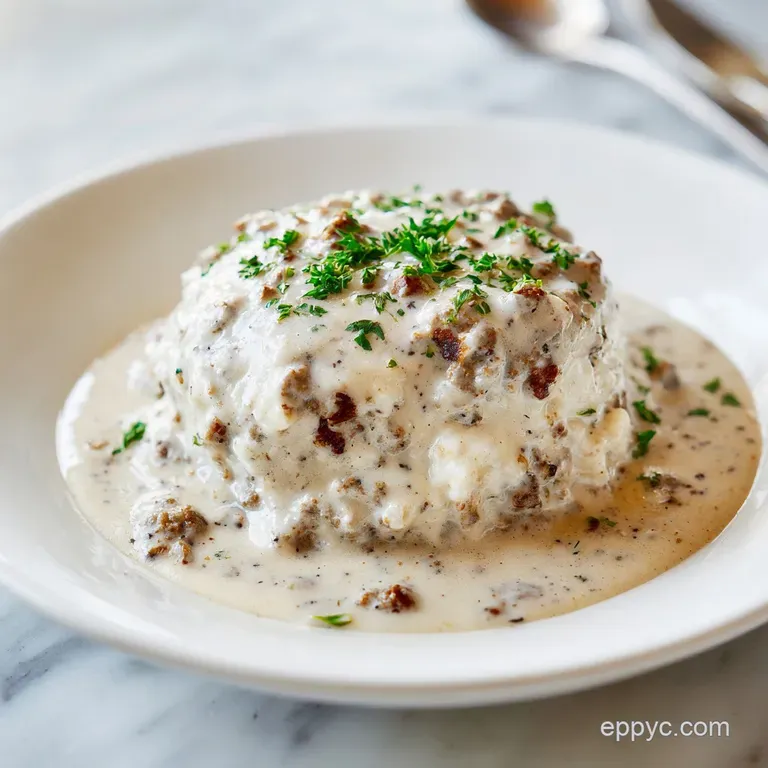
- Place the 1 lb breakfast sausage in a cold 12 inch cast iron skillet. Note: Starting cold allows the fat to melt slowly before the meat sears.
- Turn the heat to medium high.
- Use a wooden spoon to crumble the meat into small, pebble sized pieces.
- Sauté the sausage until deeply browned and no pink remains.
- Sprinkle the 1/3 cup of flour evenly over the cooked sausage and fat. Note: Do not drain the fat; you need it to hydrate the flour.
- Stir the flour and sausage constantly for 2–3 minutes until it turns a light golden color.
- Gradually pour in the 4 cups of milk, one cup at a time.
- Whisk vigorously after each cup is added until the mixture is smooth and lump free.
- Reduce heat to medium low and simmer for 5–7 minutes.
- Stir occasionally until the gravy coats the back of a spoon.
- Season with 1 tsp black pepper and 1/2 tsp salt to taste.
Resolving Common Texture Issues
Even with the best instructions, gravy can be a bit temperamental. The most common hurdle people face is a texture that feels "off" either too thin like a soup or thick like a paste. Usually, this comes down to the heat level or the speed at which the milk was added.
Gravy is Too Thick
If you let it simmer a minute too long or the heat was a bit high, the moisture evaporates, leaving you with a sludge. Simply whisk in an extra splash of milk, one tablespoon at a time, until the velvety texture returns. Remember, it will thicken even more as it sits on the table.
Lumpy Flour Texture
This happens when the flour is added to the milk rather than the fat, or if the milk is dumped in all at once. If you see lumps, don't panic. You can usually whisk them out over medium heat with some aggressive elbow grease, or in extreme cases, pass the gravy through a fine mesh sieve.
| Problem | Root Cause | Solution |
|---|---|---|
| Gummy Texture | Flour didn't cook long enough | Simmer for an extra 2 mins on low heat |
| Greasy Surface | Too much fat for the flour | Add 1 tsp of flour and whisk rapidly |
| Bland Flavor | Not enough browning on meat | Add a pinch more pepper or a drop of Worcestershire |
Common Mistakes Checklist
- ✓ Start with a cold skillet to maximize the liquid fat available for the roux.
- ✓ Never drain the sausage drippings; that is where all the flavor lives.
- ✓ Cook the flour for at least 2 minutes until it smells slightly nutty.
- ✓ Add the milk in stages to ensure a smooth, emulsified finish.
- ✓ Use a flat bottomed whisk to reach the corners of the skillet.
Smart Swaps for Different Diets
If you need to adjust this for your family's needs, it is actually quite flexible. While I'm a purist when it comes to the fat, I know sometimes we have to pivot based on what's in the pantry or our specific dietary goals.
Adjusting for Quantity:Scaling Down (1/2 batch): Use 1/2 lb sausage and 2.5 tbsp flour with 2 cups milk. Cook time reduces by about 3 minutes. Scaling Up (2x batch): Use a larger pot instead of a skillet.
Use 2 lbs sausage and 2/3 cup flour, but only increase the salt/pepper to 1.5x initially to avoid over seasoning.
If you are looking to save a bit of money, you can use a mix of ground pork and beef. For those wanting a different morning protein, checking out how to make Sausage Patties can help you prep your own customized meat blend with specific spices like fennel or red pepper flakes.
Keeping and Refreshing Your Gravy
Leftover gravy is a gift, but it needs a little love to get back to its original glory. Because the starches continue to set as they cool, the gravy will likely turn into a solid block in the fridge. This is totally normal and easy to fix.
- Fridge
- Store in an airtight container for up to 4 days.
- Freezer
- This recipe freezes surprisingly well for up to 2 months. Thaw it completely in the fridge before reheating.
- Zero Waste Tip
- If you have leftover gravy but no biscuits, use it as a base for a "breakfast poutine" over roasted potatoes or as a creamy sauce for a quick chicken pot pie filling.
To reheat, put the gravy in a small saucepan over low heat. You will almost certainly need to add a splash of milk or water to loosen it back up. Whisk constantly as it warms so the fat and dairy don't separate.
Best Serving Combinations
The classic move is, of course, pouring this over split buttermilk biscuits. But why stop there? The peppery bite of the sausage makes it a fantastic partner for a variety of textures.
The Savory Side
Try serving this over crispy hash browns or even a thick slice of toasted sourdough. The crunch of the toast provides a beautiful contrast to the silkiness of the sauce. If you want to get really wild, a fried egg on top with a runny yolk adds another layer of richness that feels truly decadent.
Traditional Myths
"You have to use heavy cream for thick gravy." This isn't true at all. Whole milk has plenty of protein and fat to create a thick, stable sauce if your roux (the flour and fat mixture) is measured correctly. Using cream often makes the dish too heavy and mutes the savory pork flavor.
"The sausage must be room temperature." Actually, starting with cold sausage in a cold pan is superior because it gives the fat more time to render out before the exterior of the meat gets too dark. This ensures you have plenty of "liquid gold" to mix with your flour.

Recipe FAQs
What is the secret to good sausage gravy?
Do not drain the rendered fat. That fat is essential for creating the roux, which provides the necessary body and depth of flavor for the gravy.
What is the 3 2 1 rule for gravy?
No, this is a common misconception. This recipe relies on specific ratios of 1 pound of sausage to 1/3 cup of flour and 4 cups of milk to achieve the perfect consistency without complex formulas.
What are the ingredients in Pioneer sausage gravy?
Combine one pound of breakfast sausage, 1/3 cup of all-purpose flour, 4 cups of whole milk, 1 teaspoon of black pepper, and 1/2 teaspoon of kosher salt. Keep these proportions steady for the best results.
What is the secret ingredient in sausage gravy?
There is no hidden secret ingredient, but technique is everything. If you enjoyed mastering the thickening technique used here, you can apply the same fat-to-flour balancing principles to create other rich, velvety sauces.
How to prevent lumpy sausage gravy?
Whisk the milk in one cup at a time. Adding the liquid gradually while stirring or whisking vigorously ensures the flour incorporates smoothly into the sausage fat without forming clumps.
How to tell when the gravy is finished cooking?
Look for the gravy to coat the back of a spoon. This usually takes about 5 7 minutes of simmering over medium low heat after the milk has been fully incorporated.
How to properly cook the sausage for this recipe?
Start in a cold 12 inch cast iron skillet. Turn the heat to medium high and use a wooden spoon to crumble the meat into small, pebble sized pieces until it is deeply browned with no pink remaining.
Pioneer Woman Sausage Gravy 2

Ingredients:
Instructions:
Nutrition Facts:
| Calories | 288 kcal |
|---|---|
| Protein | 12.5 g |
| Fat | 22 g |
| Carbs | 11 g |
| Fiber | 0.3 g |
| Sugar | 6.2 g |
| Sodium | 645 mg |
