Signature Easter Cocktail with Gin: Velvety Finish
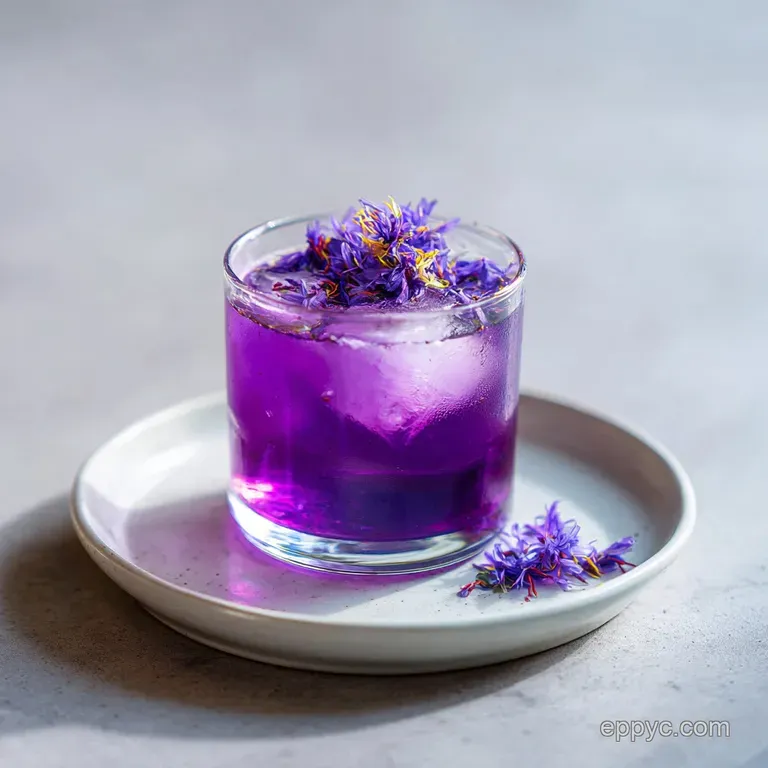
- Time: Active 10 minutes, Passive 0 minutes, Total 10 minutes
- Flavor/Texture Hook: Silky, botanical, and tart with a velvety meringue finish
- Perfect for: Easter brunch, garden parties, or impressive spring celebrations
- Signature Easter Cocktail with Gin to Impress Your Guests
- The Physics of the Foam and Floral Infusion
- Component Analysis of Your Holiday Sipper
- The Building Blocks of Your Spring Cocktail
- Essential Equipment for a Professional Pour
- Master the Shake for a Flawless Finish
- Troubleshooting Your Easter Gin Cocktail
- Making These Drinks for a Larger Crowd
- Modifying the Recipe for Every Guest
- Preparing Components Ahead of Time
- Final Touches for an Impressive Presentation
- Debunking Cocktail Myths
- Recipe FAQs
- 📝 Recipe Card
Signature Easter Cocktail with Gin to Impress Your Guests
I remember the first time I poured that deep indigo gin into a shaker. The way the liquid swirls like a midnight sky before hitting the lemon juice and instantly transforming into a brilliant, electric violet is pure kitchen magic.
Last Easter, I was struggling to find a drink that felt "spring like" without being overly sweet or boring, and this recipe absolutely saved my hosting reputation. This Easter, wow your guests with our signature gin cocktail recipe.
The aroma of freshly snapped lavender and the bright zing of lemon juice will fill your kitchen as you prep. There's something deeply satisfying about the "clack clack" of the shaker and the way the egg white transforms into a thick, luxurious foam.
It's not just a drink, it's a conversation starter that feels like you've brought a high end cocktail bar right into your living room.
We've all been there: you try to make a "fancy" drink and it ends up looking like muddy water or tasting like pure sugar. I've made those mistakes so you don't have to. We're going to use a bit of science and some digital precision to ensure every single pour is as vibrant and velvety as the last.
Trust me, once you see that purple hue against a garnish of fresh thyme, you'll never go back to basic mimosas.
The Physics of the Foam and Floral Infusion
Protein Denaturation: Shaking the egg white without ice (the "dry shake") allows the proteins to unroll and trap air bubbles without being diluted by melting water. This creates a stable, stiff foam that can support garnishes without collapsing into the drink.
pH Sensitive Anthocyanins: The natural pea flower in the gin reacts to the citric acid in the lemon juice, shifting the color from deep blue to bright purple. This chemical reaction happens instantly, providing a visual cue that your acid to base ratio is perfectly balanced for a tart finish.
Dry Shake Protein Science
When we use technology like a high speed shake, we are physically forcing air into the egg white structure. Without the interference of ice cubes during the first 30 seconds, the proteins bond more tightly. This creates that iconic "meringue" texture that feels like silk on the tongue.
pH Balance and Color
The acidity of the lemon juice doesn't just provide flavor; it acts as a catalyst for the color change. If your drink looks too blue, you need more acid. If it's too pale, you've over diluted the botanicals. It's a visual feedback loop that ensures the drink tastes exactly as it should.
| Serving Size | Total Gin Required | Lemon Juice Volume | Syrup Amount |
|---|---|---|---|
| 1 Guest | 2 oz | 0.75 oz | 0.5 oz |
| 4 Guests | 8 oz | 3 oz | 2 oz |
| 8 Guests | 16 oz | 6 oz | 4 oz |
Selecting the right quantity for your party helps maintain the balance of flavors. While you can batch the gin, liqueur, and syrup, I always recommend shaking the egg white in smaller groups of two to ensure the foam doesn't lose its structural integrity before it reaches the glass.
Component Analysis of Your Holiday Sipper
| Ingredient | Science Role | Pro Secret |
|---|---|---|
| Empress 1908 Gin | Base / Color Source | Keep it at room temp to ensure the color reaction is instantaneous and vivid |
| Egg White | Emulsifier / Texture | Use the freshest eggs possible for a foam that won't have an "eggy" smell |
| Lemon Juice | Acid / Color Catalyst | Strain your juice through a fine mesh to remove pulp that ruins the foam's surface |
The Building Blocks of Your Spring Cocktail
To get that professional result on a home cook's budget, we need to be smart about our ingredients. You don't need the most expensive elderflower liqueur on the shelf, but you do need fresh citrus.
- 2 oz Empress 1908 Gin: Why this? The pea blossom infusion provides the unique color changing properties essential for this look.
- Substitute: Any high-quality dry gin + 1 drop of natural purple food coloring.
- 0.5 oz Elderflower Liqueur: Why this? Adds a floral "nose" that mimics the scent of an Easter garden.
- Substitute: 0.5 oz extra simple syrup + a drop of rose water.
- 0.75 oz freshly squeezed lemon juice: Why this? The acid is required for the color shift and to cut the sweetness.
- Substitute: Lime juice (though it will slightly alter the final purple shade).
- 0.5 oz Lavender or Thyme infused simple syrup: Why this? Ties the botanical notes of the gin to the herbal garnish.
- Substitute: Plain honey syrup (1:1 honey and water).
- 2 dashes orange bitters: Why this? Bridges the gap between the floral notes and the citrus acidity.
- Substitute: A small squeeze of fresh orange zest.
- 1 large egg white: Why this? Creates the essential velvety head that defines this cocktail style.
- Substitute: 2 tbsp aquafaba (chickpea liquid) for a vegan friendly foam.
If you enjoy the balance of citrus and floral notes in this recipe, you'll love the complexity of an & Refreshing Margarita recipe which uses similar acid balancing techniques.
Essential Equipment for a Professional Pour
You don't need a professional bar setup to empower your inner mixologist, but a few specific tools will make your life much easier.
- Cocktail Shaker: A Boston shaker (two tins) is better for egg white drinks because it allows more room for the foam to expand.
- Fine Mesh Strainer: Essential for the "double strain" technique to catch ice shards and lemon pulp.
- Digital Scale or Jigger: Precision is everything in mixology. Using technology like a digital scale to measure in grams can be even more accurate than a standard jigger.
Chef's Tip: Freeze your coupe or martini glasses 15 minutes before serving. A chilled glass keeps the foam stable and prevents the drink from warming up as you sip.
Master the Shake for a Flawless Finish
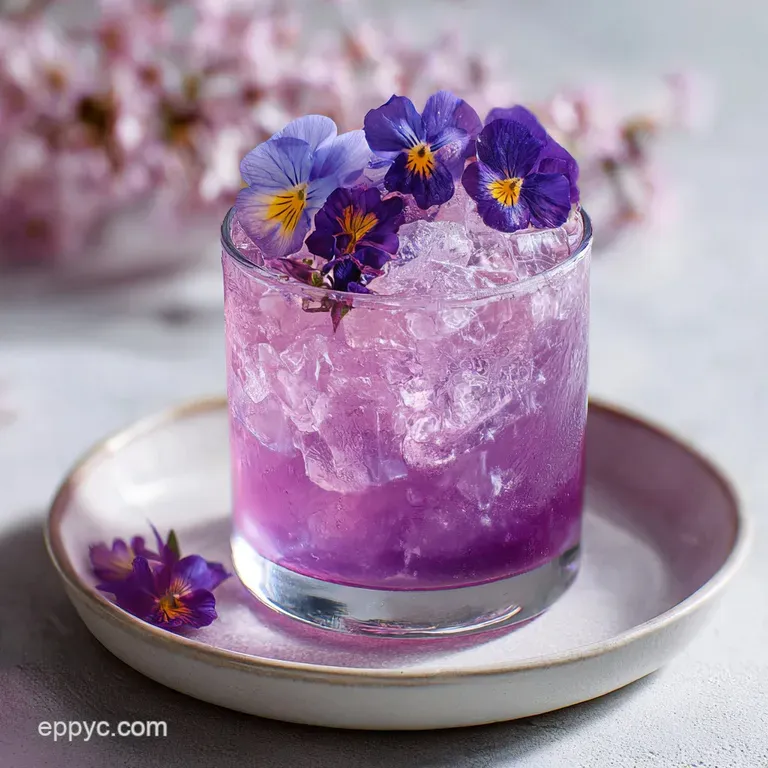
- Separate the egg. Carefully crack one large egg white into your shaker tin. Note: Ensure no yolk gets in, or the fat will prevent the foam from forming.
- Measure the spirits. Add 2 oz Empress 1908 Gin and 0.5 oz Elderflower Liqueur.
- Balance the acid. Pour in 0.75 oz freshly squeezed lemon juice. Watch for the color to turn purple.
- Add the sweetener. Pour in 0.5 oz Lavender or Thyme infused simple syrup and 2 dashes of orange bitters.
- Perform the Dry Shake. Secure the lid and shake vigorously for 30 seconds until the shaker feels slightly pressurized.
- Add ice. Fill the shaker with 1 cup of large ice cubes.
- Perform the Wet Shake. Shake for another 15 seconds until the outside of the tin is frosty.
- Double strain. Pour the liquid through the shaker's built in strainer and a fine mesh tea strainer into a chilled coupe glass.
- Garnish and serve. Wait 10 seconds for the foam to settle into a thick layer until the surface looks like smooth white velvet. Add a sprig of thyme or a dried lavender bud.
For a completely different texture profile that still uses gin as the star, check out our How to Create recipe which focuses on clarity and temperature rather than foam.
Troubleshooting Your Easter Gin Cocktail
Even with the best intentions, things can go sideways. The most common issue I see is a "flat" drink that lacks that beautiful white head.
Why Your Foam is Flat
If your foam looks more like bubbles on dishwater than a thick cloud, it's usually one of two things: the egg wasn't fresh enough, or you didn't shake hard enough during the dry shake. You really have to put some muscle into it!
Also, make sure your shaker is completely free of any greasy residue, as fat is the enemy of foam.
Eliminating the Eggy Aroma
Some people are sensitive to the smell of raw egg. To fix this, always add your bitters after the pour directly onto the foam, or use a citrus peel to express oils over the top. The aromatic oils will mask any scent from the egg white.
Fixing a Muddy Color
If your drink looks brownish or grey, you likely used a syrup that was too dark (like brown sugar syrup) or your lemon juice was oxidized. Stick to clear or light colored syrups to keep that purple hue vibrant and "Easter ready."
| Problem | Root Cause | Solution |
|---|---|---|
| Thin, watery foam | Not enough air incorporated | Increase dry shake time to 45 seconds |
| Drink is too sweet | Too much syrup or liqueur | Add a small pinch of salt or 0.25 oz more lemon |
| Visible ice shards | Improper straining | Use a fine mesh tea strainer during the final pour |
Common Mistakes Checklist
- ✓ Using "bottled" lemon juice instead of fresh (it lacks the enzyme activity needed for the color shift)
- ✓ Adding ice before the first shake (this prevents the egg whites from emulsifying properly)
- ✓ Forgetting to chill the glass (the foam will collapse within minutes in a warm glass)
- ✓ Over shaking with ice (this over dilutes the botanicals and makes the drink taste "thin")
- ✓ Using small, "melty" ice cubes (they dilute the drink too fast; use large cubes if possible)
Making These Drinks for a Larger Crowd
Scaling up a cocktail that requires shaking can be tricky. You can't just throw 10 egg whites into a blender and hope for the best.
- For 4-6 People: You can batch the gin, liqueur, and syrup in a large pitcher. When guests arrive, pour 3 oz of the mix into a shaker with one egg white and the lemon juice. Shake and serve.
- The 1.5x Rule: When doubling or tripling, don't just double the bitters. Bitters are potent; for a 4 person batch, start with 4 dashes and taste before adding more.
- Simple Syrup Stovetop vs. Cold Infusion:
| Method | Time | Result | Why it Works |
|---|---|---|---|
| Stovetop | 5 minutes | Deep flavor | Heat extracts essential oils from herbs quickly |
| Cold Infusion | 24 hours | Delicate aroma | Avoids "cooking" the herbs, keeping the scent fresh |
While the stovetop method is faster, the cold infusion preserves the bright green notes of thyme or the floral punch of lavender much better. If you have the time, go for the slow infusion.
Modifying the Recipe for Every Guest
Not everyone wants egg in their drink, and that’s okay. We can use modern kitchen technology to find heartfelt alternatives that still empower you to serve a stunning drink.
The Vegan "Cloud" Swap
Aquafaba is the liquid from a can of chickpeas, and it is a miracle worker. It contains similar proteins to egg whites and creates an almost identical foam. Use 2 tablespoons of aquafaba per cocktail. Trust me, it doesn't taste like beans once it's shaken with gin and lemon!
The Low Sugar Alternative
To keep the results strong without the sugar crash, swap the simple syrup for an allulose based syrup. Allulose dissolves just like sugar and doesn't have that strange aftertaste that some other sweeteners do. You can still infuse it with lavender just like the original recipe.
Preparing Components Ahead of Time
The key to a stress free Easter is doing the work before the guests arrive. While you can't shake the drink ahead of time (the foam will die!), you can prep everything else.
- Storage: Store your infused simple syrup in a glass jar in the fridge for up to 2 weeks. The lemon juice should be squeezed no more than 4 hours before the party to keep it from tasting "metallic."
- Zero Waste Tip: Don't throw away those leftover lemon rinds! Toss them in a jar with some sugar to create an "oleo saccharum" for your next batch of Classic Original Chex recipe or use them to garnish your water carafes. You can even use the leftover egg yolks to make a quick lemon curd.
- Freezing: You can freeze the simple syrup in ice cube trays. If you know you're making a batch, just pop a "lavender cube" into your shaker it will melt as you shake and keep the drink ice cold.
Final Touches for an Impressive Presentation
The garnish is where you really make this a "signature" drink. I like to use a small clothespin to attach a sprig of fresh thyme to the rim of the coupe. It adds a rustic, garden fresh feel that fits the Easter theme perfectly.
The Floral Finish
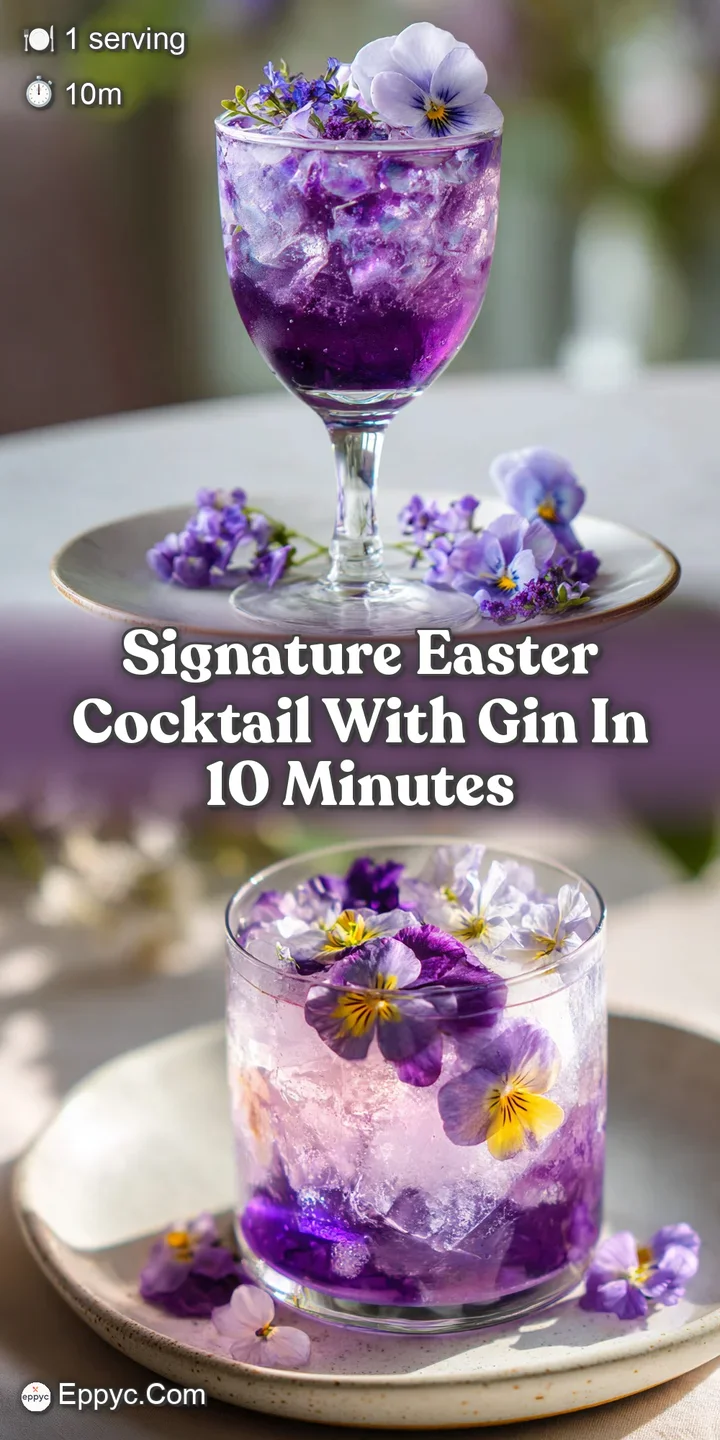
If you have edible flowers like pansies or violas, floating one on top of the foam is a showstopper. Because the foam is so dense, the flower will sit right on top without sinking. It looks like a piece of art.
The Perfect Brunch Pairing
This drink is tart and floral, which makes it a great partner for savory brunch items. It cuts right through the richness of an Eggs Benedict or a salty ham. If you're looking for another easy sipper to round out your drink station, consider learning How to Mix recipe for guests who prefer something with an herbal, bitter profile.
Debunking Cocktail Myths
"You must use expensive gin for it to be good." Honestly, don't even bother with the $60 bottles if you're mixing it with egg whites and lavender. The nuances of a super premium gin get lost in the foam. A mid range gin with good botanical notes is all you need for a heartfelt, impressive result.
"The egg white will make the drink taste like eggs." This only happens if the egg isn't fresh or if you don't use enough citrus or bitters. When balanced correctly, the egg white adds zero flavor it's purely there for that velvety, cloud like texture that makes the drink feel expensive.
"Shaking harder makes more foam." It's actually about the length of the shake and the temperature during the dry shake. A steady, rhythmic shake for 30 seconds is better than a 5 second "blast." You're building a structure, similar to making a meringue.
You can't rush the physics of protein denaturation!
Recipe FAQs
What is a good Easter cocktail?
Yes, this gin cocktail is excellent. It uses natural pH indicators for a dramatic color change and floral notes of lavender perfect for spring.
What is the most popular gin cocktail?
No, the Martini is not the most popular overall right now. While historically dominant, sours like the Gin Daisy or Gin Fizz, which use fresh citrus and egg white, are trending heavily for events.
What cocktail goes with gin?
This signature recipe pairs well with savory brunch items. The tartness cuts through rich dishes like hollandaise or salty ham, similar to how acid balances richness in our Classic Chicken Francaise Recipe.
What drink is associated with Easter?
Bright, floral, and visually striking cocktails are associated with Easter. Think pastels, fresh herbs, and citrus, moving away from the deep spices of winter drinks.
How do I ensure my egg white foam is thick and velvety?
Perform the dry shake first for 30 seconds. Shake vigorously without ice to build structure, then add ice for the wet shake to chill and finalize the aeration.
Is it true I can skip straining the lemon juice?
No, this is a common misconception, especially with egg whites. Pulp and zest left in the mix will disrupt the protein structure, resulting in a weak or flat foam layer.
Can I make the lavender syrup ahead of time?
Yes, prepare the lavender simple syrup up to two weeks in advance. Storing it in the fridge allows the floral essence to fully marry with the sugar, much like allowing flavors to meld in a slow cooking process found in our Homemade Enchilada Seasoning recipe.
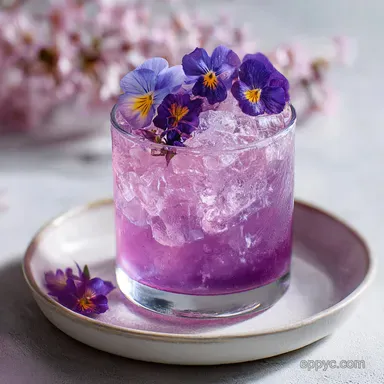
Signature Easter Gin Cocktail
Ingredients:
Instructions:
Nutrition Facts:
| Calories | 257 calories |
|---|---|
| Protein | 3.8 g |
| Fat | 0.1 g |
| Carbs | 21 g |
| Fiber | 0.1 g |
| Sugar | 19 g |
| Sodium | 62 mg |
