Slow Cooker Beef Tips and Gravy
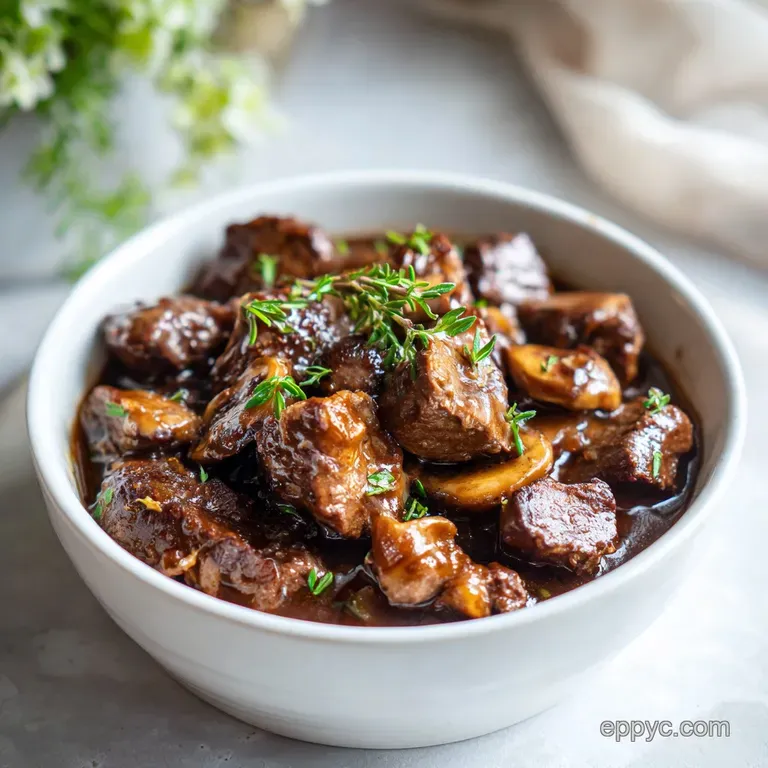
- Time: Active 15 minutes, Passive 8 hours, Total 8 hours 15 minutes
- Flavor/Texture Hook: Savory, mahogany rich beef in a silky, umami packed gravy
- Perfect for: Stress free Sunday dinners or hands off weeknight comfort
- Essential Timelines for Success with Slow Cooker Beef Tips and Gravy
- Selecting the Perfect Elements for Slow Cooker Beef Tips and Gravy
- Tools to Empower Your Home Cooking
- Steps for a Flawless Finish
- Fixing Common Gravy and Meat Issues
- Adjusting the Recipe for Different Crowds
- Common Myths About Slow Cooking Beef
- Managing Your Leftovers and Reducing Waste
- The Best Ways to Enjoy Your Meal
- Recipe FAQs
- 📝 Recipe Card
The first thing you’ll notice isn't the sound, it’s the smell that deep, primal aroma of beef hitting a screaming hot pan. There’s a specific moment when the neutral oil starts to shimmer and a tiny wisp of smoke rises, signaling it’s time.
As the 3 lbs of beef chuck roast chunks hit the cast iron, the hiss is immediate and loud. I remember the first time I rushed this step; I ended up with gray, boiled looking meat that lacked any soul. Now, I wait for that dark, mahogany crust to form.
It’s that crust that eventually dissolves into the gravy, giving it a color so rich it looks like melted chocolate, but tastes like pure, concentrated Sunday afternoon.
By the time the timer hits the 8 hour mark, the air in your kitchen won't just smell like food; it’ll feel like home. The onions have practically vanished, having sacrificed their structure to become part of the sauce, and the garlic has mellowed into a sweet, buttery background note.
I love using my digital slow cooker for this because I can set it and literally forget it while I’m out running errands or working. There is something so empowering about knowing that technology is doing the heavy lifting for you, turning tough connective tissue into something you can eat with a spoon.
If you’ve ever struggled with "dry" slow cooker meat, trust me, this specific method of using bone broth and a long, low temperature cook is the ultimate fix.
Essential Timelines for Success with Slow Cooker Beef Tips and Gravy
When we talk about making slow cooker beef tips and gravy, we’re really talking about a marriage between old school browning and modern temperature control. The reason this works so well isn't magic; it's physics.
We are taking a tough, hardworking muscle and giving it enough time for the internal proteins to relax and the collagen to melt. This isn't a dish you want to rush. While you can use the high setting, the low setting for 8 hours is where the true transformation happens.
- Collagen Melt
- At around 160°F (71°C), the tough connective tissue in the chuck roast begins to convert into gelatin, which provides that silky mouthfeel.
- Aromatic Infusion
- The 8 hour window allows the onion soup mix and garlic to permeate the meat entirely, rather than just coating the outside.
- Maillard Integration
- The browned bits (fond) from your initial sear slowly dissolve into the bone broth, creating a natural gravy base that tastes "aged" in just a few hours.
- Starch Activation
- Adding the cornstarch slurry at the very end during the "high" phase ensures the gravy thickens without becoming gummy or breaking.
| Cook Method | Total Time | Beef Texture | Gravy Consistency | Best For |
|---|---|---|---|---|
| Slow Cooker (Low) | 8 hours 15 mins | Fork tender, falling apart | Thick and glossy | Ultimate comfort |
| Slow Cooker (High) | 4 hours 15 mins | Tender but holds shape | Medium thick | Quicker turnaround |
| Stovetop Braise | 3 hours 00 mins | Very tender | Most concentrated | Weekend project |
Choosing the right method depends on your schedule, but the results from the 8 hour low cook are consistently the most "velvety" and flavorful. If you find yourself needing a different beef fix on a shorter timeline, you might want to look into my Slow Cooker Beef and Broccoli which handles the meat differently for a faster result.
Selecting the Perfect Elements for Slow Cooker Beef Tips and Gravy
The ingredients in this dish are a mix of "from scratch" staples and smart, time saving shortcuts. I’ve tried making this with just salt and pepper, but honestly, the combination of the onion soup mix and the brown gravy mix provides a specific savory profile that’s hard to replicate without a 24 hour stock reduction.
Using 3 lbs of beef chuck roast is the gold standard here because of its fat to lean ratio.
| Ingredient | Science Role | Pro Secret |
|---|---|---|
| Chuck Roast | High collagen content | Cut against the grain to ensure the shortest muscle fibers. |
| Beef Bone Broth | Provides gelatinous body | Use bone broth over standard stock for a richer, stickier sauce. |
| Worcestershire | Adds acidity and fermented depth | Don't skip this; it acts as a "brightener" for the heavy fats. |
| Cornstarch | Thickening agent | Always mix with cold water to prevent "clumping" in the hot liquid. |
We use 2 tablespoons of neutral oil for the sear because it has a high smoke point, which is crucial for getting that dark crust without burning the oil. The 1 teaspoon of coarse black pepper adds a necessary bite that cuts through the richness of the 2 cups of beef bone broth.
I prefer bone broth because it empowers the dish with more protein and a better mouthfeel than water or thin bouillon.
Tools to Empower Your Home Cooking
You don't need a professional kitchen to pull off high end slow cooker beef tips and gravy, but a few specific tools make the process much more efficient. First, a heavy skillet is non negotiable. I personally swear by a 12 inch cast iron pan.
It retains heat so well that when you drop 3 lbs of cold beef in, the temperature doesn't plummet, ensuring you actually sear the meat instead of steaming it in its own juices.
A good set of tongs is also vital. You want to be able to turn each chunk of beef individually to ensure you get that mahogany color on at least two sides. For the slow cooker itself, a 6 quart or 7 quart model is perfect.
If the pot is too large, the liquid might evaporate too quickly; if it’s too small, the meat won't be submerged properly in the 2 cups of bone broth. Finally, a small whisk is your best friend when it comes time to mix the 2 tablespoons of cornstarch with the water. No one wants "flour nuggets" in their gravy.
Steps for a Flawless Finish
1. The Foundation of Flavor
Start by cutting your 3 lbs of beef chuck roast into 1.5 inch chunks. Don't go too small, or they’ll disintegrate into the sauce. Season them liberally with that 1 teaspoon of coarse black pepper. I don't add extra salt here because the onion soup and gravy packets already have plenty.
2. The over High heat Sear
Heat your 2 tablespoons of neutral oil in the skillet over medium high heat until it's shimmering and just about to smoke. Add the beef in batches. If you crowd the pan, the temperature drops and the meat will turn gray. We want a dark, mahogany crust. Once seared, move the meat to the slow cooker.
3. Assembling the Aromatics
Directly into the slow cooker, add your sliced yellow onion and the 3 minced garlic cloves. The onion should be sliced thickly so it doesn't completely dissolve it provides a nice texture later on. Sprinkle the onion soup mix and the brown gravy mix over the top.
4. Liquid Gold
Pour in the 2 cups of beef bone broth and the 2 tablespoons of Worcestershire sauce. Give everything a gentle stir. The meat doesn't need to be completely covered, but it should be mostly submerged.
5. The Long Simmer
Cover the pot and set it to Low for 8 hours. Resist the urge to peek! Every time you lift the lid, you lose heat and steam, which can add 15-20 minutes to your cook time. At the 8 hour mark, the beef should be "shatter" tender when pressed with a fork.
6. The Thickening Phase
Turn the slow cooker to High. In a small bowl, whisk the 2 tablespoons of cornstarch with 2 tablespoons of cold water until smooth. Pour this slurry into the bubbling liquid and stir gently.
7. The Final Texture
Let it cook on High for another 15 minutes. You will see the liquid transform from a thin broth into a velvety, glossy gravy that coats the back of a spoon.
8. Garnish and Serve
Turn off the heat. Stir in the 1 tablespoon of chopped fresh parsley. This adds a pop of color and a fresh, herbaceous note that balances the heavy umami of the dish. Serve it hot over your favorite base.
Fixing Common Gravy and Meat Issues
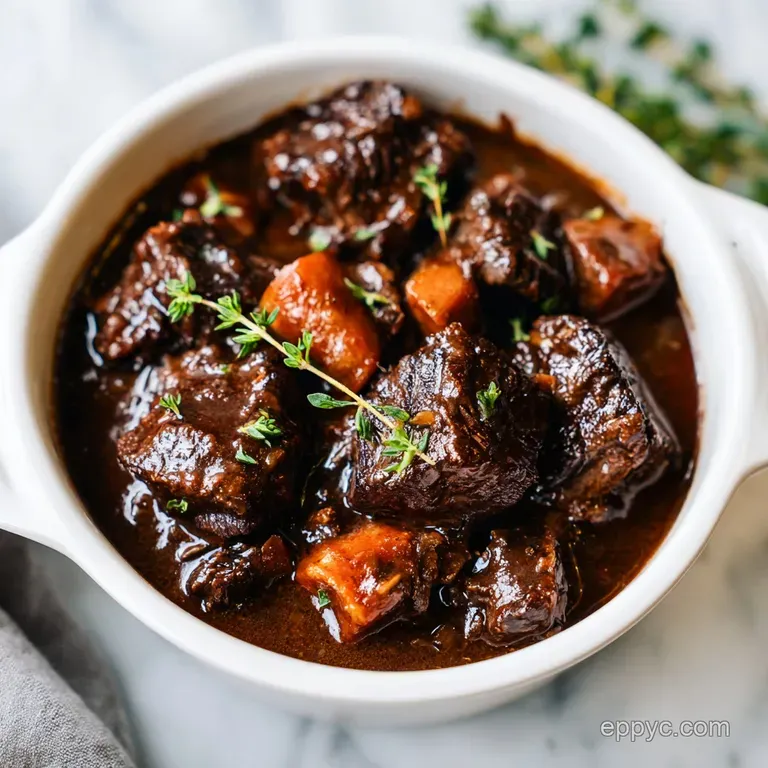
Even with the best intentions, things can go sideways in the kitchen. The most common mistake I see with slow cooker beef tips and gravy is a sauce that feels too thin or meat that feels "tough." Usually, "tough" meat in a slow cooker just means it hasn't cooked long enough.
People get scared and turn it off early, but chuck roast needs that full 8 hours to break down.
| Problem | Root Cause | Solution |
|---|---|---|
| Meat is Chewy | Collagen hasn't melted yet | Cook for 1 more hour on Low; check every 30 mins. |
| Gravy is Lumpy | Slurry added to hot liquid directly | Strain the gravy or use an immersion blender briefly. |
| Too Salty | Broth was high sodium | Add a peeled, halved potato for 30 mins to absorb salt, then discard. |
Mistakes to Avoid Checklist
- ✓ Never skip the searing step; it’s where 50% of your flavor lives.
- ✓ Don't use "lean" stew meat; you need the fat of the chuck roast for moisture.
- ✓ Always whisk cornstarch with cold water, never hot, to avoid lumps.
- ✓ Avoid lifting the lid during the first 7 hours of cooking.
- ✓ Pat the beef dry with paper towels before searing to get a better crust.
If you find that your beef is consistently coming out too dry, it might be the cut of meat. Choosing the best meat for pot roast is a skill in itself, and I always recommend looking for heavy marbling (those white flecks of fat) inside the muscle.
Adjusting the Recipe for Different Crowds
Scaling this recipe is fairly straightforward, but you have to be careful with the liquid and salt ratios. If you are cutting the recipe in half to serve 3 people, you’ll use 1.5 lbs of beef, but I recommend still using at least 1.5 cups of broth to ensure there’s enough liquid to keep the slow cooker from scorching the meat.
For the seasoning packets, you can use about 2/3 of each.
If you are doubling the recipe for a party (12 servings), use a 7 quart or 8 quart slow cooker. You’ll need to sear the 6 lbs of beef in several more batches don't rush this!
For the liquids, you don't necessarily need to double the broth to 4 cups; 3 to 3.5 cups is usually enough because the meat will release a significant amount of its own juices. When doubling, keep the spices at about 1.5x the original amount and taste at the end, as salt can become overwhelming when scaled linearly.
| Servings | Beef Quantity | Broth Amount | Slow Cooker Size |
|---|---|---|---|
| 2-3 People | 1.5 lbs | 1.5 cups | 3-4 Quart |
| 6 People | 3.0 lbs | 2.0 cups | 6 Quart |
| 10-12 People | 6.0 lbs | 3.5 cups | 7-8 Quart |
When making a larger batch, the time for the gravy to thicken after adding the slurry might increase to 20 or 25 minutes simply because there is more volume to heat up. Just be patient and wait for those bubbles!
Common Myths About Slow Cooking Beef
Myth: Searing "seals in" the juices. This is one of those kitchen tales that just won't die. Searing actually causes the surface of the meat to lose moisture because of the intense heat.
However, we do it for the Maillard reaction the chemical process that creates hundreds of new flavor compounds. The "juiciness" of the final dish comes from the melted fat and gelatin, not from "sealed" juices.
Myth: You can't overcook meat in a slow cooker. While it’s hard to do, you actually can overcook it. If left for 12+ hours, the muscle fibers will eventually give up all their moisture and turn into a "mushy" or stringy texture.
8 hours on low is the sweet spot for a 3 lb roast.
Myth: You must add water to a slow cooker. Many people think you need to submerge the meat in water. In reality, the 2 cups of bone broth combined with the moisture released by the beef and the sliced yellow onion is more than enough to create a rich gravy.
Adding too much water just dilutes the flavor and leaves you with a bland soup.
Managing Your Leftovers and Reducing Waste
This is one of those magical dishes that actually tastes better the next day. As it sits in the fridge, the flavors in the gravy continue to meld and deepen. I’ve found that the 3 lbs of beef chuck roast usually provides enough for a couple of days of lunches for my family.
- Storage
- Store leftovers in an airtight container in the fridge for up to 4 days. If the gravy looks like jelly when it's cold, don't worry that’s just the natural gelatin from the bone broth! It will turn back into a silky liquid once heated.
- Freezing
- This recipe freezes beautifully. I like to freeze it in individual portions. It will stay fresh for up to 3 months. To reheat, thaw in the fridge overnight and warm it gently on the stovetop with a splash of water to loosen the gravy.
- Zero Waste
- If you have leftover gravy but no meat, use it as a base for a "shepherd's pie" by mixing in some frozen peas and carrots and topping it with mashed potatoes. You can also use the leftover onion scraps and beef trimmings to start a homemade beef stock for your next batch.
The Best Ways to Enjoy Your Meal
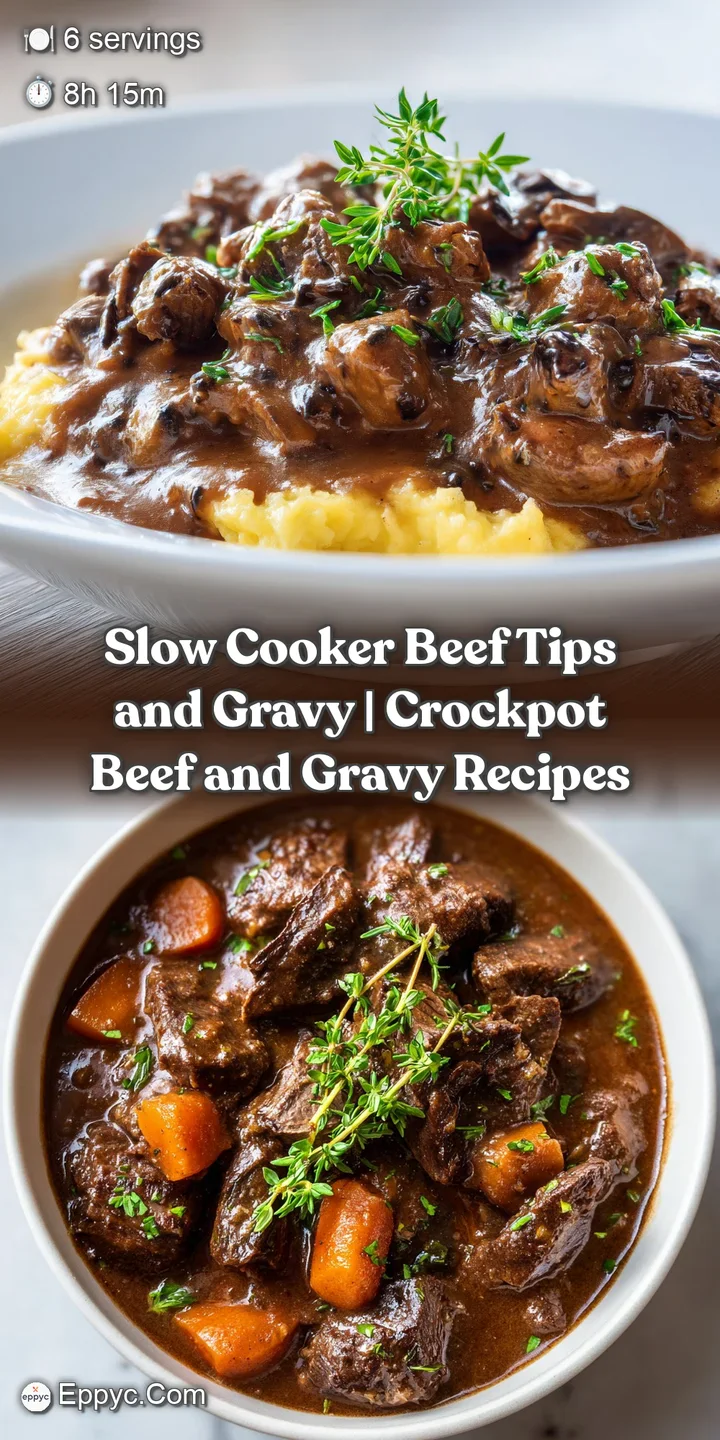
The classic way to serve slow cooker beef tips and gravy is over a mountain of buttery mashed potatoes. The gravy creates little rivers in the potatoes, and it’s pure heaven.
However, if you want to switch things up, wide egg noodles are a fantastic alternative; they catch the gravy in their curves and provide a slightly different chew.
If you’re looking for a low carb option, try serving the beef tips over roasted cauliflower or a cauliflower mash. The savory gravy is so flavorful that you won't even miss the starch. I also love serving this with a side of crusty bread to mop up every last drop of that mahogany sauce. If you want a more "set it and forget it" beef experience with a different flavor profile, you have to try my Mississippi Pot Roast recipe — it’s a total crowd pleaser that uses a very similar technology driven approach to home cooking.
Whatever you choose as your base, remember to add that final sprinkle of fresh parsley. It might seem like a small thing, but that tiny bit of green provides a visual and flavor contrast that takes this from a "crockpot meal" to a "heartfelt masterpiece." Happy cooking!
Recipe FAQs
Is it true I must brown the beef before slow cooking?
Yes, this is essential for depth of flavor. Searing the beef in a skillet over medium high heat until a dark, mahogany crust forms creates the foundational savory profile that slow cooking alone cannot replicate.
How to thicken the gravy at the end?
Whisk two tablespoons of cornstarch with two tablespoons of water to create a slurry. Stir this mixture directly into the slow cooker and continue cooking on high for 15 minutes until the gravy reaches a velvety consistency.
How to ensure the beef becomes fork tender?
Cook the beef on Low for 8 hours to allow the collagen to fully render. This gentle, extended cooking time is the secret to breaking down tough chuck roast fibers; if you mastered this low and slow technique here, you can apply the same logic to other tough cuts.
Can I use a different cut of beef for this recipe?
No, stick with beef chuck roast. Other cuts lack the necessary fat and connective tissue required to withstand eight hours of cooking without becoming dry or stringy.
How to prevent the garlic from burning during prep?
Add the minced garlic only when combining the ingredients in the slow cooker. Do not include the garlic in the hot skillet during the searing phase, as it will scorch and turn bitter before the beef is finished.
Should I trim all the fat off the beef chuck roast?
No, leave some fat on the meat. The fat renders during the long cooking process, which is necessary to keep the tips succulent and provide richness to the overall gravy.
How to serve this dish for the best experience?
Serve the beef and gravy over a bed of mashed potatoes, egg noodles, or rice. These starch bases are designed to soak up the savory gravy, and a final garnish of fresh chopped parsley adds a necessary bright, herbal finish.
Slow Cooker Beef Tips
Ingredients:
Instructions:
Nutrition Facts:
| Calories | 591 calories |
|---|---|
| Protein | 46.9 g |
| Fat | 38.7 g |
| Carbs | 11.5 g |
| Fiber | 1.2 g |
| Sugar | 3.8 g |
| Sodium | 785 mg |
