Beef and Broccoli: Silky Velvety Texture
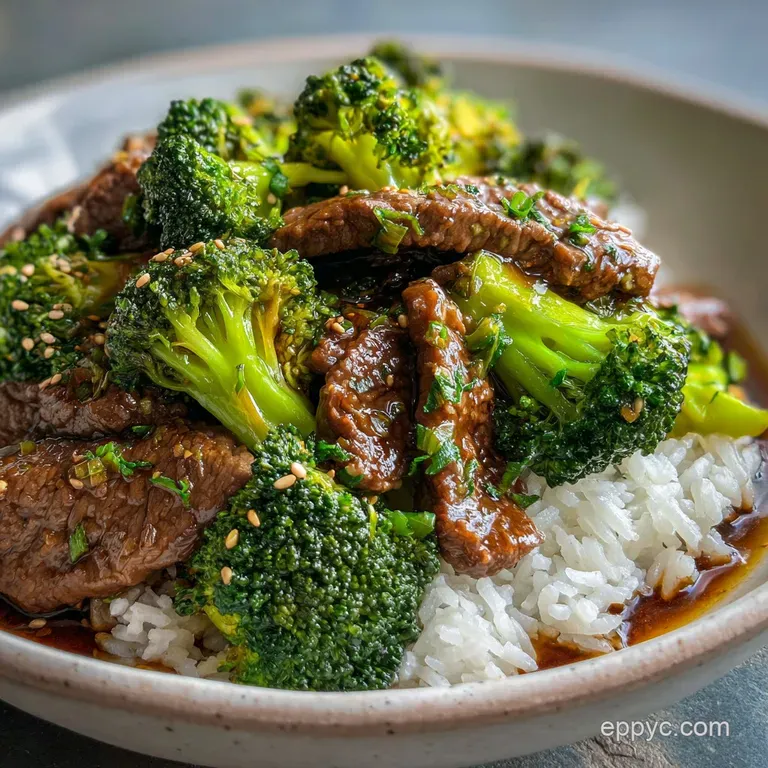
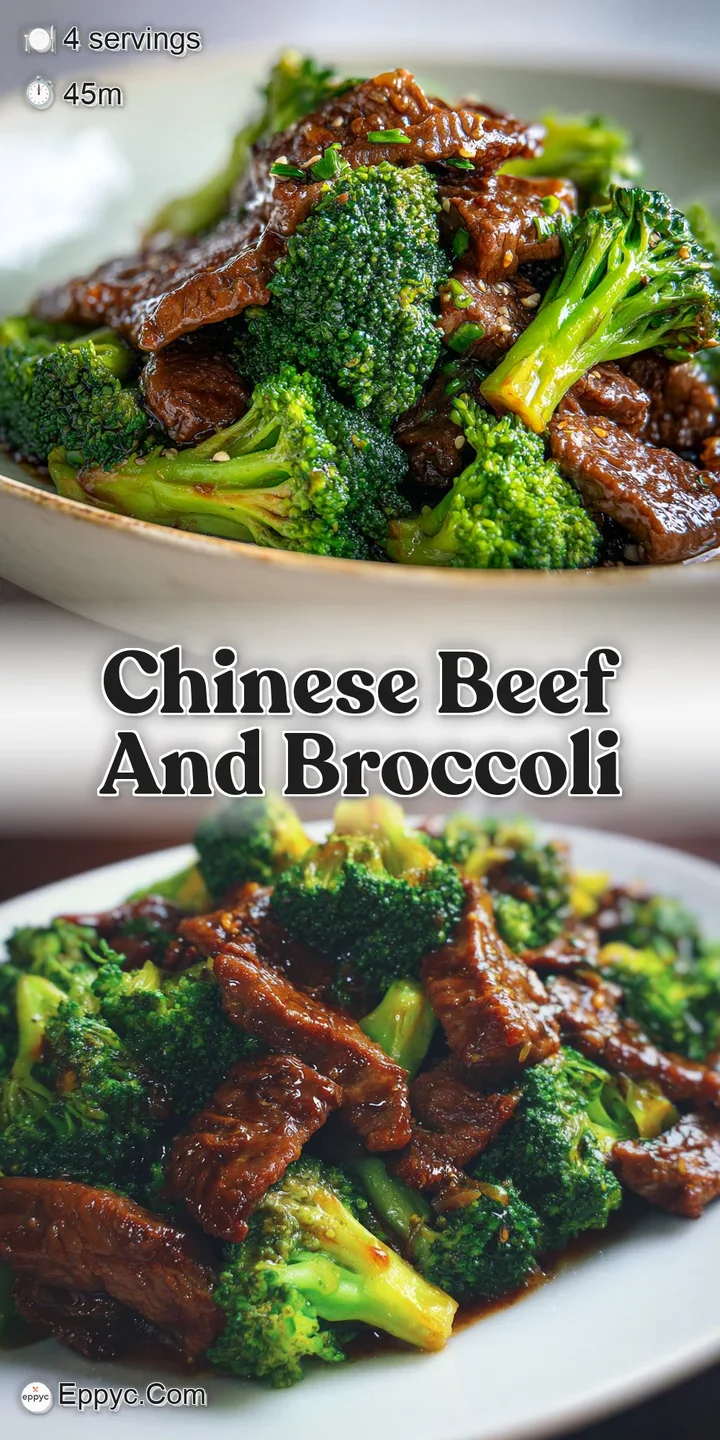
- Time: Active 35 minutes, Passive 10 minutes, Total 45 minutes
- Flavor/Texture Hook: Velvety beef paired with snap crispy broccoli in a glossy, dark umami sauce.
- Perfect for: Reclaiming your weeknight dinner from expensive food delivery apps.
- Bringing the Sizzle Home with Authentic Beef and Broccoli
- The Chemical Magic That Transforms Kitchen Basics into Umami
- Planning Your Kitchen Strategy for a Flawless Forty Five Minutes
- Sourcing the High-Quality Elements for a Professional Result
- Equipping Your Digital Kitchen for High Performance Stir Fry Results
- Navigating the Strategic Stages from Slicing to Final Sizzle
- Navigating Common Pitfalls for the Most Tender Texture Possible
- Adapting Your Dish with Smart Swaps and Flavor Profiles
- Maximizing Your Meal with Smart Storage and Reheating Methods
- How to Serve and Enjoy
- Myths Regarding Stir Fry Success
- Very High in Sodium
- Recipe FAQs
- 📝 Recipe Card
Bringing the Sizzle Home with Authentic Beef and Broccoli
The sharp sizzle of cold steak hitting a blistering pan is the digital signature of a kitchen that is about to produce something special. I remember standing in my tiny first apartment, clutching a lukewarm takeout container and wondering why my home attempts always tasted like soggy vegetables and shoe leather meat.
It felt like there was a secret technology I wasn't invited to use, a barrier between me and that glossy, dark sauce that defines the best Chinese Beef and Broccoli.
The breakthrough happened when I stopped treating the recipe like a chore and started treating it like a heartfelt experiment in thermodynamics. I realized that the "magic" wasn't a special wok or a hidden ingredient, but a series of small, intentional steps that empower the ingredients to shine.
You do not need a jet engine burner to get that restaurant quality finish; you just need to understand how to manipulate the proteins and the heat.
This guide is designed to walk you through the prep flow and cooking execution that I spent years refining. We are going to use specific techniques like velveting to ensure every bite of beef is buttery and tender, while keeping the broccoli vibrant and snappy.
It is a technical triumph you can actually eat, and once you master the timing, you'll never look at a delivery menu the same way again.
The Chemical Magic That Transforms Kitchen Basics into Umami
Success in the kitchen often comes down to chemistry rather than just luck. When we talk about this specific stir fry, we are looking at two major reactions: the tenderization of the muscle fibers and the thickening of the sauce through starch gelatinization.
Understanding these helps you adjust on the fly if the sauce looks too thin or the meat feels too resistant.
- The pH Shift of Velveting: Baking soda raises the pH level on the meat's surface, which prevents the proteins from bonding too tightly when heat is applied. This keeps the fibers loose and velvety instead of shrinking and toughening into a rubbery texture.
- Starch Gelatinization: Cornstarch granules swell and burst when heated in the presence of liquid, creating a mesh that traps water and thickens the sauce into a glossy coating.
- The Maillard Reaction: At high heat, the sugars in the brown sugar and the amino acids in the beef react to create hundreds of flavor compounds, providing that signature charred, savory depth.
The pH Shift of Velveting
The sodium bicarbonate acts as a molecular buffer. By soaking the flank steak in a small amount of baking soda, we are essentially pre empting the "squeeze" that happens during cooking. Usually, heat causes muscle proteins to denature and coil up, pushing out moisture.
The alkaline environment created by the soda keeps those proteins relaxed, so the moisture stays inside the meat.
| Thickness | Internal Temp | Rest Time | Visual Cue |
|---|---|---|---|
| 1/8 inch | 145°F | 2 minutes | Opaque center with charred edges |
| 1/4 inch | 150°F | 3 minutes | Deep brown exterior, no pink |
| 1/2 inch | 160°F | 5 minutes | Firm texture, dark mahogany color |
Choosing the right cut and preparation method is the first step toward a heartfelt meal that feels professional. While some prefer the convenience of pre cut meat, taking the extra ten minutes to slice a 1 lb flank steak yourself against the grain ensures the shortest possible muscle fibers.
This technical detail is what separates a chewy dish from one that melts in your mouth.
Planning Your Kitchen Strategy for a Flawless Forty Five Minutes
Stir frying is a high speed sport. Once the heat is on, you won't have time to peel ginger or hunt for the soy sauce. I like to think of this as a digital workflow: you have the input phase (prep), the processing phase (cooking), and the output (plating).
If your inputs aren't ready, the entire system crashes, usually resulting in burnt garlic or mushy broccoli.
We start with the "Cold Prep" phase. This involves slicing the beef while it is slightly firm and whisking the marinade. Flank steak is the gold standard here because of its intense beefy flavor and predictable grain.
After the beef is coated in its 1 tsp of baking soda and 1 tbsp of soy sauce, it needs about 20 minutes to "process." This is your window to chop the 1 lb of broccoli and mince your 3 cloves of garlic and 1 inch of ginger.
Chef Tip: Place your flank steak in the freezer for 15 minutes before slicing. This firms up the fat and muscle, allowing you to get those paper thin, 1/8 inch slices that the sauce clings to so beautifully.
| Component Analysis | Science Role | Pro Secret |
|---|---|---|
| Cornstarch | Thickening agent | Mix with cold liquid first to avoid "lumps" of starch |
| Shaoxing Wine | Aroma & Acid | Adds a fermented depth that regular vinegar lacks |
| Dark Soy Sauce | Color & Viscosity | Provides the rich, "ebony" look without adding too much salt |
The role of the dark soy sauce is often misunderstood. While regular soy sauce provides the salt, the 1 tbsp of dark soy sauce in this recipe is there for the aesthetic and a slight molasses like sweetness. It is the secret to that deep, dark brown glaze that makes the green broccoli pop in contrast.
If you skip it, your dish will taste fine but look pale and uninviting.
Sourcing the high-quality Elements for a Professional Result
When you are ready to assemble your ingredients, precision is your best friend. Stir fry is a balance of salt, sweet, and aromatics. Each component in this list has been selected to empower the overall flavor profile.
- 1 lb flank steak: Sliced 1/8 inch thick against the grain. Why this? It has a bold flavor and takes well to velveting.
- 1 tsp baking soda: The chemical tenderizer. Why this? Softens tough fibers instantly.
- 2 tbsp cornstarch: Used in the marinade and the sauce. Why this? Creates the velvety texture and thickens the glaze.
- 3 tbsp soy sauce: The primary salt source.
- 1 tbsp Shaoxing wine: Traditional Chinese cooking wine. Why this? Cuts through the richness of the beef.
- 1/2 cup low sodium beef broth: The liquid base for the sauce.
- 1/4 cup oyster sauce: The "body" of the sauce. Why this? Adds thickness and a complex, savory sweet funk.
- 1 tbsp dark soy sauce: For that iconic deep color.
- 1 tbsp brown sugar: Balances the salt.
- 1 tsp toasted sesame oil: A finishing aromatic.
- 1 lb broccoli florets: Cut into bite sized pieces.
- 3 cloves garlic: Finely minced.
- 1 inch fresh ginger: Grated.
- 3 tbsp neutral oil: Like canola or grapeseed.
- 1/4 cup water: For steaming the broccoli.
If you find yourself missing an ingredient, don't panic. Cooking is an evolving technology. For example, if you're looking to explore a different cooking method, you might find my Crock Pot Beef recipe helpful for those days when you don't want to stand over a hot stove. However, for this over high heat version, the Shaoxing wine is a key player. If you can't find it, dry sherry is a respectable substitute that mimics that fermented tang.
Equipping Your Digital Kitchen for High Performance Stir Fry Results
You don't need a thousand dollar setup to make world class Beef and Broccoli, but you do need the right tools for the job. Heat management is the most important factor. A heavy bottomed skillet or a carbon steel wok is ideal because they retain heat even when you add cold meat.
If your pan is too thin, the temperature will drop the moment the beef hits, and instead of searing, the meat will grey and steam in its own juices.
I also recommend using a digital scale to measure your liquids if you want absolute consistency. While tablespoons work, measuring by weight empowers you to replicate the exact sauce viscosity every single time. A microplane for the ginger and a sharp chef's knife are the only other "high tech" requirements.
A dull knife will crush the fibers of the flank steak rather than slicing them, which leads to a loss of moisture before the meat even touches the heat.
| Fresh Component | Shortcut Alternative | Impact on Final Result |
|---|---|---|
| Fresh Ginger Root | Ginger Paste (1 tbsp) | Slightly more acidic; less "zingy" punch |
| Fresh Garlic Cloves | Jarred Minced Garlic | Milder flavor; lacks the sharp aromatic kick |
| Fresh Broccoli | Frozen Florets | Note: Will be softer; skip the steaming step |
Using fresh ingredients is always the goal for that heartfelt, home cooked feel. However, I know life happens. If you use frozen broccoli, make sure to thaw it and pat it completely dry. Any excess water will dilute your sauce and ruin the "shatter" of the sear on the beef. For a budget friendly approach to this meal, you can check out my Beef Broccoli Recipe which focuses on maximizing flavor with accessible pantry staples.
Navigating the Strategic Stages from Slicing to Final Sizzle
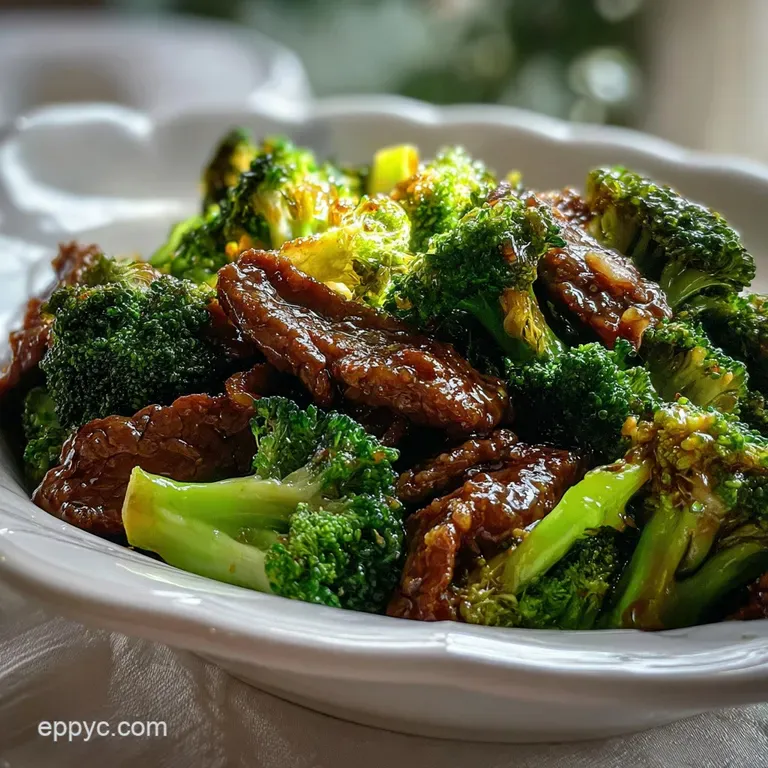
This workflow is divided into three distinct phases: The Marinate, The Steam, and The Sear. If you follow this order, you ensure that every component is cooked to its specific "perfection point" without overcomplicating the process.
- Slice the beef. Cut the 1 lb flank steak into 1/8 inch slices against the grain. Note: Slicing against the grain breaks up long muscle fibers for maximum tenderness.
- Apply the velvet. Toss the beef with 1 tsp baking soda, 1 tbsp cornstarch, 1 tbsp soy sauce, and 1 tbsp Shaoxing wine. Let it sit for 20 minutes.
- Whisk the sauce. In a small bowl, combine the beef broth, oyster sauce, dark soy sauce, brown sugar, sesame oil, and the remaining 1 tbsp of cornstarch.
- Par cook the broccoli. Heat 1 tbsp oil in the wok, add the 1 lb of broccoli and 1/4 cup water. Steam for 2 minutes until bright green and crisp tender.
- Clear the deck. Remove the broccoli and wipe the pan dry. This is essential to prevent the beef from sticking.
- Sear the protein. Add 2 tbsp oil. Wait until the oil is shimmering and wisps of smoke appear. Spread the beef in a single layer.
- Develop the crust. Cook for 2 minutes without moving the meat until a deep brown crust forms. Flip and sear for another minute.
- Aromatize the oil. Push the beef to the side and add the minced garlic and grated ginger. Sauté for 30 seconds until fragrant.
- Emulsify the sauce. Pour the sauce mixture into the pan. Stir constantly for 1 minute until the liquid bubbles and turns glossy.
- The final toss. Return the broccoli to the pan. Toss for 30 seconds until everything is coated in a velvety glaze.
Chef Tip: Never crowd the pan. If your skillet isn't large enough to hold the meat in a single layer with space between the pieces, sear the beef in two batches. Overcrowding drops the temperature and turns your "fry" into a "boil."
Navigating Common Pitfalls for the Most Tender Texture Possible
Even with the best instructions, things can go sideways. The most common complaint I hear is that the beef is still "chewy" or the sauce is too salty. Usually, these issues stem from a technical oversight during the prep phase or a misunderstanding of how the ingredients react to heat.
Correcting Tough or Chewy Beef
If your beef feels like rubber, you likely sliced it with the grain or didn't give the baking soda enough time to work. The grain of the meat looks like long lines; you want to cut perpendicular to those lines.
If the meat is already cooked and tough, there isn't much you can do for this batch, but you can "save" the experience by slicing the cooked pieces even thinner before serving.
Fixing a Watery Sauce
A watery sauce usually means the cornstarch didn't reach its "activation temperature" or there was too much moisture left on the broccoli. The sauce must come to a full boil to thicken. If it's still thin after boiling, whisk 1 tsp of cornstarch with 1 tsp of cold water and stir it in.
Never add dry cornstarch directly to a hot pan, or you will create tiny, insoluble "flour dumplings."
| Problem | Root Cause | Solution |
|---|---|---|
| Meat is grey/boiled | Pan was too cold or overcrowded | Sear in smaller batches on higher heat |
| Sauce is too salty | Used regular soy instead of low sodium broth | Add a splash of water and a pinch more sugar |
| Garlic is bitter | Burnt during the sauté phase | Add aromatics only when the sauce is almost ready |
The key to a heartfelt kitchen is learning from the "mistakes" rather than letting them discourage you. We have all burnt the garlic at least once!
Common Mistakes Checklist: - ✓ Did you pat the beef dry? If the marinade is too wet, the meat won't sear. - ✓ Is the pan smoking? If not, the beef will stick to the bottom.
- ✓ Did you whisk the sauce? Cornstarch settles at the bottom of the bowl; give it a stir right before pouring. - ✓ Is the broccoli dry? Drain every drop of water after steaming to keep the sauce thick.
Adapting Your Dish with Smart Swaps and Flavor Profiles
One of the reasons I love Beef and Broccoli is that the base architecture is so sturdy. Once you have the technique down, you can swap proteins or veggies to suit what you have in the fridge. This empowers you to be an innovator in your own kitchen.
If you are looking for a leaner option, chicken breast works beautifully with the same velveting technique. However, because chicken has less fat, you should reduce the sear time by about 30 seconds to prevent it from drying out.
For a spicy kick, I love adding 1 tbsp of Sambal Oelek or dried red chili flakes during the aromatic stage.
| Original Ingredient | Substitute | Why It Works |
|---|---|---|
| Flank Steak | Chicken Thighs | Note: Higher fat content stays juicy; adds a different flavor profile. |
| Oyster Sauce | Hoisin Sauce | Similar thickness, but much sweeter. Reduce the brown sugar if using. |
| Shaoxing Wine | Dry Sherry | Almost identical flavor profile and acidity level. |
If you want a truly different experience, you could even swap the beef for firm tofu. Just ensure you press the tofu for 30 minutes to remove moisture before tossing it in cornstarch and searing until the edges "shatter." The technology of the sauce remains the same, providing that heartfelt umami punch regardless of the protein.
Maximizing Your Meal with Smart Storage and Reheating Methods
Stir fry is often best eaten immediately, but we all love a good leftover lunch. The trick to keeping this dish from becoming a soggy mess is in the reheating strategy. When stored in an airtight container, it will stay fresh in the fridge for up to 3 days.
Storage: Let the dish cool completely before sealing the lid. This prevents steam from being trapped inside, which would continue to cook the broccoli and turn it into mush.
Freezing: While you can freeze Beef and Broccoli for up to 2 months, be warned that broccoli loses its "snap" after thawing. The beef, however, freezes and reheats perfectly. If you plan to freeze it, I suggest slightly undercooking the broccoli during the initial prep.
Zero Waste Tip: Don't throw away the broccoli stalks! Peel off the tough outer skin with a vegetable peeler, slice the tender inner core into matchsticks, and stir fry them right along with the florets. They have a lovely, mild sweetness that adds great texture.
How to Serve and Enjoy
To truly empower this dish, serve it over a bed of fluffy jasmine rice or brown rice. The rice acts as a sponge for that glossy sauce, ensuring not a single drop of umami goes to waste. If you're feeling fancy, garnish with a sprinkle of toasted sesame seeds or some thinly sliced green onions for a fresh, sharp finish.
This recipe is more than just a quick meal; it's a heartfelt connection to the flavors of your favorite restaurant, brought to life through your own technical skill. By mastering the prep flow and the science of velveting, you've turned a few simple ingredients into a masterpiece. Enjoy the sizzle, enjoy the aroma, and most importantly, enjoy the fact that you made it yourself. For more slow cooked variations of this classic, don't forget to look into my Beef and Broccoli recipe for those times when you want the stove to do all the work while you go about your day.
Myths Regarding Stir Fry Success
Many people believe that you need a "Wok Hei" (breath of the wok) or a massive flame to get restaurant results. This isn't true for home kitchens. The "breath of the wok" actually comes from the carbonization of oil on a seasoned pan at very high temperatures.
You can mimic this flavor by letting your beef sear undisturbed in a cast iron skillet until a dark, mahogany crust forms.
Another common misconception is that the sauce needs to be cooked for a long time to "develop flavor." In reality, overcooking the sauce will only cause the starch to break down, turning your glossy glaze into a thin, watery mess. Once it bubbles and thickens, it is done.
The flavor is already there in the quality of your oyster sauce and aromatics.
Very High in Sodium
1280 mg mg of sodium per serving (56% % of daily value)
The American Heart Association recommends limiting sodium intake to no more than 2,300mg per day for most adults. Ideally, aim for 1,500mg per day for even greater health benefits.
Sodium Reduction Tips for Your Recipe
-
Low-Sodium Broth-30%
Switch to a no-sodium or low-sodium beef broth. This simple swap can significantly cut the sodium in the dish, as broth is a major contributor.
-
Reduce Soy Sauce-20%
Use low-sodium soy sauce and decrease the amount by 1 tablespoon. You can also dilute it with a little water or rice vinegar to maintain the liquid volume.
-
Lower Sodium Oyster Sauce-20%
Opt for a lower sodium version of oyster sauce or consider using a small amount of Hoisin sauce as a substitute, as it is naturally less salty. Alternatively, use a mushroom based umami sauce in smaller quantity.
-
Dark Soy Caution-15%
Dark soy sauce is very high in sodium. Reduce the amount used by half or eliminate it entirely, compensating with a touch more brown sugar for color and sweetness.
-
Spice It Up!
Enhance the flavor with fresh herbs and spices like black pepper, ginger, garlic, and red pepper flakes to compensate for the reduced saltiness. These additions provide complexity without adding sodium.
Recipe FAQs
What is Chinese beef and broccoli sauce made of?
The sauce is primarily a balance of savory, sweet, and umami elements. It is made from a base of beef broth, thickened with cornstarch, and flavored heavily with oyster sauce, soy sauce, and brown sugar. The dark soy sauce provides the iconic deep coloring.
How do Chinese restaurants get beef so tender?
They use a chemical tenderizing process called velveting. This involves soaking the sliced beef in a mixture containing baking soda, which raises the pH level and prevents the proteins from seizing up when they hit the high heat of the wok.
What kind of beef do Chinese restaurants use for beef and broccoli?
Flank steak is the preferred cut for its deep beef flavor and texture. Skirt steak is also an excellent, budget friendly alternative that accepts the velveting process very well. You must slice it thinly against the grain for best results.
What makes beef and broccoli so tender?
The primary factor is the velveting technique, which uses baking soda. This small chemical step keeps the meat fibers relaxed during the quick, high heat sear. If you master this protein management, the same flavor balancing principles apply when you look at making a rich sauce like the one in our & Juicy Cooking recipe.
Is it true you must use Shaoxing wine, or can I substitute it?
No, you do not strictly have to use Shaoxing wine, but it adds authenticity. Dry sherry is the best substitute as it mimics the fermented, slightly acidic depth that the wine brings to cut through the richness of the beef fat.
How do I stop the broccoli from getting soggy in the stir fry?
Steam the broccoli separately and cook it only briefly before adding it back. Par-cooking the broccoli for just two minutes until it is bright green and crisp tender ensures it holds its texture when tossed in the hot sauce at the very end.
Why is my finished sauce thin and watery instead of glossy?
The sauce needs to reach a full, rolling boil to activate the cornstarch. If it's thin, whisk an additional teaspoon of cornstarch into a tablespoon of cold water first, then pour that slurry into the boiling sauce while stirring rapidly to ensure proper gelatinization.
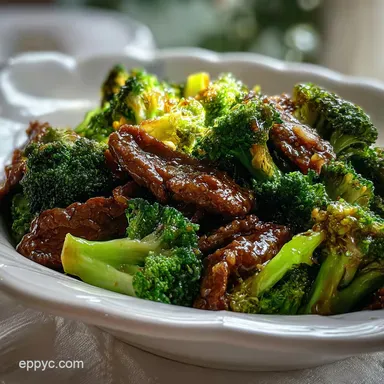
Velvety Beef And Broccoli
Ingredients:
Instructions:
Nutrition Facts:
| Calories | 418 kcal |
|---|---|
| Protein | 27.5 g |
| Fat | 25.2 g |
| Carbs | 17.8 g |
| Fiber | 3.2 g |
| Sugar | 6.4 g |
| Sodium | 1280 mg |
