Winter Soup with Roasted Root Vegetables: Velvety Smooth

- Time: Active 15 minutes, Passive 45 minutes, Total 1 hours
- Flavor/Texture Hook: Earthy, sweet, and velvety smooth
- Perfect for: Cold weather meal prep or a beginner friendly Sunday lunch
- Winter Soup with Roasted Root Vegetables: Simple Comfort
- The Heartfelt Magic of Roasting
- The Science of Why it Works
- Component Analysis for Better Cooking
- Essential Ingredients and Smart Subs
- Modern Gear for Traditional Flavors
- Step by Step Cooking Journey
- Fixing Common Soup Texture Problems
- Smart Budget Alternatives and Tweaks
- Debunking Root Vegetable Cooking Myths
- Storage and Zero Waste Tips
- Elevating Your Bowl for Serving
- Recipe FAQs
- 📝 Recipe Card
Winter Soup with Roasted Root Vegetables: Simple Comfort
Have you ever walked into a kitchen and been hit by that specific, nutty aroma of carrots and parsnips hitting high heat? It's honestly one of my favorite digital detox moments. I used to think making a winter soup meant just throwing everything into a pot of water and hoping for the best.
But let me tell you, that usually ends up tasting like... well, wet dirt. We've all been there, right?
I remember the first time I decided to roast my veggies before blending them. It was a complete mistake I had leftovers from a sheet pan dinner and didn't want them to go to waste. I tossed them with some broth, hit them with the immersion blender, and my mind was blown.
It wasn't just soup; it was a concentrated essence of winter. It felt heartfelt, warm, and surprisingly sophisticated for something made of dirt cheap ingredients.
This version of Winter Soup with Roasted Root Vegetables is the result of years of tinkering with ratios and textures. We’re using a mix of 500g carrots, 400g parsnips, and a generous 400g of sweet potato to get that specific density.
It's a recipe that empowers you to use what's in your pantry while delivering a result that feels like it came from a high end bistro. Let's get into how we make this magic happen.
The Heartfelt Magic of Roasting
When we talk about a Winter Soup with Roasted Root Vegetables, the "roasted" part isn't just a suggestion; it's the entire foundation. Boiling vegetables in water or broth causes their flavors to dilute.
Roasting, on the other hand, is a form of technology where heat removes moisture and concentrates the natural sugars. It’s the difference between a plain steamed carrot and one that’s charred, sweet, and complex.
The mix of textures here is what makes it special. The 300g of celery root (or celeriac) adds a subtle, herbal depth that balances the sugar in the 400g sweet potato. If you’ve never used celery root, don’t let the gnarly exterior scare you. Once you peel it, it’s pure, creamy gold.
It provides a structural backbone to the soup that keeps it from feeling like baby food.
Because we're aiming for that "shatter" of flavor, we don't skimp on the olive oil. Those 3 tablespoons of extra virgin olive oil help conduct heat across the surface of the vegetable chunks, ensuring every 1 inch piece gets that golden brown edge.
It's a simple step, but it's the secret to why this recipe stands out among 21 winter soups you might find online. Trust me, your taste buds will notice the difference.
The Science of Why it Works
Maillard Reaction: High heat triggers a chemical dance between amino acids and reducing sugars, creating hundreds of new flavor compounds that boiling cannot achieve.
Starch Gelatinization: Simmering the roasted 400g sweet potato and 500g carrots allows their starches to swell and burst, naturally thickening the liquid without any added flour.
| Method | Time | Texture | Best For |
|---|---|---|---|
| Oven Roast | 45 minutes | Caramelized/Velvety | Deep flavor, complex sweetness |
| Boil/Simmer | 25 minutes | Soft/Watery | Quick prep, milder flavor |
| Slow Cooker | 6 hours | Very soft/Mashed | Hands off, less caramelization |
Roasting at 200°C is the sweet spot for these specific root vegetables. If you go too low, they just steam; too high, and the 4 cloves of garlic will burn before the carrots are tender.
This specific thermal technology ensures the center of the 1 inch chunks is creamy while the outside is nearly "shattered" with browned goodness.
Component Analysis for Better Cooking
To truly empower your cooking, you need to understand the roles each player serves in the pot. We aren't just tossing things in randomly; each measurement, like the 1.5 liters of vegetable broth, is calculated to ensure the final viscosity is pourable but rich. If you enjoy deep savory flavors, this broth reminds me of my Turkey Neck Gravy recipe.
| Ingredient | Science Role | Pro Secret |
|---|---|---|
| 500g Carrots | Provides Beta carotene and base sweetness | Use the smaller, "young" carrots for higher sugar content |
| 400g Parsnips | Adds complex, spicy floral notes | Remove the woody core if they are very large |
| 1 tsp Turmeric | Acts as an anti inflammatory and color booster | Bloom it in the oil with the onions to activate the curcumin |
| 1 tbsp ACV | Brightness and pH balance | Add it at the very end to "wake up" the heavy starches |
Using a digital scale to measure your 500g of carrots and 400g of parsnips ensures that the sweetness doesn't overpower the savory notes. Accuracy is a form of respect for the ingredients.
When we follow these weights, we ensure the 1.5 liters of broth has exactly enough starch to bond with, creating that silky mouthfeel we all crave in a winter soup.
Essential Ingredients and Smart Subs
- 500g carrots: Peeled and cut into 1 inch chunks. Why this? They provide the vibrant orange hue and essential vitamins.
- Sub: 500g Butternut squash (adds more creaminess, less earthiness).
- 400g parsnips: Peeled and cut into 1 inch chunks. Why this? They offer a unique peppery, anise like undertone.
- Sub: Extra 400g carrots (sweeter result, less complex).
- 400g sweet potato: Peeled and cubed. Why this? The high starch content creates a natural thickener.
- Sub: 400g Yukon Gold potatoes (earthier, less sweet).
- 300g celery root: Peeled and cubed. Why this? Adds a sophisticated, nutty celery flavor.
- Sub: 3-4 stalks of chopped celery (milder flavor, more fibrous).
- 1.5 liters vegetable broth: The liquid base. Why this? Keeps the dish light and highlights the veggies.
- Sub: Chicken broth (adds more umami and body).
- 1 tbsp apple cider vinegar: For acidity. Why this? Cuts through the heavy starches and fats.
- Sub: 1 tbsp Lemon juice (brighter, more citrusy).
Chef Tip: Freeze your ginger root and grate it directly into the soup pot during the onion sauté stage. It adds a zing that mimics the heat of a winter fire without needing peppers.
Modern Gear for Traditional Flavors
Technology in the kitchen doesn't have to be complicated. For this recipe, a heavy duty baking sheet is non negotiable. You want something that won't warp at 200°C. If your pan is too thin, your 500g of carrots will steam instead of roast, and you'll miss out on that Maillard magic.
I personally love using a high-quality rimmed sheet pan for this.
The second piece of tech I swear by is the immersion blender. Sure, you could transfer everything to a stand mixer or a traditional blender, but that’s a recipe for a "soup volcano" and a very messy kitchen. An immersion blender gives you total control over the texture.
You can keep it a bit chunky or go for that ultra smooth, velvety finish. It empowers you to customize your meal without the extra dishes.
Finally,, use a digital thermometer if you really want to be precise. Your vegetables should be roasted until they hit an internal temperature of about 95°C. At this point, the pectin in the cell walls has completely broken down, ensuring there are no grainy bits left after you blend.
It’s a small detail that separates a good home cook from a master of winter recipes.
step-by-step Cooking Journey
- Preheat your oven to 200°C. Note: This high heat is essential for caramelization.
- Toss the 500g carrots, 400g parsnips, 400g sweet potato, and 300g celery root with 3 tbsp olive oil, 1 tsp sea salt, and 0.5 tsp pepper.
- Spread the vegetables in a single layer on a large baking sheet. Roast 30 minutes until edges are browned and centers are soft.
- Sauté the diced yellow onion in a large pot over medium heat for 5 minutes. Wait until translucent and smelling sweet.
- Add the 4 cloves of minced garlic and 1 tsp ground turmeric. Note: Sautéing spices in oil "blooms" their flavor.
- Transfer all the roasted vegetables from the baking sheet into the pot.
- Pour in the 1.5 liters of vegetable broth and add the 2 sprigs of fresh thyme.
- Simmer the mixture for 15 minutes until all vegetables are fork tender and the kitchen smells amazing.
- Remove the thyme sprigs and use an immersion blender to process the soup. Blend until silky and no lumps remain.
- Stir in the 1 tbsp apple cider vinegar and adjust seasoning with more salt or pepper if needed.
Looking for something faster next time? Try my Instant Pot Potato Soup recipe for a different kind of creamy comfort.
Fixing Common Soup Texture Problems
Why is my soup tasting flat?
If your soup tastes a bit "one note" or boring, it’s usually an issue with pH balance. Vegetables like 400g of sweet potato are very high in sugar and starch, which can mask other flavors. The 1 tbsp of apple cider vinegar is meant to fix this, but sometimes you need a tiny bit more.
| Problem | Root Cause | Solution |
|---|---|---|
| Grainy Texture | Veggies weren't roasted long enough | Simmer for 10 extra minutes before blending |
| Too Thick | Too much evaporation during roasting | Whisk in 100ml extra broth or warm water |
| Bitter Aftertaste | Garlic was burned during sauté | Add a pinch of brown sugar to neutralize |
Common Mistakes Checklist:
- ✓ Pat your veggies dry before tossing with olive oil (excess water causes steaming).
- ✓ Don't overcrowd the roasting pan; use two pans if necessary for airflow.
- ✓ Always remove the thyme sprigs before blending (nobody wants twig bits).
- ✓ Wait to add the vinegar until the very end to keep the brightness intact.
- ✓ Ensure you use a large enough pot to prevent splashing while blending.
Smart Budget Alternatives and Tweaks
This recipe is already quite budget friendly, but you can make it even smarter by using what you have. Root vegetables are the champions of the "seconds" bin at the grocery store. Don't be afraid to buy the ugly ones; once they're roasted and blended, they all look like a million bucks.
| Premium Ingredient | Budget Alternative | Flavor Impact | Savings |
|---|---|---|---|
| Extra Virgin Olive Oil | Vegetable or Canola Oil | Less peppery, still roasts well | $2-3 |
| Fresh Thyme | 1/2 tsp Dried Thyme | Slightly more muted herbal note | $1-2 |
| Celery Root | Extra 300g Carrots | Sweeter, less "earthy" depth | $3-4 |
If you want it heartier, add protein
You can transform this into a full meal by adding some texture. I love topping a bowl with some crispy chickpeas or even a dollop of Greek yogurt. If you’re craving a different creamy vibe, check out my & Creamy Broccoli recipe.
Adjusting for Smaller Batches
If you're cooking for just one or two, you can easily halve this. Downscale: Use 250g carrots and 200g each of parsnips and sweet potato. Reduce the broth to 750ml. The roasting time remains the same because the chunks are still the same size!
Upscale: If doubling, use two baking sheets. Do not pile the veggies on one pan or they will never brown. Increase spices to 1.5x rather than a full 2x to avoid overpowering the pot.
Debunking Root Vegetable Cooking Myths
One common myth is that you need heavy cream to make a "creamy" soup. In reality, the high starch content in 400g of sweet potato and 400g of parsnips creates a natural emulsion when blended with the 3 tbsp of olive oil.
Adding cream often masks the delicate, earthy flavors we worked so hard to develop during the roasting process.
Another misconception is that peeling vegetables is always necessary. For carrots, a good scrub is often enough! However, for this specific Winter Soup with Roasted Root Vegetables, I do recommend peeling the parsnips and celery root.
Their skins can be quite tough and bitter, which might interfere with that "velvety" texture we’re aiming for. It's a small task that pays off in the final mouthfeel.
Storage and Zero Waste Tips
Storage Guidelines:Fridge: This soup actually tastes better the next day! Store it in an airtight container for up to 5 days. The flavors have more time to meld and develop. Freezer: This is a meal prep dream. It freezes beautifully for up to 3 months.
Just leave about an inch of space at the top of your container for expansion. To reheat, thaw overnight in the fridge and warm it on the stove, adding a splash of water to loosen the texture.
Zero Waste Kitchen: Don't throw away those vegetable peels and ends! While they aren't great for the soup itself, they are perfect for making your own vegetable broth. Toss the carrot skins, onion tops, and celery root trimmings into a bag in the freezer.
When the bag is full, simmer them with water and a bay leaf for an hour. It's a great way to empower your kitchen and reduce your environmental footprint while saving money on store-bought broth.
Elevating Your Bowl for Serving
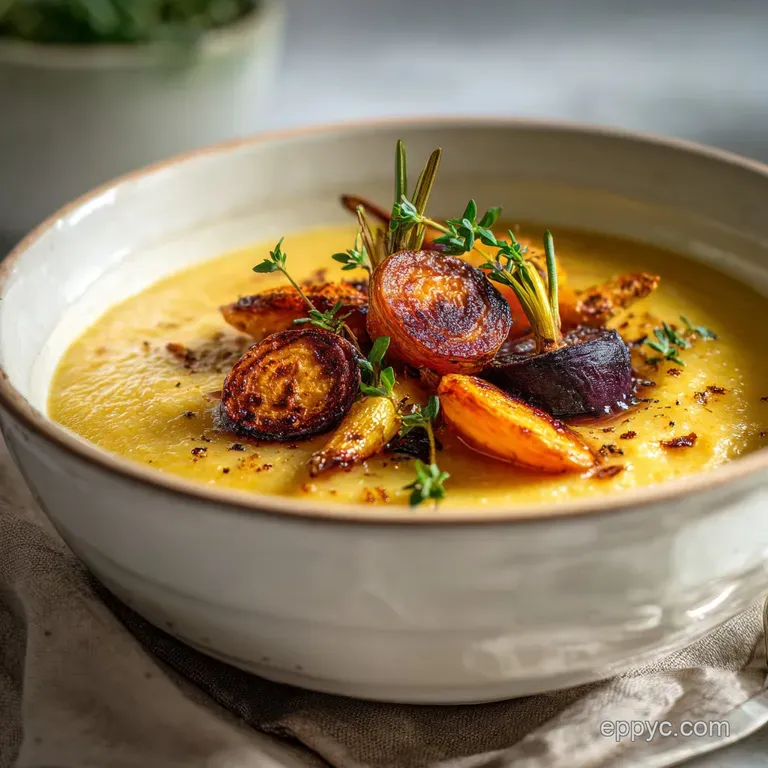
The final step in this heartfelt process is the presentation. A plain bowl of orange soup is fine, but we want something that looks as good as it tastes. Texture is key here. I love adding something with a "crunch" to contrast the velvety base.
A sprinkle of toasted pumpkin seeds or a few homemade croutons works wonders. If you have some leftover crusty bread, try a "shattering crust" pairing by brushing it with garlic oil and broiling it for 2 minutes.
The combination of the hot, silky soup and the crunchy bread is exactly what winter demands.
For a gourmet touch, a tiny drizzle of high-quality balsamic glaze or a few drops of truffle oil can add a layer of complexity that will have your friends asking for your secret recipe.
It’s about using small digital age touches like a quick photo for the group chat and traditional flavors to create a meal that feels truly special. Enjoy every spoonful!

Recipe FAQs
What is the ideal oven temperature for roasting the root vegetables?
200°C (400°F) is the sweet spot. This temperature is high enough to caramelize the natural sugars in vegetables like carrots and parsnips, creating deep flavor and a tender interior without burning the outside.
Can I use frozen root vegetables for this soup?
No, it's best to use fresh. Frozen vegetables release excess moisture when roasted, which will steam them rather than caramelize, resulting in a less intense flavor and a watery soup base.
What's the best way to achieve a silky smooth texture in this soup?
Use an immersion blender directly in the pot. This allows you to control the texture precisely, blending until it's perfectly velvety, and avoids the mess of transferring hot liquid to a traditional blender.
Why do you add apple cider vinegar at the end?
To brighten the flavors and balance richness. The acidity of the vinegar cuts through the sweetness and starchiness of the root vegetables, making the soup taste more vibrant and less heavy.
How can I make this soup heartier?
Add a protein source or hearty topping. Consider stirring in shredded cooked chicken, crispy chickpeas, or serving with a side of crusty bread for added substance.
How long can I store leftover soup?
Up to 5 days in the refrigerator. This soup actually improves in flavor as it sits, allowing the complex roasted notes to meld beautifully.
Can I substitute celery root with something else?
Yes, use extra carrots or celery. If celery root is unavailable, substituting with an additional 300g of carrots will yield a sweeter soup, while 3-4 stalks of chopped celery will provide a milder, more fibrous flavor.
Winter Root Veggie Soup

Ingredients:
Instructions:
Nutrition Facts:
| Calories | 261 kcal |
|---|---|
| Protein | 4.3 g |
| Fat | 7.9 g |
| Carbs | 45.2 g |
| Fiber | 9.4 g |
| Sugar | 13.8 g |
| Sodium | 612 mg |
