The Ultimate Turkey Seasoning Recipe
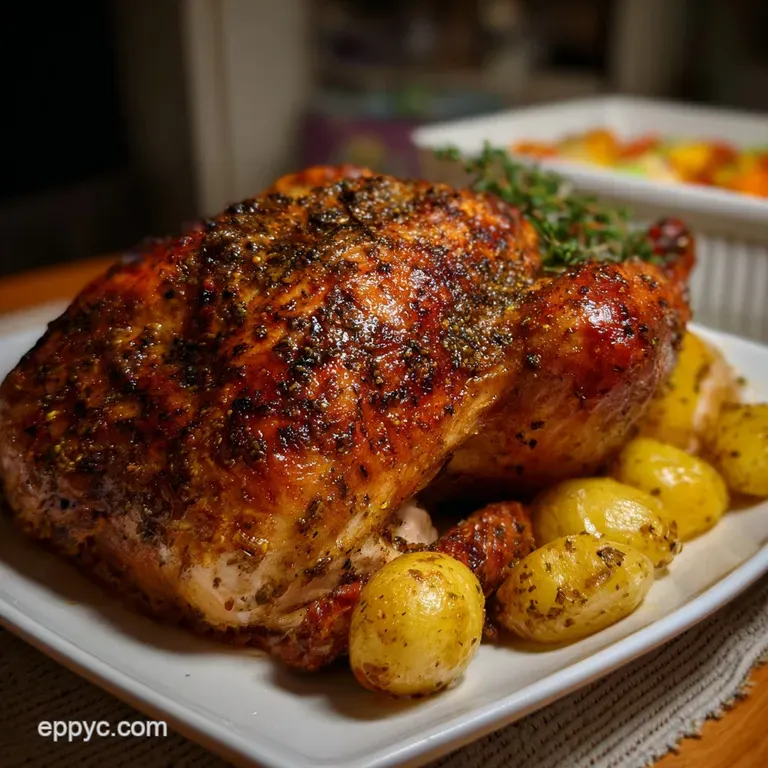
- Time: Active 10 minutes, Passive 0 minutes, Total 10 minutes
- Flavor/Texture Hook: Savory, buttery, and incredibly aromatic
- Perfect for: Thanksgiving dinner or meal prep turkey breasts
- Master This Savory Turkey Seasoning Recipe
- Science Behind Flavorful Results
- Essential Recipe Specifications
- Functional Element Deep Dive
- Necessary Kitchen Tools
- Step By Step Instructions
- Problem Solving Solutions
- Mathematics of Multiplication
- Flavor Folklore Corrected
- Long Term Storage Secrets
- Perfect Pairing Ideas
- Essential Flavor Clarifications
- Common Questions
- 📝 Recipe Card
Can you smell that? It is the scent of woodsy sage and nutty brown butter wafting from the oven, promising a meal that actually tastes like it looks. We have all been there, staring at a massive, pale bird and wondering if it will end up tasting like wet cardboard.
The secret to avoiding that heartbreak is not a fancy gadget or a multi day bath in salt water, but a two-part turkey seasoning recipe that hits every sensory note. This entire method hinges on the application of this specific turkey seasoning recipe.
Most folks just sprinkle some salt on the skin and hope for the best, but that is a mistake I once made that led to a very quiet dinner. To get those results that make everyone reach for seconds, you need to think about how flavor travels.
By combining a concentrated dry rub with a fresh herb butter, we are creating a layering effect. This ensures the skin gets that glass like shatter while the meat underneath remains dripping with moisture. Mastering this turkey seasoning recipe guarantees moisture retention.
Right then, let's crack on with this. Whether you are roasting a massive 10kg bird or just a simple breast for a weeknight, this method works every time. It is brilliant because it uses pantry staples like Diamond Crystal Kosher Salt and McCormick Smoked Paprika to create a profile that tastes far more expensive than it actually is.
Trust me on this, once you try this specific combination, you will never go back to those dusty, pre-made jars again, proving this is the ultimate turkey seasoning recipe.
Master This Savory Turkey Seasoning Recipe
The Science of Why it Works
This blend relies on osmotic pressure, where salt draws moisture out of the meat, dissolves into a brine, and is then reabsorbed into the protein strands. The addition of dark brown sugar triggers the Maillard reaction at a lower temperature, giving you that deep mahogany color without overcooking the meat.
The genius of this particular turkey seasoning recipe lies in the balance of sugar and salt.
- Protein Denaturation: The salt breaks down the tightly wound proteins in the turkey breast, allowing them to hold onto more water during the heat of roasting.
- Lipid Soluble Aromatics: Many of the flavor compounds in rosemary and thyme are fat-soluble, meaning they need the 113g of Kerrygold Unsalted Butter to "unlock" and spread across the meat.
- Hygroscopic Properties: The dark brown sugar pulls moisture from the air and the bird, creating a sticky surface that helps the dry spices adhere for a better crust. This sugar component is crucial to the success of the turkey seasoning recipe.
- Surface Tension: Lemon zest contains essential oils that lower the surface tension of the butter, allowing it to penetrate the skin more effectively.
Science Behind Flavorful Results
| Ingredient | Chemical/Physical Role (Science) | The Pro Secret (Why This Matters) |
|---|---|---|
| Kosher Salt | Ionic protein bridging | Opens up meat fibers to pull seasoning deep into the bird |
| Dark Brown Sugar | Carbonization and Maillard catalyst | Provides the glucose needed for a dark, crispy skin texture |
| Smoked Paprika | Phenolic compound infusion | Adds a "roasted over wood" flavor even in a standard oven |
| Lemon Zest | Acidic lipid balancing | Cuts through the heavy fat of the butter for a bright finish |
Essential Recipe Specifications
This recipe is designed to cover a standard 5kg to 7kg turkey. If you have a larger bird, simply double the quantities using the scaling rules found later in this guide. Following this turkey seasoning recipe precisely will yield the best results.
- Yield: 12 servings (covers one large turkey)
- Prep Time:10 minutes
- Active Effort: Low
- Skill Level: Beginner friendly
Chef's Note: I highly recommend using a Microplane for the lemon zest. You want tiny, microscopic bits of peel that melt into the butter rather than large chunks that might burn and turn bitter under high heat. This attention to detail separates average results from a perfect application of this turkey seasoning recipe.
Functional Element Deep Dive
| Original Ingredient | Substitute | Why It Works |
|---|---|---|
| Kosher Salt (3 tbsp) | Sea Salt (2 tbsp) | Sea salt is finer, so you need less volume to match the salinity. |
| Smoked Paprika (1 tbsp) | Chipotle Powder (1 tsp) | Offers heat and smoke, though it is much spicier than paprika. |
| Unsalted Butter (0.5 cup) | Ghee (0.5 cup) | Higher smoke point, though you lose the milky sweetness of butter. |
| Rubbed Sage (1 tsp) | Poultry Seasoning (1.5 tsp) | Most blends are sage heavy but add a slightly more complex floral note. |
| Dark Brown Sugar (1 tsp) | Maple Syrup (1 tsp) | Same sugar content but adds a distinct autumnal woody flavor. |
- Diamond Crystal Kosher Salt: Why this? The hollow flakes dissolve faster and are harder to over salt than table salt.
- Unsalted Butter: Why this? Allows total control over the sodium levels without affecting the moisture content.
- Dark Brown Sugar: Why this? Contains molasses which aids in the deep browning of the turkey skin.
Necessary Kitchen Tools
You do not need a high tech lab to make this, but a few specific tools make the process much smoother. I prefer using a Lodge Cast Iron Skillet if I am roasting just a breast, as the heat retention is unmatched. For a whole bird, a heavy duty roasting pan is essential.
Utilizing the right tools makes applying this turkey seasoning recipe much easier.
- Small Mixing Bowl: For the dry rub integration.
- Medium Mixing Bowl: To whip the herb butter.
- Microplane Zester: For the finest lemon zest.
- Kitchen Twine: If you plan on trussing the bird after seasoning.
- Digital Meat Thermometer: To ensure you hit that 74°C mark perfectly.
step-by-step Instructions
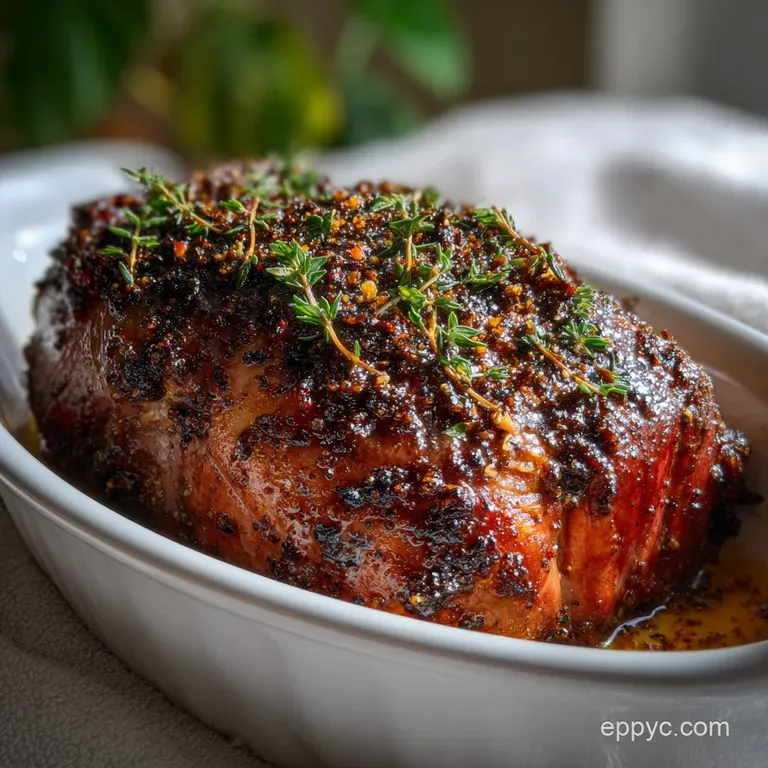
For the Signature Dry Rub
- Measure the 3 tbsp Kosher salt into a clean bowl.
- Add 1 tbsp Smoked paprika to the salt. Note: This provides the base color.
- Whisk in 1 tbsp Garlic powder and 1 tbsp Onion powder until no clumps remain.
- Combine 2 tsp Coarsely ground black pepper into the mixture.
- Incorporate 1 tsp Dried rubbed sage, 1 tsp Dried thyme, and 1 tsp Dried rosemary. Note: Rub the dried herbs between your palms to release their oils.
- Stir in 1 tsp Dark brown sugar until the mixture looks like coarse sand. This completes the dry base of the turkey seasoning recipe.
For the Fresh Butter Compound
- Place 0.5 cup Unsalted butter in a bowl until it reaches 20°C and is soft to the touch.
- Mince 1 tbsp fresh rosemary and sage until they are extremely fine.
- Fold the fresh herbs and 1 tsp Lemon zest into the softened butter. Note: Mix until the butter looks pale green and speckled.
- Apply the dry rub first, then massage the butter under the skin until the meat is fully coated. This finishing step activates the full potential of the turkey seasoning recipe.
Problem Solving Solutions
Why Your Turkey Skin Is Rubberowy
Rubberiness usually happens because of trapped steam. If the skin is not bone dry before you apply the turkey seasoning recipe, the water turns to steam under the butter layer. This prevents the fat from actually frying the skin.
Proper application of this turkey seasoning recipe is key to avoiding this issue.
| Problem | Root Cause | The Fix | Pro Protocol |
|---|---|---|---|
| Skin is soft | Excess moisture | Pat dry with paper towels | Air-dry in the fridge for 4 hours |
| Herbs are black | Sugar burnt | Lower oven temp | Tent with foil after 1 hour |
| Meat is bland | No penetration | Apply under the skin | Season 24 hours in advance |
Mathematics of Multiplication
Scaling Down (1/2 Batch): If you are only doing a small turkey breast (approx 1.5kg), cut everything in half. Reduce the roasting time by about 20% and check the internal temperature early. You should halve the turkey seasoning recipe components exactly.
- - Spices
- Use 1.5x the salt and spices, but keep the sugar at 2x.
- - Butter
- Double this exactly (1 cup) to ensure full coverage.
- - Heat
- If roasting two birds, drop your oven temp by 10°C to account for the extra mass.
Flavor Folklore Corrected
Myth: You must brine a turkey in a bucket of water for it to be moist. Truth: Dry brining with this turkey seasoning recipe is actually more effective. It concentrates the flavor rather than diluting it with water, and it results in much crispier skin.
Myth: Fresh herbs are always better than dried in a rub. Truth: Dried herbs are more potent and stand up better to long roasting times. By using a mix of both (dried in the rub, fresh in the butter), we get the best of both worlds: deep flavor and fresh aroma.
This combination is what makes the turkey seasoning recipe so famous.
Long Term Storage Secrets
Storage: Keep any leftover dry rub in a sealed Mason jar in a cool, dark pantry for up to 6 months. The herb butter can be rolled into a log using plastic wrap and kept in the fridge for 5 days or the freezer for 3 months.
We recommend making a double batch of the dry rub it’s the foundation for the entire turkey seasoning recipe.
Zero Waste: Save your lemon husks! After zesting, toss the squeezed halves into the cavity of the turkey. The steam will carry the citrus scent through the meat from the inside out. Don't discard the herb stems either; they make a fantastic base for a Turkey Ala King recipe once the feast is over.
Perfect Pairing Ideas
This seasoning profile is classic and earthy, so it needs sides that can stand up to the sage and smoke. It works beautifully alongside a Stuffed Bell Peppers recipe if you are looking for a hearty vegetable side. Every element of this turkey seasoning recipe calls for traditional, robust sides.
For a traditional spread, serve this with: - Roasted root vegetables with honey glaze. - Creamy mashed potatoes with extra chives. - A tart cranberry sauce to cut through the buttery skin.
Comparison: Stovetop vs Oven Application
| Feature | Stovetop (Pan-Seared Breast) | Oven (Whole Roast) |
|---|---|---|
| Cook Time | 15 20 minutes | 3 4 hours |
| Skin Texture | Extremely crispy/charred | Evenly golden/shatter crisp |
| Flavor Depth | Surface level intensity | Deeply infused aromatics |
Essential Flavor Clarifications
Myth: Salt makes the turkey dry.Fact: While salt draws moisture out initially, it eventually re-absorbs, carrying the seasonings with it. This actually makes the meat juicier by changing the protein structure to hold more liquid.
Myth: You should wash your turkey before seasoning.Fact: This is actually dangerous as it spreads bacteria around your kitchen. Simply pat the bird dry with paper towels. The drier the skin, the better this turkey seasoning recipe will adhere and crisp up.
- - If you want maximum crunch
- Focus the butter rub heavily on the breast and legs.
- - If you want deep mahogany color
- Ensure the brown sugar is fully dissolved into the butter.
- - If you want a smoky profile
- Increase the smoked paprika by an extra tablespoon in your dry mix.
Precision Checkpoints
- Butter Temp: Ensure the butter is exactly 20°C for the best "spreadability" without melting.
- Internal Temp: Pull the bird at 72°C; carryover cooking will bring it to the safe 74°C.
- Resting Time: Let the seasoned bird sit for at least 45 minutes after roasting to let the juices redistribute.
Honestly, don't even bother with low-fat margarine here. The whole point of this turkey seasoning recipe is the luxury of real butter and high-quality spices. Let's be real, a Thanksgiving bird is the centerpiece of the year, so it deserves the good stuff.
The way the smoked paprika interacts with the dark brown sugar creates a color that is almost too beautiful to carve almost. But once you take that first bite and hear the skin shatter, you will know the 10 minutes of prep was the best investment you made all day using this unparalleled turkey seasoning recipe.
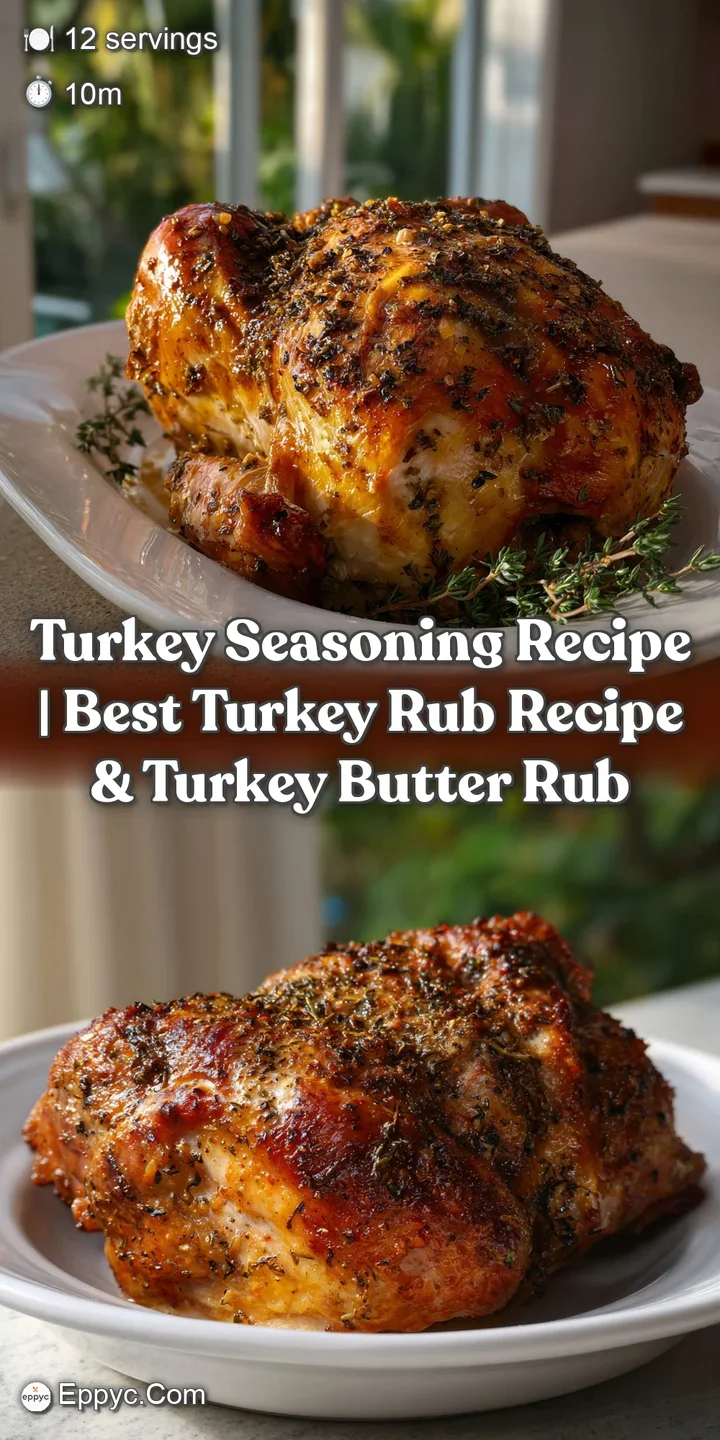
Common Questions
how to make turkey seasoning?
Combine 3 tbsp Kosher salt, 1 tbsp smoked paprika, 1 tbsp garlic powder, 1 tbsp onion powder, 2 tsp black pepper, 1 tsp dried sage, 1 tsp dried thyme, 1 tsp dried rosemary, and 1 tsp dark brown sugar.
how to make turkish seasoning?
This recipe is for North American style savory poultry seasoning, not Turkish blends like Baharat. Baharat typically emphasizes black pepper, cumin, and coriander over sage and rosemary.
how to cook a turkey seasoning?
You do not cook the seasoning; you apply it to the turkey before roasting. The dry rub is applied first, followed by a fresh herb compound butter massaged under the skin.
how to make turkey rub?
Mix all dry components salt, paprika, garlic, onion, pepper, sage, thyme, rosemary, and brown sugar until uniformly incorporated. Mastering this dry rub component is essential for deep flavor penetration.
how to make turkey marinade?
This recipe uses a dry brine/rub method, not a wet marinade, for crispier skin. Wet marinades infuse flavor but prevent the skin from browning properly due to surface moisture.
Can I substitute sea salt for kosher salt in this blend?
Use 2 tbsp of fine sea salt to substitute 3 tbsp of kosher salt. Kosher salt flakes are less dense, meaning you need less volume of sea salt to achieve the same salinity level in the final product.
If you enjoyed mastering the precise salt measurement here, see how we apply strict ingredient ratios in our Red Potato Salad Recipe The Essential Creamy Tangy BBQ Side for a complementary side dish.
What is the science behind using brown sugar in a turkey rub?
Brown sugar acts as a catalyst for the Maillard reaction during roasting. The molasses content accelerates the necessary chemical process at the skin's surface, leading to deeper color and enhanced savory flavor complexity.
If you master this flavor balancing technique here, apply the same principles of sugar integration to achieve the perfect crust on our The Best Homemade Key Lime Pie Recipe with Toasted Meringue to see how sugar works in baking.
Best Turkey Seasoning Recipe
Ingredients:
Instructions:
Nutrition Facts:
| Calories | 77 kcal |
|---|---|
| Protein | 0.3 g |
| Fat | 7.7 g |
| Carbs | 1.9 g |
| Fiber | 0.4 g |
| Sugar | 0.4 g |
| Sodium | 1748 mg |
