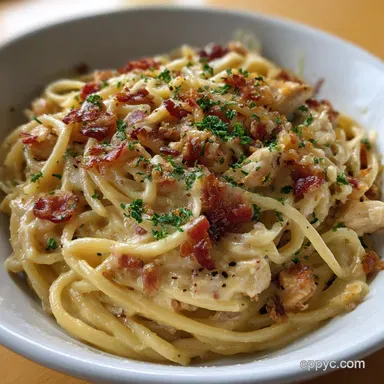
Simple Chicken Carbonara with Smoked Turkey

- Duration: 10 min prep + 20 min stovetop
- Profile: Savory, rich, and glossy
- Ideal for: An affordable weeknight meal
Chicken Carbonara
Forget the heavy cream, you don't need it for a rich sauce. While many believe otherwise, the creaminess actually stems from an emulsion of egg yolks, cheese, and starchy pasta water.
Combining smoked turkey and seared chicken gives this chicken carbonara a deep, savory profile. It’s a satisfying meal that feels elegant but stays affordable and effortless to prepare in a single pan.
The result is a glossy glaze that clings to every strand of pasta, providing a high-end dining experience on a tight budget.
What Makes the Sauce Stick
Smoked Turkey: The turkey adds a concentrated saltiness and depth that usually comes from cured meats.
Egg-Cheese Paste: Whisking the yolks and cheese together first ensures the sauce is smooth and doesn't clump.
Pasta Water: The starch in the water acts as a bridge between the fat and the eggs, creating a stable emulsion.
| Premium Ingredient | Budget Alternative | Impact | Savings |
|---|---|---|---|
| Pecorino Romano | Parmesan | Slightly milder saltiness | Moderate |
| Fresh Garlic | Garlic Powder | Less pungent, more uniform | Low |
| Organic Chicken | Standard Breast | No flavor change | Moderate |
The Ingredient Lineup
| Ingredient | Role | If You Don't Have It |
|---|---|---|
| Egg Yolks | Thickener | Whole eggs (sauce will be thinner) |
| Pasta Water | Emulsifier | None (essential for texture) |
| Smoked Turkey | Salt/Smoke | Smoked paprika + extra salt |
| Pecorino/Parmesan | Body/Salt | Grana Padano |
- 1 lb spaghetti
- 1 lb chicken breast, cut into 1-inch cubes
- 6 oz smoked turkey, diced small
- 2 tbsp olive oil
- 3 cloves garlic, minced
- 1 tsp cracked black pepper
- 3 large egg yolks
- 1 cup Pecorino Romano or Parmesan cheese, freshly grated
- 1 cup reserved pasta water
| Original Ingredient | Substitute | Why It Works |
|---|---|---|
| Spaghetti (1 lb) | Fettuccine (1 lb) | Similar starch content. Note: Heavier pasta may need slightly more water |
| Pecorino Romano | Parmesan | Both are hard, salty cheeses |
| Olive Oil (2 tbsp) | Unsalted Butter (2 tbsp) | Same fat content. Note: Adds a nuttier flavor |
Tools You'll Need
You'll need a large pot for the pasta and a 12-inch skillet for the protein. Tongs are essential here because you need to toss the pasta vigorously to emulsify the sauce. A small mixing bowl is needed for the egg and cheese paste.
Step by step Method
- Start by boiling a large pot of salted water. Add the spaghetti and cook it for 1 minute less than the package suggests until al dente.
- Reserve 1 cup of the starchy pasta water before draining the pasta.
- Warm olive oil in a 12-inch skillet using medium-high heat.
- Add the diced smoked turkey and sauté until the edges are crisp and browned.
- Add the cubed chicken breast and sear until the exterior is golden and it hits an internal temperature of 165°F (74°C).

- Mix in the minced garlic and cracked black pepper for the final 60 seconds until aromatic.
- Combine the egg yolks and grated cheese in a small bowl, stirring until a thick paste forms.

- Lower the skillet heat and transfer the drained pasta into the pan with the chicken and turkey, tossing to coat in the fats.
- Move the pan completely off the heat to keep the eggs from curdling.
- Rapidly pour in the egg and cheese mixture while slowly adding the saved pasta water, tossing vigorously with tongs until the sauce becomes a glossy, velvety coating.

Avoiding Common Pitfalls
Fixing Scrambled Eggs
If you see small clumps of cooked egg, the pan was too hot. To fix this for next time, make sure the skillet is completely off the burner before adding the eggs. The residual heat from the noodles is all you need to cook the sauce safely.
Handling Dry Sauce
If the pasta looks sticky rather than glossy, your chicken carbonara sauce needs more moisture. Add the reserved pasta water one tablespoon at a time and toss again. This thins the emulsion without losing the cheesy flavor.
Avoiding Overcooked Chicken
Small cubes can dry out quickly. Keep the heat medium-high and move the meat constantly. Once it hits 165°F (74°C), get it out of the direct heat immediately.
Customizing Your Pasta
Adding Garden Greens
Stir in a handful of baby spinach or frozen peas during the final 60 seconds of searing the chicken. The pan's heat will gently wilt the greens without overcooking them.
Using Fettuccine
You can easily substitute spaghetti with fettuccine in this chicken carbonara. The wider noodle surface area captures the sauce even more effectively, though you may need a bit more pasta water.
Flavor Boosts
For added brightness, I recommend a dash of fresh lemon juice just before plating. For a side accompaniment, a batch of homemade tomato sauce is excellent for dipping crusty bread. You might also top the chicken with a zesty chimichurri to add a vibrant, herbal contrast.
Storage and Reheating
Keep any leftovers in an airtight glass container in the refrigerator for up to 3 days. Since this chicken carbonara relies on an emulsion, the sauce will naturally thicken and firm up as it cools.
Avoid using a microwave for reheating, as it can scramble the eggs and leave the sauce clumpy. Instead, place the pasta in a small pan over low heat and stir until it reaches 165°F (74°C) in the centre. Stir in a small amount of water or a pat of butter and toss gently.
This remelts the fats and restores the creamy consistency.
Plating the Pasta

Use your tongs to swirl the pasta into a high mound. Arrange the chicken and turkey pieces on top so they remain visible rather than sinking. I like to finish the dish with a generous dusting of cracked black pepper and a bit more grated cheese. Serve immediately while the sauce is still glossy.
Sodium Content
1050 mg of sodium per serving (46% of the daily value)
To support heart health and manage blood pressure, the American Heart Association suggests a daily sodium cap of 2,300 mg.
Ways to Lower Sodium
-
Swap the Turkey
Use fresh, unseasoned turkey breast or additional chicken instead of smoked turkey to avoid the sodium found in processed curing.
-
Limit the Cheese
Cut the Pecorino Romano or Parmesan in half and stir in a bit of nutritional yeast to maintain that savory, cheesy profile.
-
Control Pasta Water
Skip the salt in the boiling water for the spaghetti; the reserved pasta water still provides enough starch to thicken the sauce.
-
Enhance with Acid
Stir in a splash of vinegar or some fresh lemon juice at the end to brighten the flavors without needing extra salt.
-
Use Fresh Herbs
Fold in freshly chopped basil or parsley to bring more aromatic depth and freshness to the meal.
Before You Start Cooking
What is chicken carbonara?
This is a rich pasta dish that uses egg yolks and cheese to create a creamy sauce. For those who prefer a tomato-based pasta, try our spaghetti sauce.
How do I make this chicken carbonara?
Boil spaghetti until al dente and reserve a cup of the cloudy pasta water. Sauté the turkey and chicken, then toss the pasta with the egg and cheese mixture away from the heat to prevent curdling.
Is chicken carbonara the same as Alfredo?
No, these dishes use entirely different bases. While Alfredo relies on cream, this version uses a tempered emulsion of Pecorino Romano or Parmesan and egg yolks.
Can this be stored in the refrigerator?
Yes, keep leftovers in a sealed glass jar and refrigerate them for three days. The sauce will thicken and set as it cools due to the emulsion.
Why can't I use a microwave to reheat it?
Microwaves scramble the eggs and create clumps in the sauce. Use a small pan over low heat with a bit of water to bring back the velvety texture. When reheating cooked leftovers, check with a food thermometer that the centre reaches 165°F (74°C); the appliance temperature and time alone do not confirm this.
Chicken Carbonara in 30 Minutes