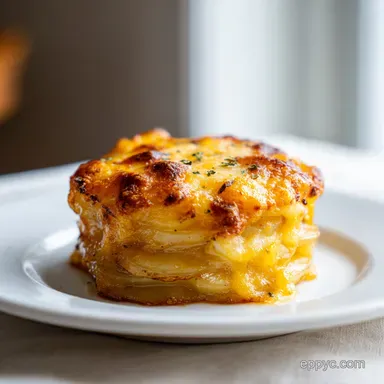
Cheesy Scalloped Potatoes: Creamy and Golden
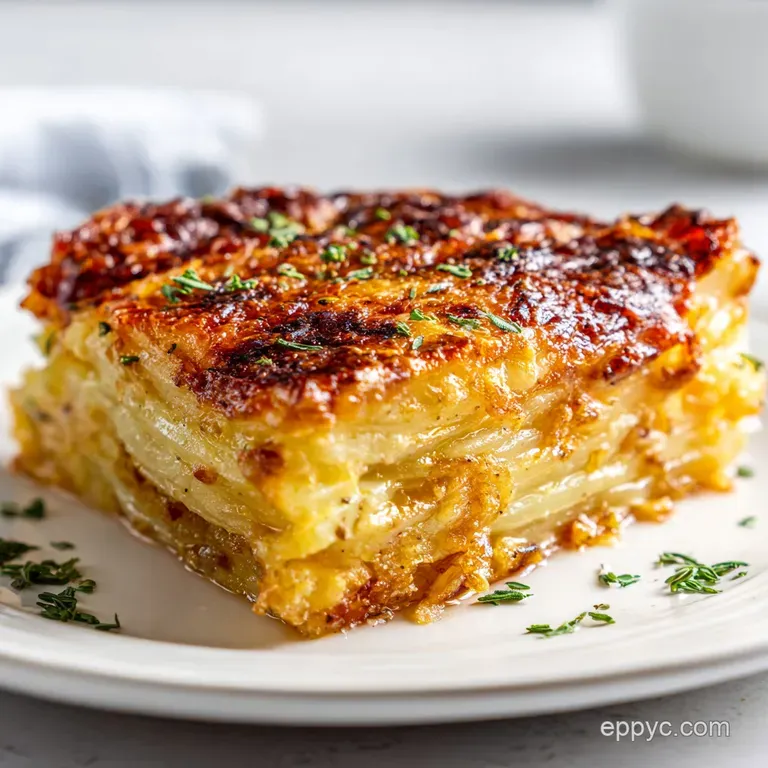
- Time:25 minutes active + 80 minutes baking = Total 105 minutes
- Flavor/Texture Hook: Velvety cheese sauce with a golden, browned crust
- Perfect for: Holiday side dishes or a comforting Sunday roast
- Cheesy Scalloped Potatoes
- How the Sauce Stays Silky
- Component Analysis
- The Right Ingredients
- Kitchen Tools You'll Need
- Making the Dish Step-by-Step
- Solving Common Texture Issues
- Twists and Easy Swaps
- Potato Cooking Misconceptions
- Storage and Leftover Tips
- The Best Pairing Ideas
- Recipe FAQs
- 📝 Recipe Card
Cheesy Scalloped Potatoes
That first bubble of cheese hitting the oven heat is a scent that just screams comfort. I remember the first time I tried making these for a family dinner, and I made the classic rookie mistake: I used Russet potatoes.
They were too starchy, and by the time the dish came out, the whole thing had turned into a salty, potato flavored mash. It was a total disaster, and I spent the rest of the night apologizing while everyone politely chewed through the mush.
Since then, I've learned that the potato choice is everything. Switching to Yukon Golds changed the game because they hold their shape but still get that buttery, silky feel. Now, when I slide the pan out of the oven, I'm looking for that specific mahogany color on top and a sauce that's thick enough to hold everything together.
If you've ever struggled with a "watery" casserole, this version is for you.
This recipe is all about the prep flow. We aren't just dumping things in a dish, we're building layers of flavor. You'll get a velvety interior and edges that almost shatter when you hit them with a fork. It's a hearty, rich side that feels fancy but is honestly just a matter of following a few key timing checkpoints.
How the Sauce Stays Silky
The secret here isn't fancy equipment, it's just how the starch and fats behave. Here is the breakdown:
- Starch Binding: The flour and butter roux creates a stable base that prevents the milk from separating when the cheese melts in.
- Potato Structure: Yukon Golds have a medium starch content, meaning they don't dissolve into the sauce like Russets would.
- Controlled Thickening: Adding the milk slowly ensures the sauce doesn't clump, keeping the texture velvety throughout the bake.
- Cheese Integration: Stirring the cheese in off heat prevents the oils from breaking, which keeps the sauce from becoming greasy.
Right then, before we get into the ingredients, let's look at how this method compares to the faster versions you see online.
| Method | Prep Time | Texture | Best For |
|---|---|---|---|
| Fast (Pre boiled) | 15 minutes | Softer, more uniform | Weeknight meals |
| Classic (Raw) | 25 minutes | Distinct layers, richer | Holidays & Guests |
It's worth the extra ten minutes of prep to get those distinct, overlapping slices that make the dish look professional.
Component Analysis
Understanding what each ingredient is doing helps you adjust the recipe on the fly. According to the guides at Serious Eats, the variety of potato significantly impacts the final viscosity of the sauce.
| Ingredient | Science Role | Pro Secret |
|---|---|---|
| Yukon Gold Potatoes | Structure | Keep the slices consistent for even cooking |
| Unsalted Butter | Fat Base | Use a roux to prevent the sauce from breaking |
| Whole Milk | Hydration | Room temperature milk prevents the roux from seizing |
| Sharp Cheddar | Flavor/Body | Grate it yourself to avoid anti clumping agents |
The Right Ingredients
For this to work, don't skimp on the cheese. I've tried using pre shredded bags, and they just don't melt the same way because of the potato starch coating they use to keep the shreds separate. Trust me, grating your own cheese is the best thing you can do for this dish.
- 1.36 kg Yukon Gold potatoes, peeled and thinly sliced Why this? Best balance of creaminess and structure
- 15 g Unsalted butter (for greasing the dish) Why this? Prevents sticking on the edges
- 56 g Unsalted butter Why this? Creates the rich roux base
- 30 g All purpose flour Why this? Thickens the sauce
- 710 ml Whole milk, room temperature Why this? Provides a velvety mouthfeel
- 225 g Sharp Cheddar cheese, shredded Why this? Strong flavor that cuts through the fat
- 50 g Parmesan cheese, freshly grated Why this? Adds a salty, nutty depth
- 6 g Garlic powder Why this? Subtle aromatic backbone
- 6 g Salt (plus more to taste) Why this? Enhances all other flavors
- 1 g Black pepper Why this? Adds a tiny bit of heat
- 1 g Ground nutmeg Why this? Secret ingredient that makes cheese taste "cheesier"
- 8 g Fresh parsley, chopped for garnish Why this? Adds a pop of color and freshness
| Original Ingredient | Substitute | Why It Works |
|---|---|---|
| Whole Milk (710ml) | Half and Half (710ml) | Higher fat content. Note: Makes it much richer; reduce butter slightly |
| Sharp Cheddar | Gruyère (225g) | Similar melt point. Note: More nutty, sophisticated flavor |
| Yukon Gold Potatoes | Red Potatoes (1.36kg) | Waxy texture. Note: Holds shape well but less creamy interior |
Kitchen Tools You'll Need
You don't need a professional kitchen, but a few tools make this much easier. I highly recommend a mandoline for the potatoes, but if you're nervous about your fingers, a sharp chef's knife works just fine. Just aim for 1/8 inch rounds.
You'll also need a heavy bottomed saucepan for the roux. If the pan is too thin, the butter can burn quickly, and you'll end up with a bitter taste in your sauce. A 9x13 inch baking dish is the standard here, though a ceramic casserole dish works great too.
Chef's Note: If you don't have a mandoline, try to slice the potatoes as evenly as possible. If some are thick and some are thin, the thin ones will turn to mush while the thick ones stay crunchy.
Making the Dish step-by-step
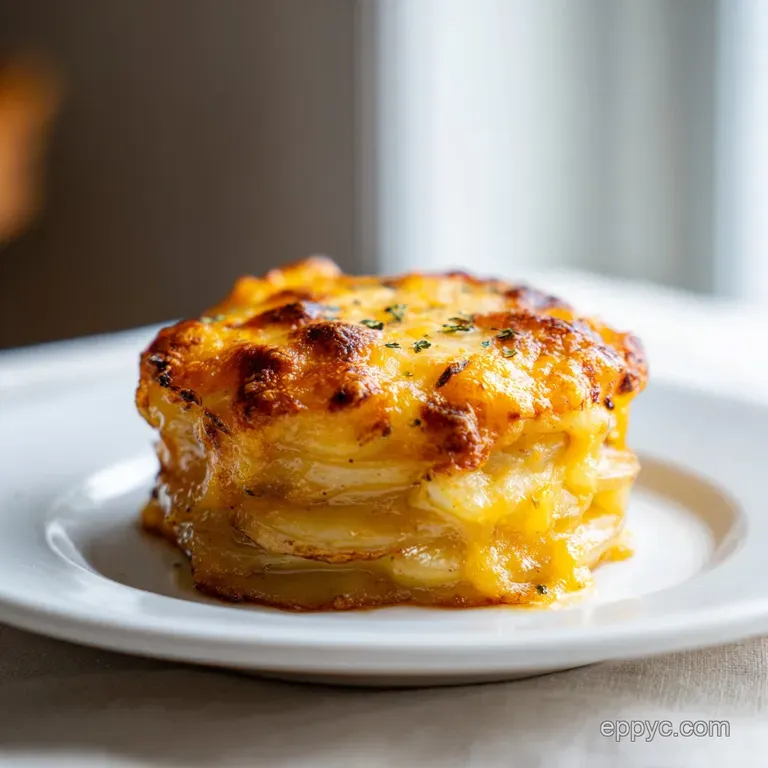
Let's crack on. This is a three phase process: prep, sauce, and bake.
Phase 1: Prep the Potatoes
- Slice potatoes into 1/8 inch rounds using a mandoline or knife. Note: Consistency is key for even cooking.
- Rub the interior of your baking dish with 15g of butter. Note: This creates a non stick barrier for the edges.
- Arrange half of the potato slices in the bottom of the dish, overlapping them slightly like shingles.
- Sprinkle with half of the salt, pepper, and garlic powder.
- Repeat the process with the remaining potato slices and the rest of the seasoning.
Phase 2: Build the Sauce
- Melt 56g of butter in a saucepan over medium heat.
- Whisk in 30g of flour and cook for 1-2 minutes until it smells nutty and looks golden.
- Slowly pour in 710ml of milk, whisking constantly.
- Continue cooking until the sauce thickens enough to coat the back of a spoon.
- Remove from heat and stir in the Cheddar and Parmesan until the cheese is completely melted and velvety.
Phase 3: Assemble and Bake
- Pour the cheese sauce evenly over the layered potatoes.
- Bake at 350°F (180°C) for 80 minutes until the top is browned and potatoes are tender when pierced with a knife.
- Let it rest for 10 minutes before serving. Note: This allows the sauce to set so it doesn't run everywhere.
- Garnish with chopped fresh parsley.
Solving Common Texture Issues
The most common complaint with Cheesy Scalloped Potatoes is either a "soupy" consistency or a burnt top. Both are easy to fix if you know what to look for.
Why Your Potatoes Are Watery
This usually happens if the potatoes were sliced too thick or if the sauce wasn't cooked long enough to thicken before adding the cheese. If the potatoes release too much water, the sauce can't bind.
Why the Top Browns Too Quickly
Depending on your oven, the top might get dark before the potatoes in the middle are soft. If you see the cheese starting to darken around 60 minutes, just tent the dish with aluminum foil.
| Problem | Root Cause | Solution |
|---|---|---|
| Sauce is too thin | Roux not cooked enough | Simmer longer before adding cheese |
| Potatoes are hard | Slices were too thick | Use a mandoline for 1/8 inch cuts |
| Greasy surface | Cheese overheated | Stir cheese in off the heat |
- The Roux
- Should be bubbly and smell like toasted nuts before milk enters.
- The Sauce
- Must be thick enough that a finger drawn through it on the spoon leaves a clear path.
- The Bake
- Internal temperature should reach about 200°F for fully cooked potatoes.
Common Mistakes Checklist:
- ✓ Avoid using pre shredded cheese to prevent graininess.
- ✓ Don't skip the nutmeg; it's essential for the flavor profile.
- ✓ Ensure milk is room temperature to avoid sauce clumping.
- ✓ Always let the dish rest for 10 mins before slicing.
Twists and Easy Swaps
If you want to change things up, this recipe is very flexible. For a more filling meal, you can make cheesy scalloped potatoes and ham by tucking diced smoked ham between the potato layers. The saltiness of the ham pairs perfectly with the rich sauce.
For those who like more depth, cheesy scalloped potatoes with mushroom soup is a classic shortcut. You can replace half the milk with a condensed cream of mushroom soup, though the result is a bit heavier and less "clean" in flavor.
If you love this style of potato but want something a bit more refined, you might like my Twice Baked Potatoes for a different kind of cheese experience.
Adjustment Guide for Portions:Scaling Down (1/2 batch): Use a smaller 8x8 pan and reduce baking time by about 15-20 minutes. Scaling Up (2x batch): Do not double the salt and nutmeg (use 1.5x instead).
Use two separate dishes rather than one deep one to ensure the middle cooks through. Lower oven temp to 325°F (160°C) and extend time.
Potato Cooking Misconceptions
One big myth is that you need to pre boil the potato slices before baking them. Some people say this ensures they are soft, but it actually removes the natural starches that help thicken the sauce. Raw slices give you a much better texture.
Another misconception is that using low-fat milk or skim milk will produce the same result. It won't. The fat in whole milk is what creates the velvety emulsion. If you use skim milk, the sauce will often separate or feel "watery" regardless of how much flour you use.
Storage and Leftover Tips
Fridge: Store in an airtight container for up to 4 days. The sauce will thicken significantly as it cools, which is normal.
Freezer: You can freeze this for up to 2 months. However, the texture of the sauce can change slightly upon thawing. To fix this, add a splash of milk before reheating.
Reheating: The best way to reheat is in the oven at 300°F (150°C) covered with foil. This prevents the cheese from drying out and keeps the potatoes tender.
Zero Waste: Don't throw away your potato peels! Toss them in olive oil and salt and air fry them at 400°F (200°C) for 10 minutes for a crunchy snack.
The Best Pairing Ideas
Since this is such a rich side, you need a main dish that can stand up to it. A lean, charred protein is the way to go. I highly recommend pairing this with a Grilled Flank Steak because the acidity of a steak marinade cuts through the creaminess of the potatoes.
Alternatively, a roasted chicken or a glazed ham works beautifully. If you're serving this at a party, keep it as the star of the side dish table and pair it with something green and crisp, like a lemon dressed arugula salad, to balance the richness.
Right then, you're all set. Just remember to be patient with the bake time and don't rush the roux. Your Cheesy Scalloped Potatoes will be the highlight of the meal. Enjoy!
Recipe FAQs
What are some common mistakes to avoid when making scalloped potatoes?
Slicing potatoes inconsistently. If the rounds vary in thickness, some pieces will be mushy while others remain hard. Use a mandoline to ensure every slice is exactly 1/8 inch thick for even cooking.
What is the best cheese to use for scalloped potatoes?
Sharp Cheddar and Parmesan. This pairing provides a bold, salty punch and a smooth, creamy melt. Freshly grating your own cheese prevents anti caking agents from making the sauce grainy.
What is the difference between scalloped and au gratin potatoes?
The use of cheese. Traditional scalloped potatoes rely on a creamy milk based sauce, while au gratin potatoes specifically incorporate cheese and often a crusty topping. This recipe combines both for maximum richness.
How to make the flavor of scalloped potatoes more complex?
Stir in a pinch of ground nutmeg. This subtle spice cuts through the richness of the whole milk and butter. Finish the dish with chopped fresh parsley for a bright, herbal contrast.
Is it true that you must pre-boil the potatoes before baking?
No, this is a common misconception. Slicing Yukon Gold potatoes thinly allows them to soften perfectly in the sauce during the 80-minute bake time without any prior boiling.
How to ensure the cheese sauce is smooth and lump free?
Whisk the milk in slowly. Pour the room temperature milk into the butter and flour roux gradually while whisking constantly. If you enjoyed mastering this emulsion here, the same principle works in our creamy potato soup.
How to reheat leftovers without them becoming dry?
Bake at 300°F covered with foil. The foil traps steam to keep the potatoes tender and prevents the cheese from scorching. Add a splash of milk before reheating if the sauce thickened significantly in the fridge.
Cheesy Scalloped Potatoes