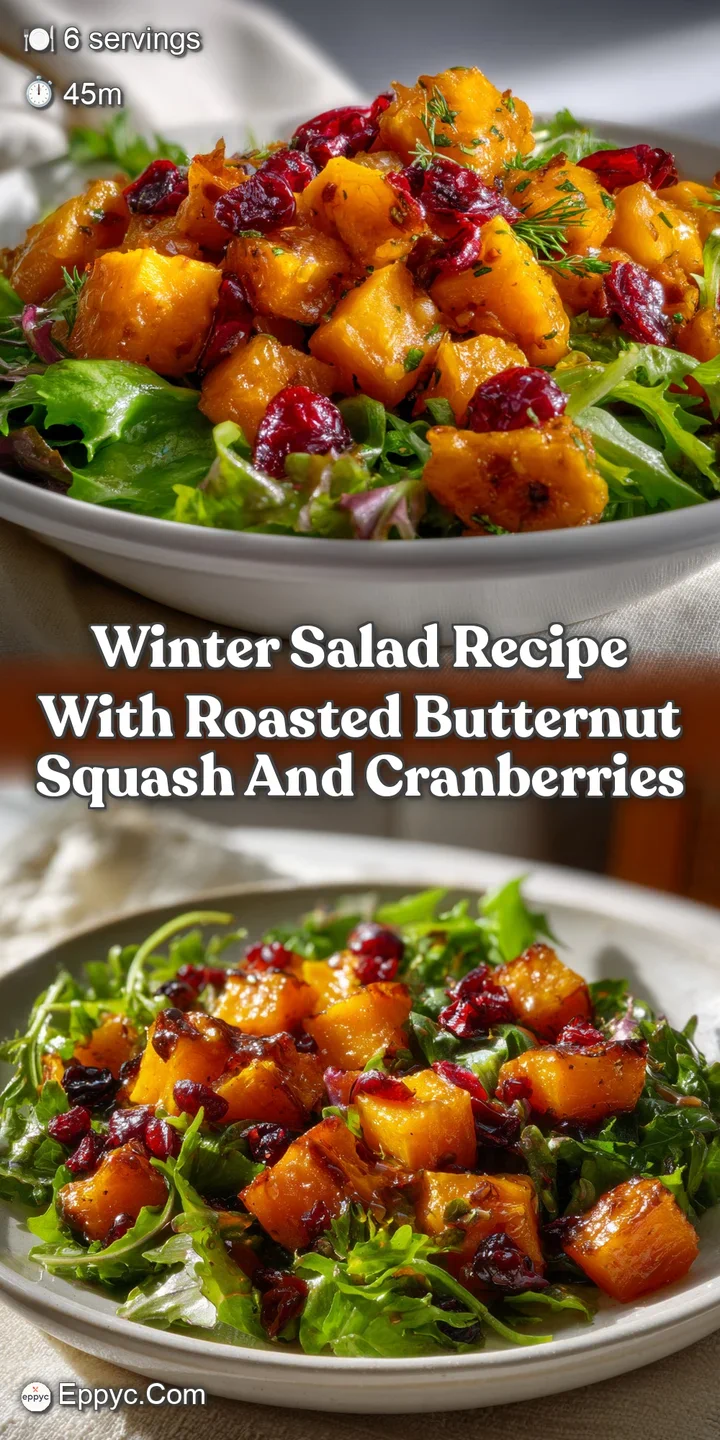
Winter Salad Recipe with Roasted Butternut Squash and Cranberries
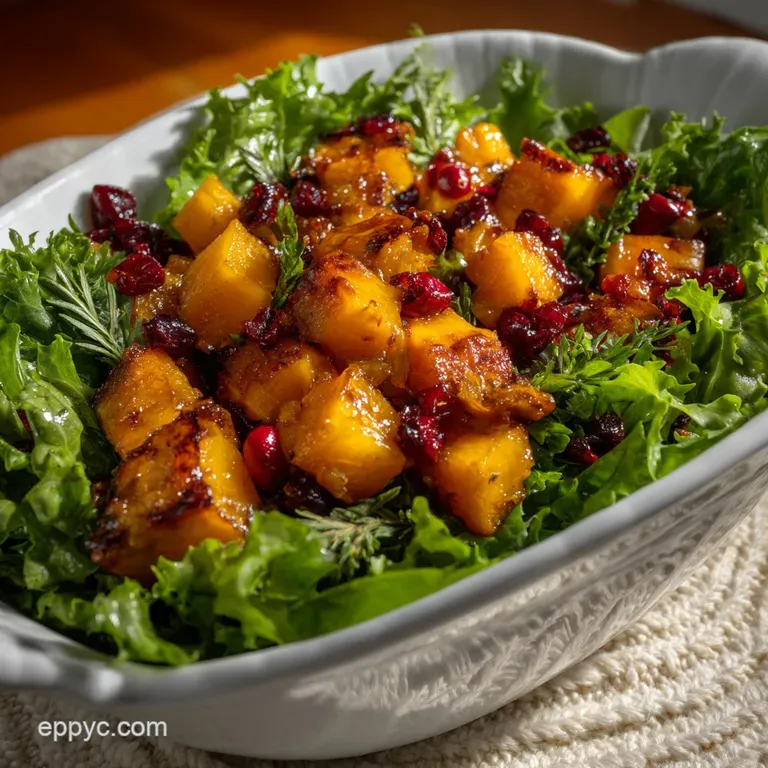
- Effort/Time: Low-effort roasting / 45 minutes total
- Flavor Hook: Contrast of warm, mahogany-roasted squash against cool, massaged greens
- Perfect for: Holiday-dinners, meal-prep lunches, or inventive plant-based mains
- The Architecture of Contrast: Why This Winter Salad Recipe Tastes Divine
- Precision Timing and Thermal Measurements for Seasonal Success
- The Alchemy of Seasonal Elements: Selecting High-quality Whole Foods
- Technical Infrastructure: Essential Tools for Precision Roasting and Prep
- Action-First Assembly: Creating Flavor Layers Through Sequential Preparation
- Overcoming Textural Failures and Flavor Imbalance in Your Salad
- ⚗️ The Scaling Lab: The Physics of Quantity
- Common Myths About Winter Salad Recipes
- Preservation Logistics and Zero-Waste Strategies for Maximum Freshness
- Curated Pairing Protocols for Wholesome and Satisfying Winter Meals
- Recipe FAQs
- 📝 Recipe Card
The Diamond Hook: From Textural Nightmare to Seasonal Success
There is nothing more disheartening than spending forty minutes prepping only to pull a pan of gray, mushy squash out of the oven. We have all been there tossing lukewarm, limp vegetables into a pile of raw, bitter greens that feel like eating a bowl of sandpaper.
This textural failure isn't just a waste of a 2 lb butternut squash; it’s an emotional letdown when you’re craving a wholesome, satisfying meal that actually feels like a treat.
I remember my first attempt at a Winter Salad Recipe with Roasted Butternut Squash and Cranberries. I crowded the pan, skipped the kale massage, and ended up with a soggy mess that lacked any bold character. I was so focused on the ingredients that I ignored the physics of moisture evaporation.
It took three more tries to realize that the difference between a sad side dish and a masterclass salad lies entirely in how you manage thermal energy and mechanical breakdown.
The secret to this Winter Salad Recipe with Roasted Butternut Squash and Cranberries is the science of the Maillard reaction combined with cellulose softening. By roasting the squash at a high heat to trigger sugar caramelization and physically massaging the kale to break down its fibrous structure, we create a velvety mouthfeel that rivals any restaurant quality dish.
This recipe isn't about complexity; it’s about using inventive techniques to let simple, wholesome ingredients reach their peak sensory potential.
The Architecture of Contrast: Why This Winter Salad Recipe Tastes Divine
- Maillard Caramelization: High heat transforms the squash's complex starches into simple sugars, creating a mahogany colored crust and nutty aroma.
- Cellulose Softening: Mechanical massaging with fat and acid breaks down the kale's rigid cell walls, turning "tough" leaves into tender, velvety greens.
- Emulsion Stability: The Dijon mustard acts as a lecithin rich bridge, binding the balsamic vinegar and olive oil into a thick, clinging dressing that won't pool at the bottom of the bowl.
- Osmotic Pressure: Slicing the red onion thinly and introducing it to the dressing early draws out its pungent sulfur compounds, mellowing the flavor for a satisfying crunch.
Precision Timing and Thermal Measurements for Seasonal Success
To achieve the best results with this Winter Salad Recipe with Roasted Butternut Squash and Cranberries, you must respect the physics of heat distribution. Roasting in the oven provides the dry, circulating air necessary for browning, whereas a stovetop method often leads to uneven cooking and breakage of the delicate squash cubes.
| Method | Texture Outcome | Flavor Profile | Technical Note |
|---|---|---|---|
| Oven Roasting | Firm exterior, velvety center | Deep, caramelized sweetness | Best for large batches (2 lbs+) |
| Stovetop Sauté | Softer, potentially mushy | Lightly browned, more "boiled" flavor | High risk of the squash "smashing" |
- 1. Roasting Temperature
- Exactly 400°F (200°C) is the "sweet spot" for roasting squash without burning the Diamond Crystal Sea Salt.
- 2. Cube Uniformity
- 1 inch pieces ensure that the thermal mass cooks through at the exact moment the exterior reaches mahogany brown.
- 3. Kale Prep
- 6 cups of de-stemmed kale must be chopped into 1/2 inch ribbons to maximize the surface area for the dressing to cling to.
The Alchemy of Seasonal Elements: Selecting high-quality Whole Foods
Building a bold Winter Salad Recipe with Roasted Butternut Squash and Cranberries requires ingredients that play specific chemical roles. Do not settle for pre-cubed squash if you can avoid it; the lack of surface moisture on freshly cut squash leads to a much better sear.
Ingredient Chemistry Breakdown
| Ingredient | Chemical/Physical Role (Science) | The Pro Secret (Why This Matters) |
|---|---|---|
| Butternut Squash | Polysaccharide caramelization | Freshly cut cubes release internal moisture slower, aiding the Maillard reaction. |
| Lacinato Kale | Structural cellulose framework | Also known as "Dinosaur Kale," its flatter surface allows for more efficient mechanical softening than curly varieties. |
| Balsamic Vinegar | Acidic pH regulator | The acid breaks down the pectin in the kale while balancing the lipid heavy goat cheese. |
| Maple Syrup | Glucose/Fructose glaze | Adds a secondary layer of sugar that accelerates browning during the final minutes of roasting. |
- 1 large butternut squash (approx. 2 lbs): Peeled and cubed. Why this? Provides the essential starch base that becomes creamy and sweet when roasted.
- 5 tbsp Pompeian Extra Virgin Olive Oil: Divided (3 for roasting, 2 for dressing). Why this? high-quality lipids are required for both heat transfer and nutrient absorption of the kale.
- 6 cups Lacinato Kale: De-stemmed and finely chopped. Why this? Its sturdy structure holds up against heavy dressings without wilting prematurely.
- 1/2 cup Dried Cranberries: Why this? Concentrated fructose provides a sharp, chewy contrast to the soft squash.
- 1/3 cup Crumbled Goat Cheese: Why this? Tangy acidity cuts through the richness of the olive oil and maple syrup.
- Maille Dijon Mustard: 1 tsp for the dressing. Why this? Essential for creating a stable emulsion between the balsamic and oil.
Technical Infrastructure: Essential Tools for Precision Roasting and Prep
You don't need a professional kitchen, but using the right tools ensures your Winter Salad Recipe with Roasted Butternut Squash and Cranberries turns out consistently inventive and satisfying.
- Lodge Rimmed Baking Sheet: Essential for even heat distribution. A dark colored pan will brown the squash faster than a shiny aluminum one.
- Global G-2 Chef’s Knife: A sharp blade is non-negotiable for peeling the thick skin of the squash without "hacking" the flesh.
- Large Stainless Steel Mixing Bowl: You need enough space to physically massage the kale with your hands to achieve the proper texture.
- Whisk or Mason Jar: For the dressing. A jar allows for "high shear" agitation, creating a tighter emulsion than a fork ever could.
Action First Assembly: Creating Flavor Layers Through Sequential Preparation
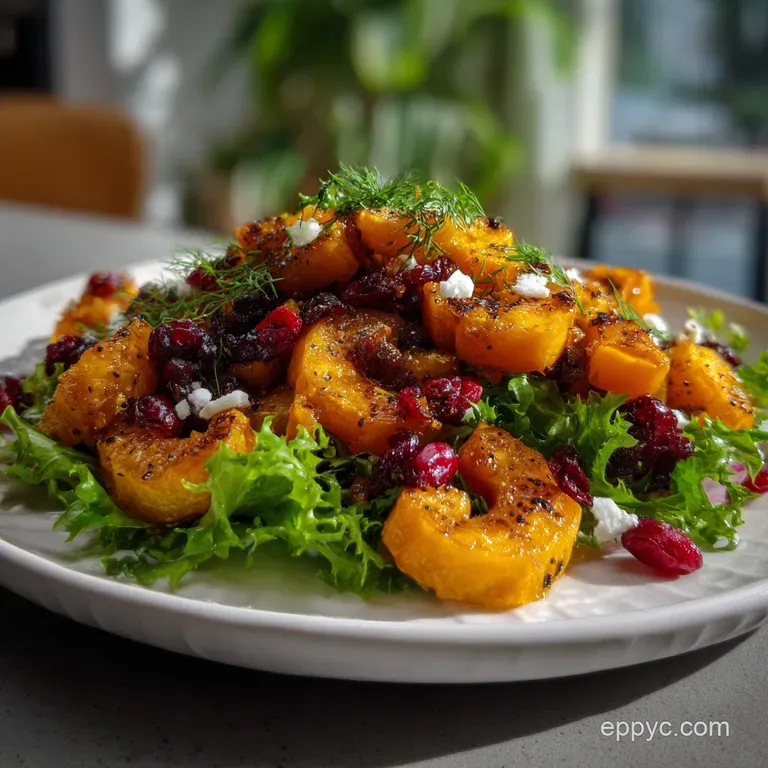
- Preheat the oven to 400°F (200°C) with the Lodge Rimmed Baking Sheet inside. Note: This creates immediate contact heat, searing the bottom of the squash cubes instantly.
- Toss the 2 lbs of cubed butternut squash with 3 tbsp olive oil, 1/2 tsp sea salt, 1/4 tsp pepper, and 1/2 tsp cinnamon in a bowl. Note: Cinnamon enhances the perception of sweetness without adding extra sugar.
- Spread the squash onto the preheated pan in a single layer for 25 minutes until edges are mahogany brown and centers are tender.
- Massage the chopped kale with 1 tbsp of olive oil and a pinch of salt for 3 minutes until the leaves turn dark green and feel velvety.
- Whisk the remaining 1 tbsp olive oil, 2 tbsp balsamic vinegar, 1 tbsp maple syrup, and 1 tsp Dijon mustard until the dressing is thick, opaque, and fully combined.
- Macerate the thinly sliced red onion in the dressing for 5 minutes until the onion softens and the harsh bite subsides.
- Combine the massaged kale and the dressing soaked onions in a large bowl.
- Add the warm roasted squash and 1/2 cup dried cranberries to the greens. Note: The residual heat from the squash helps the cranberries plump slightly.
- Fold in 1/2 cup toasted pepitas and 1/3 cup goat cheese gently. Note: Excessive mixing will turn the cheese into a "paste" rather than distinct, creamy crumbles.
- Season with a final crack of black pepper and serve immediately while the squash is still warm and fragrant.
Overcoming Textural Failures and Flavor Imbalance in Your Salad
Why Your Squash is Mushy
If your squash lacks that satisfying "bite," it's likely due to steam. When cubes are too close together, the moisture escaping from the vegetable creates a humid micro climate on the pan, leading to boiling rather than roasting.
This is a common pitfall when making this Winter Salad Recipe with Roasted Butternut Squash and Cranberries.
| Problem | Root Cause | The Fix | Pro Protocol |
|---|---|---|---|
| Soggy Squash | Pan crowding | Use two pans or a larger sheet | Space cubes 1 inch apart for airflow |
| Bitter Kale | Intact cellulose | Longer massage time | Add a drop of maple syrup to the massage |
| Broken Dressing | Lack of emulsifier | Add more Dijon mustard | Whisk in a slow, steady stream of oil |
Why Your Salad is Too Dry
Kale is incredibly thirsty. If the salad feels "sticky" or dry, the greens have absorbed the dressing too quickly. This usually happens if the kale was massaged too aggressively or if the ratio of greens to liquid was off. Much like making a proper Sauerkraut recipe, the balance of salt and time determines the final moisture level of the vegetable.
⚗️ The Scaling Lab: The Physics of Quantity
When you need to double this recipe for a holiday gathering, do not simply double every measurement. Physics dictates that volume and surface area do not scale linearly.
- Flavor Saturation (Salt/Spices): Scale the salt and cinnamon to 1.5x (NOT 2x). Spices accumulate quickly; you can always add more after tasting the final assembly.
- The Evaporation Paradox: If you double the squash but use the same pan, you will end up with steamed squash. Mandatory instruction: Use two separate rimmed baking sheets and swap their rack positions halfway through cooking.
- Thermal Mass & Carry Over: A double batch of warm squash holds more internal energy. Pull the pans 2 3 minutes earlier than usual, as the cubes will continue to "cook" themselves while sitting in the bowl.
- Pan Crowding (Maillard Killer): Never overlap the squash. If the pan looks full, it is full. Air must circulate around all six sides of the cube to ensure it doesn't turn into a mash.
Common Myths About Winter Salad Recipes
- Myth: You must cook the kale to make it digestible. Truth: Mechanical massaging performs the same "pre-digestion" of cellulose as heat, but preserves the heat sensitive Vitamin C and enzymes.
- Myth: Fresh cranberries are better than dried for salads. Truth: Fresh cranberries are extremely tart and can be unpleasantly "crunchy" in this context. Dried cranberries provide the necessary chewy texture and concentrated sugar to balance the earthy kale.
Preservation Logistics and Zero Waste Strategies for Maximum Freshness
Storage: This recipe with roasted butternut squash and cranberries holds up surprisingly well. Store in an airtight container in the fridge for up to 3 days. Unlike lettuce based salads, kale doesn't turn into slime overnight; it actually gets better as the dressing penetrates the leaves.
Reheating: If you prefer the squash warm, reheat just the squash cubes in a toaster oven for 5 minutes at 350°F before adding them back to the cold greens. Do not microwave the whole salad, or the goat cheese will melt into an oily mess.
💡 ZERO WASTE PHILOSOPHY:Squash Seeds?Transform: Clean them and roast with salt and smoked paprika. Science: They are high in protein and healthy fats, providing a free, inventive snack.
Kale Stems?Transform: Finely mince them and sauté with garlic for your next omelet. Science: Stems contain the most concentrated fiber and "green" flavor but require heat to break down their woody structure.
Leftover Dressing? Use it as a marinade for chicken or tofu. The acidity of the balsamic and the enzymes in the mustard make it a perfect tenderizer.
Curated Pairing Protocols for Wholesome and Satisfying Winter Meals
This Winter Salad Recipe with Roasted Butternut Squash and Cranberries is bold enough to stand alone as a light lunch, but it truly shines when paired with other inventive dishes. For a complete seasonal spread, consider serving this alongside a classic Tomato Bruschetta recipe to provide a crisp, garlic heavy contrast to the sweet squash.
If you are looking for a grain based hearty variation, fold in 2 cups of cooked farro or quinoa. The grains will absorb the maple balsamic dressing and turn this into a meal that offers 4 6 hours of satiety.
For those following a vegan path, simply omit the goat cheese and add extra pepitas or sliced avocado for that necessary lipid creaminess.
Trust me, once you master the mechanical massage of the kale and the over high heat roasting of the squash, this Winter Salad Recipe with Roasted Butternut Squash and Cranberries will become your go-to for every cold weather gathering.
It’s inventive, it’s wholesome, and most importantly, it’s a satisfying solution to the "boring salad" problem. Let's get cooking.
Recipe FAQs
What temperature should the butternut squash be roasted at?
400°F (200°C). This temperature maximizes the Maillard reaction, causing surface caramelization for sweetness without burning the natural sugars. If the heat is too low, the squash steams and turns mushy instead of browning.
Why is my roasted squash watery or mushy?
Crowding the baking sheet prevents necessary evaporation. Excess moisture trapped between the cubes causes them to steam rather than roast, inhibiting the necessary browning.
- Use two pans instead of one
- Ensure cubes are 1 inch apart
- Use a preheated sheet for contact searing
Can I substitute butternut squash with sweet potatoes?
What is the purpose of massaging the kale?
It physically breaks down tough cellulose fibers. Mechanical agitation separates the plant's cell walls, mimicking the tenderizing effect of low-heat cooking without leaching nutrients.
Is maple syrup essential for the dressing?
Myth: I should use shredded cheese to save time.
Myth: You should use pre-shredded cheese to save time. Reality: Pre-shredded cheeses are coated with cellulose or potato starch to prevent clumping in the bag. This coating prevents the cheese from melting smoothly into the dressing, resulting in a grainy texture.
Which oil is best for roasting the squash?
Roasted Squash Cranberry Winter Salad
Ingredients:
Instructions:
Nutrition Facts:
| Calories | 313 kcal |
|---|---|
| Protein | 8.3 g |
| Fat | 18.6 g |
| Carbs | 33.3 g |
| Fiber | 4.7 g |
| Sugar | 17.8 g |
| Sodium | 245 mg |
