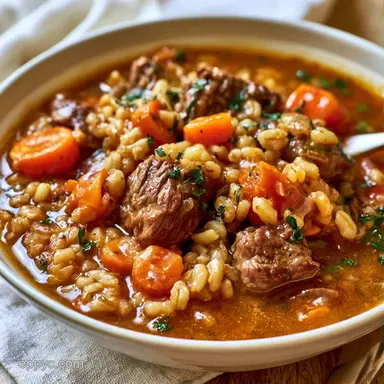
Hearty Slow Cooker Beef Barley Soup
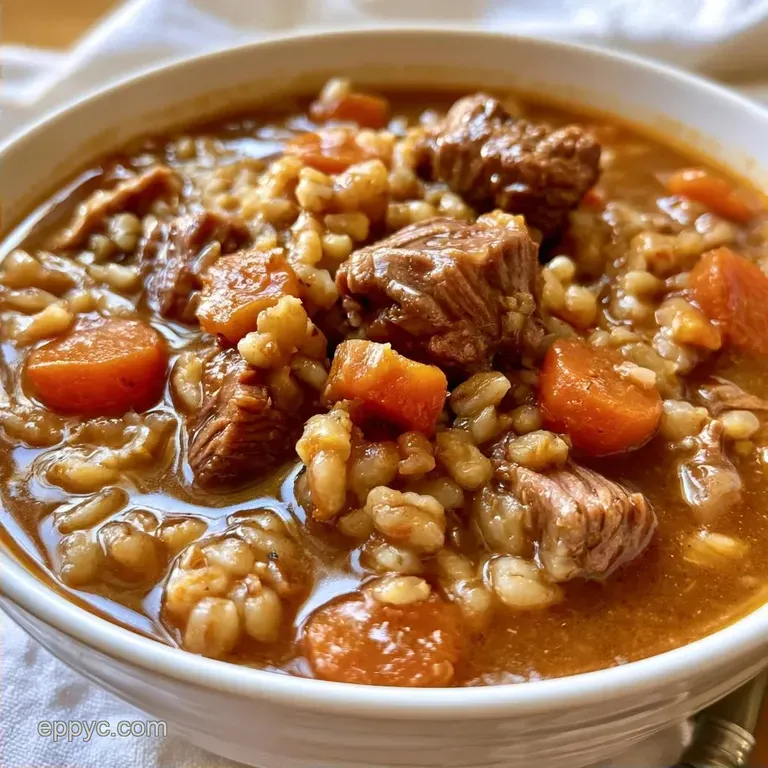
- Time: 15 min active + 8 hrs slow cooking
- Flavor/Texture Hook: Hearty, savory beef with a thick, soul-warming broth
- Perfect for: Chilly winter nights, meal prep, and effortless family dinners
Years ago, I tried a "dump and-go" version of this recipe. While it seemed easy, the result was a disaster. I ended up with a salty, gluey mush where the barley had absorbed all the liquid, leaving the beef tasting like boiled cardboard.
The solution was straightforward. I began searing the beef in a hot pan and sautéing the vegetables first. This develops the deep, caramelized bits that give the broth a mahogany hue and a rich, savory depth.
The end result is a thick, satisfying dish that tastes like it spent two days simmering on the stove. This Slow Cooker Beef Barley Soup transforms a few simple ingredients into a hearty meal that truly fills you up.
Slow Cooker Beef Barley Soup Details
This recipe is a classic "set it and forget it" meal, though it does require an initial 15 minutes of preparation. Even when pressed for time, ensure you sear the beef, as this browning stage is where the flavor depth is created.
Beef chuck roast is the ideal cut because its fat and connective tissue can withstand 8 hours of heat. Using a leaner alternative like sirloin will likely result in meat that is dry and stringy.
Keep in mind that pearl barley continues to soak up liquid after the heat is turned off. If the soup rests for an hour before serving, it will thicken naturally. Should it become too thick, a quick splash of extra broth will fix it instantly.
Why This Method Works
The slow cooker is a tool for transformation. It doesn't just heat food; it changes the structure of the ingredients over several hours.
Collagen Breakdown: The low, steady heat turns the tough connective tissue in the chuck roast into gelatin. This gives the broth a velvety, lip smacking body that you can't get with quick cooking methods.
Starch Release: Pearl barley releases starches slowly as it simmers. This naturally thickens the liquid without needing a flour slurry or cornstarch.
Layered Flavor: Sautéing the aromatics (onion, carrots, celery) before adding them to the pot develops a sweetness that balances the salty beef broth.
| Method | Time | Texture | Best For |
|---|---|---|---|
| Slow Cooker | 8 hours | Fall apart tender | Busy workdays |
| Stovetop | 3 hours | Slightly firmer beef | Weekend cooking |
| Pressure Cooker | 1 hour | Very soft beef | Last minute needs |
The Core Ingredients
I've found that the quality of your beef broth makes a huge difference here. Use a low sodium version so you can control the salt yourself. If the broth is too salty from the start, there's no way to fix it once the barley absorbs the liquid.
| Ingredient | What It Does | Best Swap |
|---|---|---|
| Beef Chuck Roast | Provides richness and heartiness | Bottom round (leaner) |
| Pearl Barley | Thickens broth and adds chew | Farro (nuttier taste) |
| Tomato Paste | Adds umami and deep color | 1 tbsp tomato puree |
| Lemon Juice | Cuts through the heavy beef fat | Apple cider vinegar |
For the vegetables, I prefer cutting the carrots into thick rounds. If you slice them too thin, they'll practically disappear into the soup after 8 hours.
Full Shopping List:
- 900g beef chuck roast, cut into 1 inch cubesWhy this? High fat content keeps beef moist
- 30ml olive oil
- 150g yellow onion, diced
- 180g carrots, sliced into rounds
- 90g celery, sliced
- 20g garlic, minced
- 32g tomato pasteWhy this? Concentrated flavor for the base
- 1.9L low sodium beef broth
- 150g pearl barley, rinsed
- 5g dried thyme
- 2 bay leaves
- 6g salt
- 3g black pepper
- 15ml Worcestershire sauce
- 15ml fresh lemon juice
- 15g fresh parsley, chopped
| Original Ingredient | Substitute | Why It Works |
|---|---|---|
| Pearl Barley | Farro | Similar chew. Note: Slightly shorter cook time |
| Beef Broth | Bone Broth | More protein. Note: Naturally thicker consistency |
| Fresh Parsley | Fresh Cilantro | Earthy hit. Note: Changes flavor profile to savory/bright |
Tools for the Job
No professional kitchen setup is required here. A standard 6 quart slow cooker is ideal for this quantity of ingredients. If you are using a smaller pot, you may want to slightly decrease the broth to prevent it from overflowing.
A heavy duty pan, such as stainless steel or cast iron, is necessary for searing. You need something that retains heat well so the beef browns effectively instead of steaming in its own juices.
Good prep tools will make the 15 minutes of chopping go quickly. I also suggest using a whisk or a large spoon to ensure the barley doesn't settle and clump at the bottom.
How to Cook It
Let's get started. Follow these directions carefully to avoid the "porridge" consistency I mentioned.
- Warm 30ml olive oil in a pan over medium high. Brown the beef chunks in several batches until a dark crust forms (roughly 3-4 mins per side), then move the meat to the slow cooker.
- Using the same pan, sauté the chopped onion, sliced carrots, and sliced celery for 5 minutes until the onions are translucent.
- Mix in the minced garlic and 32g tomato paste. Heat for 1 minute until the paste deepens in color and becomes aromatic, then transfer everything to the slow cooker.
- Pour in 1.9L beef broth. Stir in 150g rinsed pearl barley, 5g dried thyme, 2 bay leaves, 6g salt, and 3g black pepper. Note: Stir thoroughly so the barley doesn't stick to the bottom.
- Secure the lid. Set to LOW for 7-8 hours or HIGH for 4-5 hours until the beef is fork tender.
- Turn off the heat. Stir in 15ml Worcestershire sauce and 15ml lemon juice. Note: The acidity cuts through the rich fats of the meat.
- Find and remove the bay leaves.
- Taste the liquid. Add a bit more salt or pepper if it needs more flavor.
- Garnish with 15g chopped fresh parsley just before serving.
Chef Note: Be aware that older slow cookers can sometimes run hot. Check the beef at the 6 hour mark on LOW to ensure it doesn't overcook.
Solving Common Soup Issues
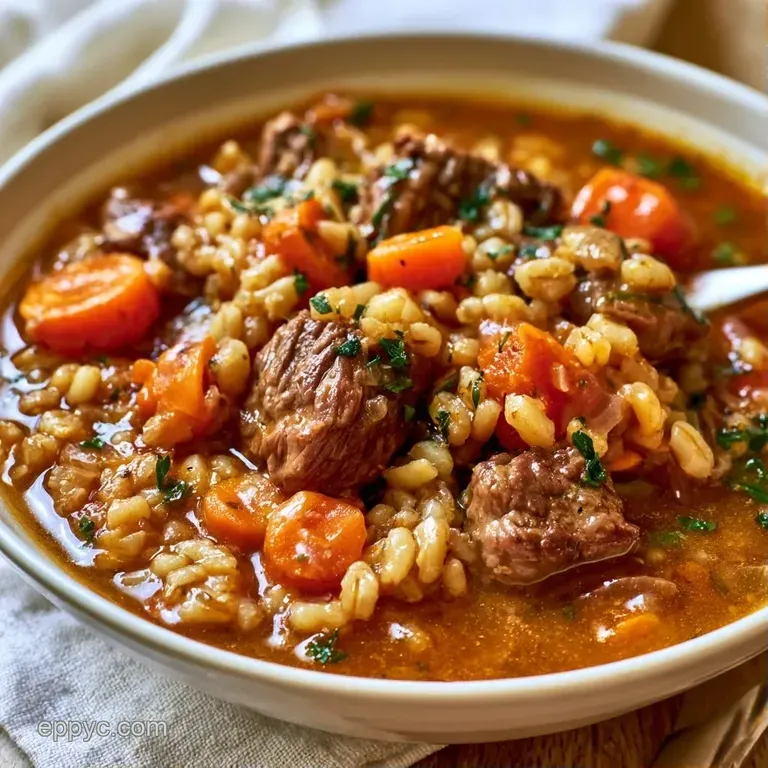
Slow cooker meals are generally reliable, but mistakes can still happen. Most issues typically stem from the barley or the cooking temperature.
Fixing a Porridge Consistency
This occurs when the barley absorbs an excessive amount of liquid. It is a frequent problem because the grains continue to soak up the broth even after the heat is off. To remedy this, simply stir in an additional 120ml of water or beef broth. This will restore a pourable texture without compromising the flavor.
Dealing with Tough Beef
If the meat remains chewy after 8 hours, you likely used a cut that was too lean. While you cannot change the meat at this stage, you can extend the cooking time by another 2 hours on LOW. If that fails, a quick simmer on the stovetop can help force the fibers to break down.
Rescuing a Bland Broth
If the soup tastes "flat," it usually needs more salt or acid. This is why adding lemon juice at the end is so critical. If it still isn't quite right, add a pinch of salt or another teaspoon of Worcestershire sauce.
While the USDA guidance for safe internal beef temperature is 145°F, this soup requires a temperature of around 200°F to ensure the collagen fully melts.
| Problem | Root Cause | Solution |
|---|---|---|
| Soup is too thick | Barley absorbed too much liquid | Stir in 120ml beef broth |
| Beef is rubbery | Lean meat cut or undercooked | Cook 2 more hours on LOW |
| Taste is too salty | Broth reduced too much | Add 1 sliced potato to absorb salt |
| Broth is pale | Skipped the searing step | Add 1 tbsp tomato paste or soy sauce |
Customizing Your Bowl
Once you've got the basic Slow Cooker Beef Barley Soup down, you can start playing with the additions. Trust me on this adding a few extra veggies makes it a full meal.
For a heartier texture, try adding two diced potatoes. They add a creaminess to the broth that pairs well with the chew of the barley. Just add them during step 4. If you're looking for something with a similar vibe but a different flavor, my Classic Beef Stew Recipe is a great way to use chuck roast without the grains.
If you want an umami boost, toss in 200g of sliced cremini mushrooms during the sauté phase. They brown beautifully and add a woody depth to the soup. For those avoiding gluten, swap the barley for quinoa or cauliflower rice, though you'll lose that natural thickness.
| Goal | What to change |
|---|---|
| More vegetables | Add 1 diced potato and 1 sliced parsnip |
| Lower calories | Use lean beef and omit olive oil |
| Extra richness | Add 1 tbsp butter at the end |
Keeping Leftovers Fresh
This soup is actually better the next day. The flavors have more time to mingle, and the barley fully integrates with the broth. Put the soup in sealed glass jars and keep them chilled in the cooler for up to 4 days.
For long term storage, this freezes quite well. I recommend freezing the soup without the barley. Barley can get a bit mushy when thawed and reheated. Instead, cook the barley separately and add it to the bowl before reheating the beef and veg base. It'll stay fresh in the freezer for 3 months.
To avoid waste, don't toss the beef trimmings from your roast. You can freeze those scraps in a bag and use them later to make your own beef stock. If you have leftover carrots and celery ends, throw them in a freezer bag for your next batch of broth.
Best Side Pairings
A heavy soup needs something to balance it out. I usually go for a crusty piece of sourdough bread with salted butter. The crunch of the toast is the perfect contrast to the tender beef.
A light, crisp salad with a lemon vinaigrette also works well. It cuts through the richness of the beef and cleanses the palate between bites. If you're in the mood for another cozy meal but want something lighter, my Cabbage Soup recipe is a fantastic alternative for those colder days.
Avoid serving this with heavy starches like mashed potatoes or thick pasta. The barley already provides plenty of carbs, so adding more just makes the meal feel too heavy.
Debunking Soup Myths
Searing meat does not "seal in juices." That's an old myth. Moisture loss happens regardless of whether you sear or not. The real reason we sear is to create a brown crust that adds a deep, savory flavor to the overall pot.
Adding barley at the start doesn't always make it mushy. As long as you use pearl barley (which has a tougher outer shell than hulled barley), it can handle the 8 hour simmer. The key is rinsing it first to remove excess surface starch.
Some people think you need a "special" slow cooker for this. Truth is, any Crockpot style machine will do. The temperature difference between brands is negligible compared to the impact of using the right cut of meat.
High in Sodium
877 mg 877 mg of sodium per serving (38% 38% of daily value)
The American Heart Association recommends a daily sodium limit of no more than 2,300 mg for most adults to maintain heart health.
Tips to Reduce Sodium
-
Swap the Broth-30%
Replace the low-sodium beef broth with water combined with a small amount of salt free beef base or homemade unsalted stock.
-
Omit Added Salt-25%
Remove the 1 tsp of salt entirely; the savory depth of the beef and vegetables will provide a natural base flavor.
-
Alternative Umami-20%
Substitute the Worcestershire sauce with balsamic vinegar or a dash of coconut aminos for a similar tangy sweet profile with less sodium.
-
No-Salt Tomato Paste-10%
Ensure you are using no-salt added tomato paste to prevent hidden sodium from adding up in the stew base.
-
Enhance with Herbs
Double the dried thyme or add fresh rosemary and smoked paprika to boost the aromatic profile without adding any sodium.
Recipe FAQs
What cut of beef works best for this soup?
Beef chuck roast is the ideal choice. Its fat and connective tissue break down over 8 hours, ensuring the meat stays tender. If you enjoyed the tenderness of chuck here, apply the same cut logic to our pot roast recipe.
How long does the barley need to cook?
Cook for 7-8 hours on low or 4-5 hours on high. This duration allows the pearl barley to soften and thicken the broth without becoming mushy.
Is it true that searing the meat is optional?
False. Searing creates deep brown bits that provide the broth with a rich mahogany color and savory depth that "dump" recipes lack.
Why does the soup sometimes become too thick?
Barley continues absorbing liquid after cooking. If the soup reaches a porridge like consistency, simply stir in a splash of extra beef broth to reach your preferred thickness.
Slow Cooker Beef Barley Soup