Velvety Coconut in Milk: 20 Minute Tropical Treat
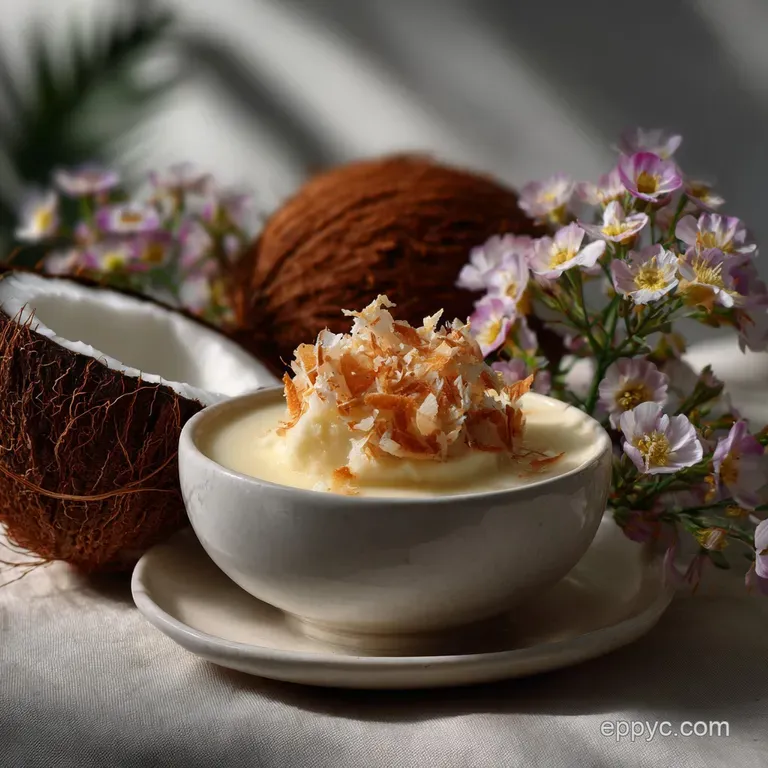
- Effort/Time: Low-effort, 20 minute total execution.
- Flavor Hook: Earthy pandan notes meet buttery-soft coconut.
- Perfect for: Chilled summer refreshers or warm comfort-bowls.
- Masterclass: The Secret to Silky Coconut in Milk
- The Science of Flavor: Why This Recipe Works
- Essential Ingredients & Smart Substitutions
- Step-by-Step Instructions for Perfect Results
- Pro Tips & Common Mistakes to Avoid
- Common Myths
- Storage and Freezing Guidelines
- Creative Serving Suggestions
- Recipe FAQs
- 📝 Recipe Card
Masterclass: The Secret to Silky Coconut in Milk
Why Your Coconut in Milk Usually Separates
We’ve all been there: you heat your coconut in milk only to find a greasy layer of oil floating on top while the milk looks thin and grainy. I spent months trying to replicate the rich, cohesive texture of Southeast Asian street desserts, failing until I realized I was treating the coconut milk like water rather than the delicate emulsion it is.
The trick isn't just about heat; it’s about the ratio of fats to sugars and the specific maturity of the coconut you choose. This recipe for coconut in milk uses a dual milk approach blending full fat coconut milk with whole milk to create a structural backbone that stays creamy even after 48 hours in the fridge.
We’re aiming for a mouthfeel that’s more "velvety" than "watery," and I'm going to show you exactly how to stabilize it.
The Science of Flavor: Why This Recipe Works
- Emulsification Stability: The proteins in the Horizon Organic Whole Milk act as surfactants, surrounding the fat droplets in the Aroy-D Coconut Milk to prevent them from coalescing into an oily mess.
- Pectin Softening: Simmering the young coconut strips at a low temperature allows for gentle pectin breakdown, resulting in a "tender snap" texture rather than a rubbery chew.
- Osmotic Balance: The addition of Maldon Sea Salt doesn't just season; it balances the osmotic pressure between the coconut meat and the liquid, ensuring the strips absorb sweetness without losing their structural integrity.
The Science Behind 2 cups (300g) Young Coconut Meat
- What It Does
- Provides the structural "bite" and textural contrast to the liquid base.
- The Chemistry
- Young coconut contains high levels of hemicellulose and pectin, which undergo partial hydrolysis when heated in a sugary, slightly acidic environment.
- Why This Matters
- This process transforms the "jelly like" meat into a succulent, absorbent sponge that holds the infused milk flavors.
The Science Behind 1 can (13.5 oz) Full Fat Coconut Milk
- What It Does
- Supplies the primary lipid content and the signature tropical aroma.
- The Chemistry
- Rich in Medium Chain Triglycerides (MCTs) like lauric acid, this milk is a natural oil-in-water emulsion.
- Why This Matters
- It creates a dense, creamy mouthfeel and serves as the carrier for the fat-soluble aromatics found in the pandan leaf.
The Science Behind 1/4 cup (50g) Big Tree Farms Coconut Sugar
- What It Does
- Sweetens the dish while providing a deep, caramel colored undertone.
- The Chemistry
- Unlike white sugar, coconut sugar contains trace minerals and short chain fatty acids that trigger a subtle Maillard reaction even at lower simmering temperatures.
- Why This Matters
- It avoids the "one-note" sweetness of refined sugars, adding complex earthy notes to the coconut in milk.
Essential Ingredients & Smart Substitutions
When making coconut in milk, your tools matter as much as your ingredients. Use a heavy bottomed Le Creuset Dutch Oven to ensure even heat distribution and prevent the bottom from scorching.
| Original Ingredient | Substitute | Why It Works |
|---|---|---|
| 1 can Full Fat Coconut Milk | 1.5 cups Heavy Cream | High fat content maintains richness, though you lose the tropical aroma. |
| 1/4 cup Coconut Sugar | 1/4 cup Light Brown Sugar | Similar molasses content and moisture profile; provides the necessary caramel notes. |
| 1 cup Whole Milk | 1 cup Unsweetened Soy Milk | High protein content (3 4g) mimics the emulsification properties of dairy. |
| 1 Pandan Leaf | 1/2 tsp Vanilla Bean Paste | Provides a floral, aromatic depth, though it changes the flavor profile toward "custard." |
step-by-step Instructions for Perfect Results
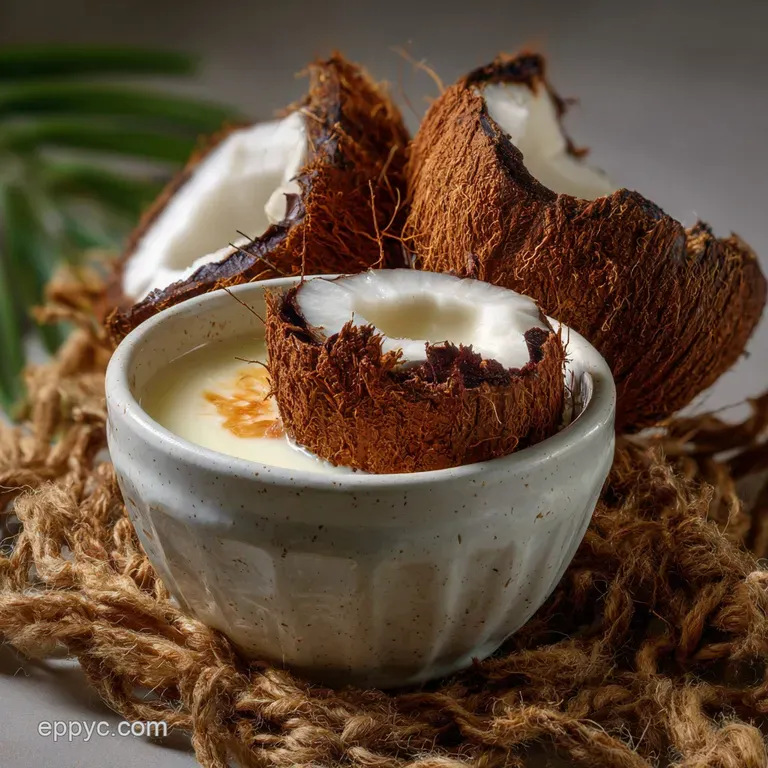
- Slice the 2 cups (300g) young coconut meat into 1/4 inch strips using a Global G-2 Chef’s Knife.Note: Uniform thickness ensures even pectin breakdown across all pieces during the short simmer time.
- Combine 1 can (13.5 oz) coconut milk, 1 cup whole milk, and the knotted pandan leaf in a Le Creuset Dutch Oven.Note: The knot increases surface area exposure, allowing for faster infusion of the leaf’s essential oils.
- Whisk in 1/4 cup coconut sugar and 1/4 tsp Maldon sea salt over medium low heat until dissolved.Note: Dissolving solutes before the boil prevents graininess and ensures a smooth fat-sugar emulsion.
- Add the coconut strips and bring the mixture to a gentle simmer for 10 minutes. Note: Keeping the temperature below 180°F prevents protein denaturation which causes curdling.
- Remove from heat once the coconut meat is translucent and the liquid coats the back of a spoon.Note: This visual cue indicates the liquid has reached the correct viscosity through slight evaporation.
Chef's Note: If you love this texture, you’ll find it’s the same "velvety" secret used in How to Make Steam Corn Bollo with Sweet Coconut Flavor: A Delicious Family Favorite.
Pro Tips & Common Mistakes to Avoid
| Problem | Why It Happens | The Fix | Pro Protocol |
|---|---|---|---|
| Liquid "Cracks" (Oily surface) | Temperature exceeded 190°F. | Whisk in 1 tsp of cornstarch slurry. | Use an Oxo Instant Read Thermometer to keep the base at 175°F. |
| Tough Coconut Meat | Using "Old" brown coconut meat. | Only use "Young" or "Jelly" meat. | Buy frozen "Young Coconut" if fresh isn't available; it’s pre-tenderized. |
| Weak Pandan Flavor | Leaf was too old or dry. | Bruise the leaf with the back of a knife. | Twist the leaf vigorously before knotting to rupture the cell walls. |
Common Myths
Myth: You must boil the milk to "cook" the coconut. Truth: Boiling actually ruins the coconut in milk by breaking the emulsion. The coconut meat is already edible; we are merely hydrating it and infusing flavor at 170°F-180°F.
Myth: low-fat coconut milk works just as well. Truth: low-fat versions contain more water and stabilizers (like guar gum). This prevents the "velvety" mouthfeel and often results in a thin, watery dessert using coconut milk.
Storage and Freezing Guidelines
Refrigeration Tips for Fresh Coconut in Milk
Store your coconut in milk in a sterilized glass Mason Jar for up to 3 days. The fat will likely solidify on top; this is a sign of a high-quality, high fat recipe. Simply shake the jar or gently reheat it on the stove to re-emulsify.
Best Practices for Freezing and Thawing
- Freeze
- Up to 1 month.
- Thaw
- Overnight in the fridge only.
- Pro Tip
- Once thawed, the milk might look "broken." A 30 second blast in a Vitamix Blender will restore the silky texture perfectly.
Creative Serving Suggestions
This recipe is incredibly versatile. While it's a "Masterclass" dessert using coconut milk, it also functions as a "What can I make with coconut milk" solution for breakfast.
- As a Chilled Treat: Serve in a chilled bowl topped with toasted flakes. If you need help with the topping, check out How to Toast Coconut: Perfectly Golden & Nutty!.
- Breakfast Power-Up: Pour the warm coconut in milk over a bowl of How to Make Coconut Flour Pancakes: Easy gluten-free Breakfast!.
- Coconut Milk in Coffee: Use the leftovers as a pre-sweetened, aromatic creamer. The pandan adds a "vanilla nutty" profile that is world class in cold brew.
- Coconut Milk in Smoothies: Freeze the base into ice cubes. Blend 4 5 cubes with a frozen banana for a 5 minute coconut milk vegan recipe that tastes like a milkshake.
Whether you're making this for a coconut milk in curry base (omit the sugar/pandan) or as a stand alone sweet, understanding the heat fat relationship is your key to success. This coconut in milk recipe is about precision, patience, and the right ingredients.
Give it a try, and you'll never settle for the canned, watery versions again.
Recipe FAQs
Can I use full fat canned coconut milk instead of fresh?
Yes, full fat canned milk thickens rapidly. Canned milk contains stabilizers that require gentle heating to prevent immediate separation upon emulsification. This variation is excellent for quick sauces, like our Creamy 20Minute Indian Shrimp Curry Recipe with Coconut Milk.
Does chilling the mixture improve the texture?
No. Chilling may cause solidification.
Why does my coconut milk curdle when heated too high?
High heat causes fat and water layers to separate aggressively. When proteins reach their denaturing point without sufficient emulsifiers, the mixture 'breaks' into grainy solids and liquid whey.
- Reduce heat immediately
- Whisk vigorously off-heat
- Reintroduce stabilizers slowly
Is young coconut meat strictly necessary for silkiness?
Young coconut yields superior tenderness. Mature coconut meat is fibrous and releases too much insoluble starch, impeding a perfect emulsion. The tender flesh integrates seamlessly, unlike drier older varieties.
Can I replace the pandan essence with vanilla?
Vanilla offers a different aromatic profile. Pandan provides a uniquely earthy, vanilla adjacent base note crucial for authentic tropical flavor contrast. Vanilla leans sweeter and less complex in this application.
Myth: Sweetened condensed milk works as a direct substitute for liquid milk.
Myth: Sweetened condensed milk works as a direct substitute for liquid milk. Reality: Condensed milk is primarily sugar and reduced solids, leading to excessive sweetness and poor viscosity control. You should use regular milk, similar to the base in our Key Lime Recipes Ultimate Pie with NoBake Condensed Milk Filling.
Should I strain the blended mixture before serving?
Straining removes any fibrous solids. While blending aims for smoothness, straining ensures no unwanted pulp remains, guaranteeing a velvet mouthfeel expected in restaurant desserts.
Velvety Coconut In Milk
Ingredients:
Instructions:
Nutrition Facts:
| Calories | 394 kcal |
|---|---|
| Protein | 5.1 g |
| Fat | 34.3 g |
| Carbs | 22.1 g |
| Fiber | 2.3 g |
| Sugar | 16.4 g |
| Sodium | 158 mg |
