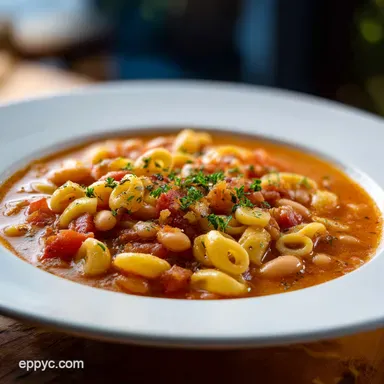
Barefoot Contessa Pasta Fagioli Recipe
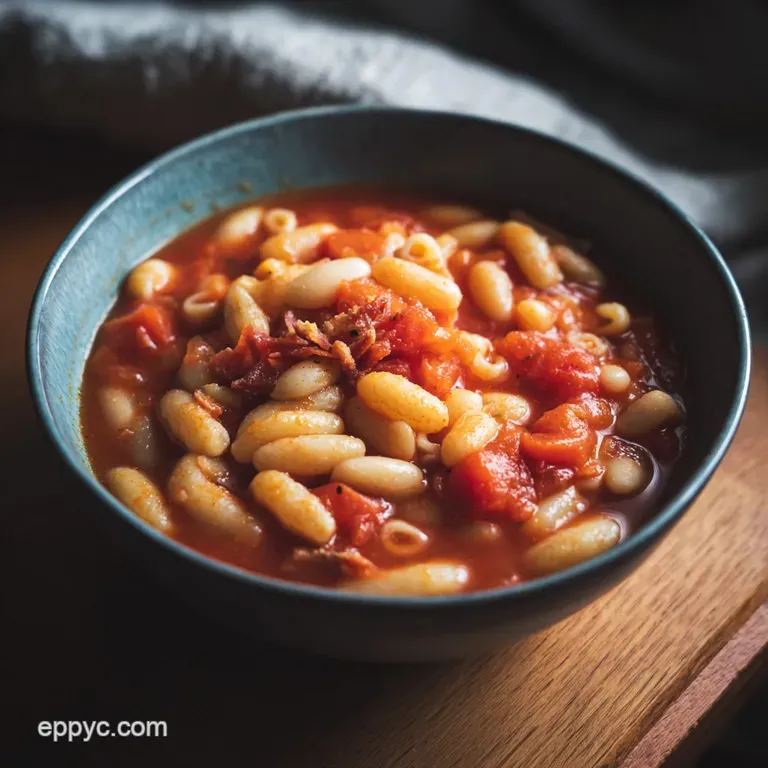
- Time:15 minutes prep + 45 minutes cook = Total 60 minutes
- Flavor/Texture Hook: Velvety bean broth with golden, crisp pancetta
- Perfect for: Rainy weeknights or cozy meal prep for the family
- The Cozy Barefoot Contessa Pasta Fagioli Recipe
- Why the Beans Get Creamy
- Comparing Cook Methods
- The Logic Behind Every Ingredient
- Gathering Your Wholesome Elements
- The Best Tools for Soup
- Bringing the Flavors Together
- Fixing Your Soup Mishaps
- Troubleshooting Common Issues
- Adjusting the Batch Size
- Updating the Recipe for All
- Keeping Your Soup Fresh
- The Best Side Dishes
- Recipe FAQs
- 📝 Recipe Card
The Cozy Barefoot Contessa Pasta Fagioli Recipe
The first thing that hits you is that sizzle. You know the one, where the pancetta hits the hot olive oil and suddenly the whole kitchen smells like a rustic Italian bistro. I remember the first time I tried this; I was convinced that a "fancy" soup needed a complex roux or a dozen different thickeners.
I spent way too much time worrying about the consistency until I realized the magic was actually hidden in the beans themselves.
The beauty of this dish is how it transforms from a simple pot of vegetables and stock into something velvety and rich. It is not just a soup, it is a hug in a bowl. When that lemon juice hits the pot at the very end, it cuts right through the richness of the pork and the starch of the pasta, waking up every other flavor in the pot.
You can expect a meal that feels substantial but doesn't leave you feeling weighed down. We are talking about a broth that clings to the ditalini pasta and a texture that feels intentional and bold.
Whether you are feeding a crowd or just treating yourself on a Sunday afternoon, this version of a barefoot contessa pasta fagioli recipe delivers that authentic, home cooked feeling we all crave.
Why the Beans Get Creamy
The Bean Puree: Blending a small amount of cannellini beans creates a natural starch slurry. This thickens the liquid without needing flour or cornstarch, keeping the flavor clean.
Acidity Balance: The lemon juice added at the end breaks down the heavy fats from the pancetta. This prevents the soup from tasting "muddy" and brightens the earthy notes of the oregano.
Deglazing Logic: Using white wine to scrape the bottom of the pot captures the caramelized pork bits. This incorporates deep, savory notes directly into the base of the broth.
Starch Release: Cooking the ditalini directly in the soup allows the pasta to release a bit of its own starch. This further binds the broth and the beans together for a cohesive texture.
Slow Reduction: Simmering the tomatoes and stock uncovered for 20 minutes concentrates the flavors. This reduces the water content and intensifies the savory profile of the vegetables.
Comparing Cook Methods
Depending on how much time you have, you might want to change how you approach the heat. While the traditional way is a steady simmer on the stove, some prefer a slower approach.
| Method | Time | Texture | Best For |
|---|---|---|---|
| Stovetop | 60 mins | Bright and Defined | Fresh dinner |
| Slow Cooker | 6 hours | Very Soft/Integrated | Set and forget |
| Oven Braise | 2 hours | Deeply Concentrated | Large batches |
Right then, it is important to remember that the stovetop method is the only way to ensure the pasta stays al dente. If you use a slow cooker, you really have to add the pasta at the very last minute, otherwise, you will end up with a porridge like consistency.
The Logic Behind Every Ingredient
I have spent a lot of time thinking about why certain things work in this soup. It is not just about following a list, but about understanding how these elements build on each other to create that bold finish.
| Ingredient | Science Role | Pro Secret |
|---|---|---|
| Pancetta | Fat Base | Render slowly for maximum crispness |
| White Wine | Acidic Deglazer | Use a dry variety to avoid sweetness |
| Cannellini | Thickener/Body | Blend 1 cup for that velvety feel |
| Lemon Juice | Flavor Brightener | Add only after heat is turned off |
When you look at these components, you see a cycle of fat, acid, and starch. The pancetta provides the fat, the wine and lemon provide the acid, and the beans and pasta provide the starch. If you miss one, the soup feels "off" or flat.
Gathering Your Wholesome Elements
For this barefoot contessa pasta fagioli recipe, you want ingredients that can stand up to a simmer. Don't bother with low-fat alternatives here, as the fat is where the flavor lives.
- 2 tbsp extra virgin olive oil
- 4 oz pancetta, diced Why this? Adds salty, smoky depth and a rich fat base
- 1 medium onion, finely chopped
- 2 medium carrots, finely diced
- 2 stalks celery, finely diced
- 3 cloves garlic, minced
- 1/2 cup dry white wine Why this? Cuts through the fat and deglazes the pan
- 28 oz crushed tomatoes
- 6 cups chicken stock Why this? Provides a savory, salty liquid foundation
- 1 tsp dried oregano
- 1 bay leaf
- 2 cans (15 oz each) cannellini beans, drained and rinsed Why this? Essential for both texture and protein
- 1 cup ditalini pasta
- 1/4 cup fresh parsley, chopped
- 2 tbsp fresh lemon juice Why this? The final "zing" that balances the dish
- salt to taste
- black pepper to taste
Ingredient Swaps
Sometimes the pantry is bare, or you need to change things up for the family. Here is how to handle substitutions without ruining the vibe of the dish.
| Original Ingredient | Substitute | Why It Works |
|---|---|---|
| Pancetta | Smoked Bacon | Similar salt and smoke. Note: Slightly heavier flavor |
| White Wine | Chicken Broth + 1 tsp vinegar | Mimics the acidity. Note: Lacks the fruity depth of wine |
| Cannellini Beans | Great Northern Beans | Almost identical texture. Note: Slightly milder flavor |
| Ditalini Pasta | Small Macaroni | Similar size. Note: May release more starch, making soup thicker |
Trust me on this, if you are skipping the pancetta for a vegetarian version, use a pinch of smoked paprika and a bit more olive oil to replace that missing smoky depth.
The Best Tools for Soup
You don't need a professional kitchen to nail this, but a few specific tools make the process much smoother. I always reach for a heavy bottomed pot because it distributes heat evenly and prevents the garlic from scorching.
First, a large Dutch oven is the gold standard here. Because we are simmering for a while and then adding pasta, you need plenty of headspace so the soup doesn't bubble over. A cast iron one, such as Le Creuset, is great for holding that steady temperature.
Then, you will need a small blender or an immersion blender. Since we are pureeing a cup of the beans, a traditional blender works, but an immersion blender lets you do it right in the pot if you're careful. Just make sure you scoop out the beans first so you don't blend the whole soup into a puree.
Finally,, a sharp chef's knife for your mirepoix (the onion, carrot, and celery). The smaller and more uniform your dice, the better the vegetables will integrate into the broth. If the chunks are too big, you get uneven bites; if they are too small, they disappear completely.
Bringing the Flavors Together
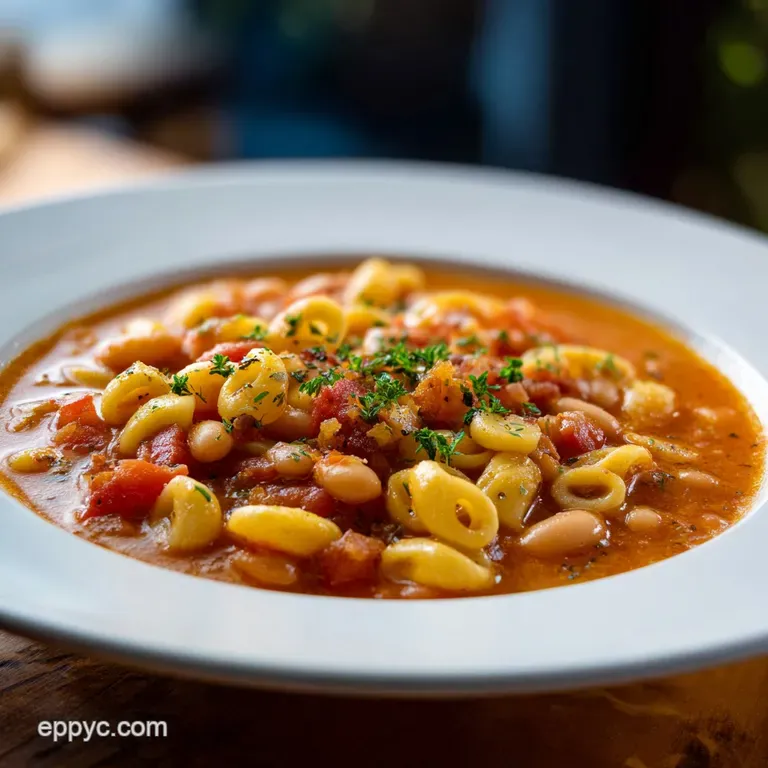
Let's crack on with the actual cooking. This is where the layers of flavor really start to build.
- Heat the olive oil in a large Dutch oven over medium heat. Add the diced pancetta and cook until the fat renders and the meat becomes golden and crisp. Note: Don't rush this; the rendered fat is the flavor base for the veg.
- Stir in the onion, carrots, and celery. Cook until the vegetables are translucent and soft. Add the garlic and sauté for 60 seconds until it smells fragrant.
- Pour in the white wine to deglaze the pan. Use a wooden spoon to scrape up any brown bits from the bottom until the liquid reduces slightly.
- Stir in the crushed tomatoes, stock, oregano, and bay leaf. Bring to a gentle boil, then reduce heat to low and simmer uncovered for 20 minutes until the broth thickens and smells savory.
- Scoop out about 1 cup of the cannellini beans. Blend them with a splash of broth until the mixture is completely smooth. Stir the puree back into the soup to thicken the broth.
- Stir in the remaining cannellini beans and ditalini pasta. Simmer until the pasta is al dente (usually about 8-10 minutes).
- Remove the bay leaf. Stir in the fresh parsley and lemon juice. Season with salt and black pepper to taste until the flavors pop.
Chef's Note: If you find your soup is thickening too much as the pasta cooks, just splash in an extra half cup of chicken stock. Ditalini is like a sponge and can soak up the liquid quickly.
Fixing Your Soup Mishaps
Even the best of us make mistakes. Maybe the pasta turned into mush, or the broth tastes a bit flat. Most of these are easy fixes if you know what happened.
Troubleshooting Common Issues
| Issue | Solution |
|---|---|
| Why Your Pasta Is Mushy | This usually happens when you simmer the pasta for too long or leave the soup on the heat after you've turned it off. Pasta continues to cook in the residual heat of the broth. To avoid this, pull the |
| Why Your Broth Is Too Thin | If your soup feels more like a watery broth than a hearty meal, you likely didn't puree enough beans or didn't simmer the base long enough. You can fix this by taking another half cup of beans, blendi |
| Why Your Soup Tastes Bitter | Overcooking the garlic is the main culprit here. If garlic turns brown or black, it becomes acrid. Always add garlic last in the sauté process, just before the wine goes in, to keep it sweet and aroma |
Adjusting the Batch Size
Sometimes you only need a bowl for yourself, and other times you are feeding the whole neighborhood. Scaling this dish is pretty straightforward, but there are a few rules to follow so the balance stays right.
Scaling Down (Half Batch): If you are cutting the recipe in half, use a smaller pot to prevent the liquid from evaporating too quickly. Reduce the simmer time by about 20%, as a smaller volume of liquid reaches concentration faster.
For the garlic, use 2 cloves instead of 1.5, as a little extra garlic never hurts.
Scaling Up (Double or Triple): When doubling, don't just double the salt and oregano. Start with 1.5x the spices, taste it at the end, and then add more. Liquids can be reduced by about 10% because larger pots often have less surface area relative to volume, meaning less evaporation.
If you are making a massive amount, I highly suggest cooking the pasta in a separate pot of salted water. If you cook 4 cups of pasta directly in a giant pot of soup, the pasta will absorb so much liquid that you'll end up with a thick stew instead of a soup. Just stir the cooked pasta in right before serving.
Updating the Recipe for All
This is a naturally hearty dish, but you can easily tweak it to fit different dietary needs without losing that satisfying soul.
Making it Vegetarian: Swap the pancetta for a tablespoon of smoked paprika and some diced smoked tofu or extra mushrooms. Replace the chicken stock with a high-quality vegetable broth. You'll still get that deep, savory base, and the bean puree keeps it just as velvety. For a similar vibe, you might enjoy a Hearty Pasta Fagioli which focuses on plant based satisfaction.
Creating a gluten-free Version: The easiest fix here is to swap the ditalini for a gluten-free small pasta or even cooked quinoa. If you use GF pasta, be careful not to overcook it, as GF varieties can go from al dente to mushy in about 30 seconds.
Reducing the Sodium: Since pancetta and canned beans can be salt bombs, rinse your beans thoroughly under cold water. Use a low sodium chicken stock and rely more on the lemon juice and black pepper to create flavor depth rather than just salt.
Keeping Your Soup Fresh
Pasta soups are a bit tricky because the pasta continues to absorb liquid even in the fridge. If you store the soup as is, you'll wake up to a pot of bean pasta porridge.
Fridge Storage: Store the soup in airtight containers for up to 4 days. To prevent the "porridge effect," I recommend storing the cooked pasta in a separate container and adding it back to the hot soup when reheating.
Freezing Guidelines: You can freeze the soup base (everything except the pasta and fresh parsley) for up to 3 months. When you're ready to eat, thaw it in the fridge overnight and simmer it on the stove. Add fresh pasta and the lemon juice at the very end to bring the flavors back to life.
Zero Waste Tips: Don't throw away those onion skins and carrot ends! Put them in a freezer bag and use them to make your own homemade vegetable stock for the next time you make this barefoot contessa pasta fagioli recipe.
Also, any leftover bean puree can be stirred into a mashed potato dish for added creaminess.
The Best Side Dishes
Because this soup is so filling, you don't need a huge spread, but a few complements make the meal feel complete. You want something that provides a crunch to contrast the velvety texture of the broth.
A piece of toasted sourdough rubbed with a raw garlic clove is the classic choice. The acidity of the bread and the sharpness of the garlic play perfectly with the rich, tomatoey base of the soup.
If you want something greener, a simple arugula salad with a lemon vinaigrette mirrors the brightness of the lemon juice in the pot.
For those who love Italian flavors, this soup fits right in with a meal centered around a Classic Italian Spaghetti Sauce for the kids or a side of roasted garlic broccolini. The key is to keep the sides light so the barefoot contessa pasta fagioli recipe remains the star of the show.
Honestly, you could serve this with nothing but a generous grating of Pecorino Romano cheese on top, and it would still be a world class meal. Just make sure the cheese is freshly grated, as the pre shredded stuff often has cornstarch that can make the soup feel grainy.
Right then, you've got the tools, the science, and the steps. This barefoot contessa pasta fagioli recipe is all about patience and layering. Take your time with the pancetta, don't forget the lemon, and enjoy that first, velvety spoonful. Happy cooking!
Recipe FAQs
What is the difference between pasta fagioli and pasta fazool?
They are essentially the same dish. "Fazool" is simply a regional dialect version of "fagioli," which is the Italian word for beans.
Should you drain beans for pasta fagioli?
Yes, drain and rinse them. Removing the canning liquid prevents the soup from becoming overly salty or cloudy.
How to thicken the broth if it is too thin?
Puree a portion of the beans. Blend about one cup of cannellini beans with a splash of broth and stir the mixture back into the pot. If you enjoyed this method for creating body, see how we use similar techniques in our Tuscan white bean soup.
Why is my pasta mushy?
You likely simmered it too long. Pasta continues to cook in the residual heat after the flame is off, so remove the pot from the heat just before the ditalini reaches al dente.
Is it true that garlic should be sautéed for several minutes before adding wine?
No, this is a common misconception. Garlic burns quickly and becomes acrid; sauté it for only 60 seconds until fragrant before deglazing.
How to deglaze the pan with white wine?
Pour the wine into the hot pan and scrape the bottom. Use a spoon to loosen the browned bits of pancetta and vegetables to incorporate those concentrated flavors into the broth.
How to prevent the soup from tasting bitter?
Avoid overcooking the garlic. Ensure the garlic is only sautéed briefly before the wine is added, as scorched garlic imparts a sharp, bitter taste to the soup.
barefoot contessa pasta fagioli recipe