Chewy Coconut Cookies: Soft and Fudgy
- Time: 10 min active + 10 min bake = Total 20 minutes
- Flavor/Texture Hook: Toasted, nutty, and shatter crisp edges with a soft heart
- Perfect for: Holiday cookie platters, afternoon tea, or a quick sweet craving
- The Best Chewy Coconut Cookies Recipe
- Why the Texture Stays Soft
- Breaking Down the Ingredients
- Gathering Your Baking Essentials
- Tools for the Job
- Bringing Everything Together
- Avoiding Common Baking Blunders
- Troubleshooting Common Issues
- Adjusting Your Batch Size
- Coconut Baking Myths
- Storage and Waste Tips
- Perfect Pairings for Cookies
- Recipe FAQs
- 📝 Recipe Card
Imagine the smell of toasted coconut filling your kitchen, that warm, nutty aroma that makes everyone in the house wander into the room. I first made these for a garden party a few summers ago, and I remember the joy on my friends' faces when they realized the cookies weren't just sweet, but had this incredible, chewy pull.
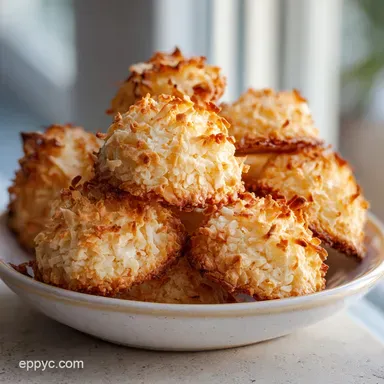
They looked like little golden gems on a white ceramic platter, perfectly contrasting with the green grass and bright sunlight.
The thing about this chewy coconut cookies recipe is that it doesn't try to be fancy, but it looks absolutely professional. It's the kind of pastry that makes you look like you spent hours in the kitchen, even though we're basically just mixing and baking.
Whether you're hosting a bridal shower or just want something to go with your coffee, these hit the spot every single time.
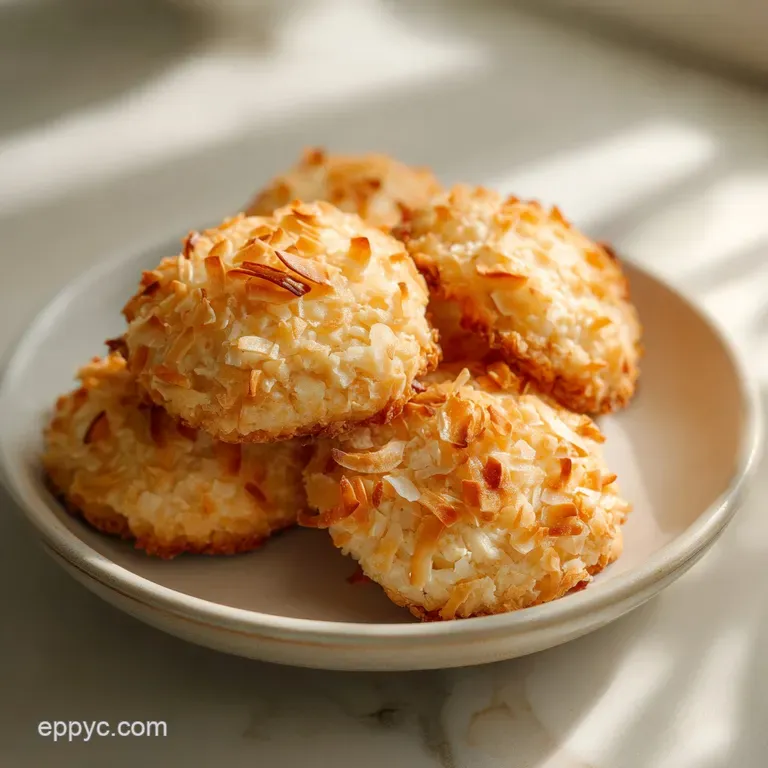
You can expect a cookie that has a slight crispness on the outside, but the inside stays tender. The shredded coconut adds a wonderful structural element, giving the cookies a rustic, artistic look that feels very intentional.
Trust me, once you see them come out of the oven, you'll understand why they're my go to for any occasion.
The Best Chewy Coconut Cookies Recipe
Right then, let's get into the heart of this. When I first started baking, I used to think all cookies were the same, but the artistry is actually in the moisture. For these, we aren't looking for a dry, crunchy biscuit.
We want something that feels almost like a piece of fudge but with the light, airy quality of a baked cookie.
If you've ever had those coconut macaroons that are a bit too sticky or those store-bought cookies that taste like cardboard, this is the antidote. The balance here is key. We're using a specific ratio of brown sugar to butter to ensure that the center stays soft, while the coconut flakes toast up just enough to give that signature nutty flavor.
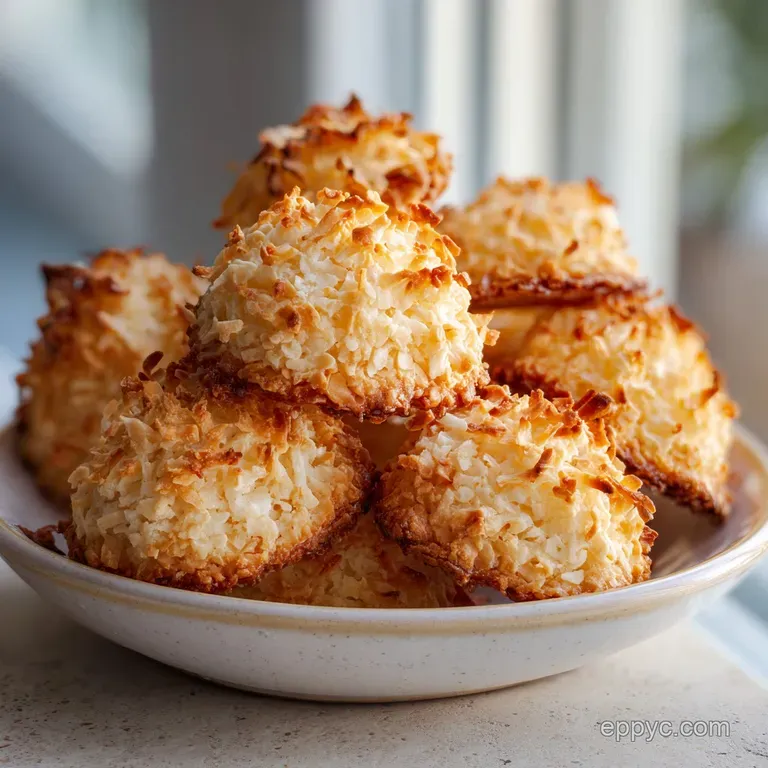
I've found that the visual appeal is just as important as the taste. By scooping them into rounded mounds, you get these beautiful little crags and peaks that catch the light. It's a simple technique, but it makes the final result feel like a piece of pastry art. Let's crack on and look at why this actually works.
Why the Texture Stays Soft
I used to wonder why some coconut cookies turned out like rocks while others stayed bendy. It turns out it's all about how the ingredients interact during those ten minutes in the oven.
Sugar Hygroscopy: Brown sugar contains molasses, which attracts and holds onto water. This prevents the cookies from drying out, keeping them velvety and soft.
Fiber Absorption: Shredded coconut acts like a tiny sponge, soaking up the fats from the butter. This creates a dense, chewy interior rather than a cakey one.
Leavening Control: The small amount of baking soda creates just enough lift so the cookies aren't flat, but not so much that they lose their chew.
Fat Distribution: Softened butter creates a stable emulsion with the sugar, which ensures the coconut is evenly coated and doesn't clump.
| Method | Time | Texture | Best For |
|---|---|---|---|
| Fast Bake | 9 mins | Very soft, underbaked center | Those who love a fudgy feel |
| Classic | 11 mins | Golden edges, set center | Gift giving and platters |
| Toasted | 13 mins | Crispy edges, nutty flavor | Dipping in coffee or tea |
Breaking Down the Ingredients
When you're aiming for a show stopping result, the quality of your components matters. I don't use fancy ingredients, but I do use them intentionally. According to King Arthur Baking, the protein content in your flour can change how much a cookie spreads, which is why I stick to a standard all purpose blend for that perfect middle ground.
| Ingredient | Science Role | Pro Secret |
|---|---|---|
| Brown Sugar | Moisture binder | Use dark brown for a deeper caramel note |
| Unsweetened Coconut | Texture & Flavor | Shake the bag to get a mix of flake sizes |
| Unsalted Butter | Fat & Aeration | Must be "pliable" not melted to keep shape |
| Baking Soda | pH Balancer | Ensures the coconut browns beautifully |
Gathering Your Baking Essentials
For this recipe, you don't need a professional kitchen, just a few staples. I've listed everything you'll need, along with some swaps if your pantry is looking a bit bare. Honestly, don't even bother with low-fat butter here - the flavor loss just isn't worth it.
- 115 g Unsalted Butter, softened Why this? Provides the fat needed for a velvety crumb
- 200 g Brown Sugar, packed Why this? Molasses content is key for the chew
- 50 g Large Egg, room temperature Why this? Binds everything without breaking the emulsion
- 5 ml Vanilla Extract Why this? Cuts through the richness of the coconut
- 190 g All Purpose Flour Why this? Gives the cookie its necessary structure
- 3 g Baking Soda Why this? Helps the cookies brown and rise slightly
- 1.5 g Salt Why this? Balances the sugar for a more complex taste
- 130 g Unsweetened Shredded Coconut Why this? The star ingredient for texture and taste
| Original Ingredient | Substitute | Why It Works |
|---|---|---|
| Brown Sugar | White Sugar | Same sweetness. Note: Cookies will be crispier and less chewy |
| All Purpose Flour | Almond Flour | gluten-free option. Note: Denser crumb and more fragile |
| Unsweetened Coconut | Desiccated Coconut | Similar flavor. Note: Less "shredded" look, more uniform texture |
| Unsalted Butter | Coconut Oil (Solid) | Maintains fat ratio. Note: Intensitifies coconut flavor, slightly softer |
If you're in the mood for something with a different kind of chew, my oatmeal cookies are a great alternative. Both use brown sugar to get that signature bend, but the oats provide a heartier contrast to the coconut's sweetness.
Tools for the Job
You don't need a lot of gear for this, but a few things make the process much smoother. I use a stand mixer such as a KitchenAid to get the butter and sugar really pale, but a hand mixer works just as well.
- Baking sheets (two, so you can rotate batches)
- Parchment paper (essential to prevent the coconut from sticking)
- Sifter or fine mesh strainer
- Rubber spatula for folding
- Cookie scoop or tablespoon
Bringing Everything Together
Now we get to the fun part. The key here is not to overwork the dough once the flour goes in. We want to keep those air bubbles we created during the creaming phase.
Phase 1: Building the Flavor Base
Cream together the softened butter and brown sugar in a bowl. Beat them until the mixture looks pale and fluffy, which usually takes about 2-3 minutes. Beat in the egg and vanilla extract until the batter is completely smooth and glossy.
Phase 2: Folding in the Texture
Sift in the flour, baking soda, and salt. Mix on low speed just until you stop seeing streaks of white flour. Now, switch to your spatula and fold in the shredded coconut by hand. Mix until the coconut is evenly distributed throughout the dough.
Note: Folding by hand prevents the dough from becoming too tough.
Phase 3: The Bake to Golden Perfection
Preheat your oven to 350°F (175°C). Scoop rounded tablespoons of dough onto your parchment lined baking sheet. Space them 2 inches apart so they have room to breathe.
Bake for 9-11 minutes until the edges are golden and the centers look just barely set.
Let them cool on the pan for 5 minutes before moving them to a wire rack. This "carryover" cooking is what ensures the center is perfectly chewy without being raw.
Avoiding Common Baking Blunders
Even the most seasoned home cooks hit a snag occasionally. Usually, it's something small that can be fixed with a quick tweak to your technique.
Troubleshooting Common Issues
| Issue | Solution |
|---|---|
| Why Your Cookies Spread | If your cookies turn into flat pancakes, it's almost always the butter. If the butter is too soft or melted, it can't hold the air from the sugar, and the dough collapses in the heat. |
| Why the Coconut Burnt | Coconut has a high oil content, which means it can go from "toasted" to "burnt" in about 30 seconds. If your oven runs hot, check them at the 8 minute mark. |
| Why the Dough is Sticky | If the dough is too hard to scoop, your butter might have been too cold, or you might have over mixed the flour. Let the dough sit for 10 minutes to soften up. |
Common Mistakes Checklist
- ✓ Did you cream the butter and sugar until pale? (Don't rush this!)
- ✓ Is your egg at room temperature? (Prevents butter from curdling)
- ✓ Did you stop mixing as soon as the flour disappeared?
- ✓ Are the cookies spaced 2 inches apart?
- ✓ Did you pull them out while the center still looked slightly underdone?
Adjusting Your Batch Size
Sometimes you need a small treat for yourself, and other times you're feeding a crowd. Adjusting this chewy coconut cookies recipe is pretty straightforward, but there are a few rules to follow.
Scaling Down (Half Batch) Use 57g butter and 100g sugar. Since you can't easily halve an egg, beat one egg in a small bowl and use exactly 25g. Reduce the bake time by about 1-2 minutes since smaller batches often heat up differently.
Scaling Up (Double or Triple Batch) Work in batches! Don't overcrowd your mixer. For the salt and baking soda, only increase them to 1.5x instead of 2x to avoid a metallic taste.
If baking two trays at once, lower the oven temp to 325°F (160°C) and extend the time by 2-3 minutes to ensure even heat distribution.
| Batch Size | Temp Adjustment | Time Adjustment | Mixing Tip |
|---|---|---|---|
| Single | 350°F (175°C) | Base Time | Standard |
| Double | 325°F (160°C) | +2-3 mins | Use two separate bowls |
| Half | 350°F (175°C) | -2 mins | Weigh the egg precisely |
Coconut Baking Myths
There are a few things people always say about coconut cookies that just aren't true. Let's clear the air.
"You must toast the coconut first." Not true! While toasting adds a different flavor, the oven does the work for you in this recipe. The coconut toasts perfectly during the 10 minute bake, keeping the interior moister.
"Sifting flour is a waste of time." In a cake, maybe. But in this chewy coconut cookies recipe, sifting prevents clumps of baking soda from ending up in your cookies, which would cause those weird bitter spots.
Storage and Waste Tips
To keep these cookies in that show stopping state, you need to store them correctly. Because of the coconut and brown sugar, they can actually dry out if left on the counter.
Storage Guidelines Keep them in an airtight container at room temperature for up to 5 days. For a longer life, the fridge keeps them soft for about a week. If you're planning for next month, the freezer is your best friend - they'll stay fresh for 3 months.
Zero Waste Tips If you have leftover shredded coconut, don't toss it! You can toast it in a dry pan and sprinkle it over oatmeal or yogurt. If you have a bit of leftover dough, roll it into a tiny ball and bake it as a "tester" cookie to check your oven temp.
Perfect Pairings for Cookies
Since these are occasion ready, the presentation is everything. I love serving these on a wooden board with a few fresh raspberries scattered around to add a pop of color. The acidity of the berries cuts through the richness of the coconut.
These are a dream when served alongside a mug of homemade hot chocolate. The deep cocoa notes and the toasted coconut create a tropical meets winter vibe that is absolutely comforting.
For a more sophisticated tea time, try pairing them with a strong Earl Grey tea. The bergamot notes in the tea complement the nutty sweetness of the cookies, making for a balanced, elegant snack. It's a simple way to turn a quick bake into a real experience.
Recipe FAQs
What is the secret to soft chewy cookies?
Use brown sugar and avoid overbaking. Brown sugar retains more moisture than white sugar, ensuring the center remains tender and bendy.
What makes cookies chewy instead of crunchy?
The high proportion of brown sugar. This ingredient is hygroscopic, meaning it attracts and holds onto water to prevent the cookie from becoming crisp.
What coconut is best for cookies?
Unsweetened shredded coconut. This allows you to control the sugar levels; if you enjoy these toasted flavor profiles, you will love our apple crisp.
How to prevent coconut cookies from burning?
Check the oven at the 8-minute mark. Coconut has a high oil content, which means it can transition from toasted to burnt in about 30 seconds.
How to store these cookies to keep them soft?
Keep them in an airtight container. Store at room temperature for 5 days or in the fridge for a week to prevent the brown sugar from drying out.
Is it true that melted butter makes cookies chewier?
No, this is a common misconception. Melted butter cannot hold the air created during creaming, causing the dough to collapse into flat pancakes.
How to handle dough that is too sticky to scoop?
Chill the dough briefly in the refrigerator. This firms up the softened butter, making the cookies much easier to portion and scoop.
Chewy Coconut Cookies