Crispy Skin
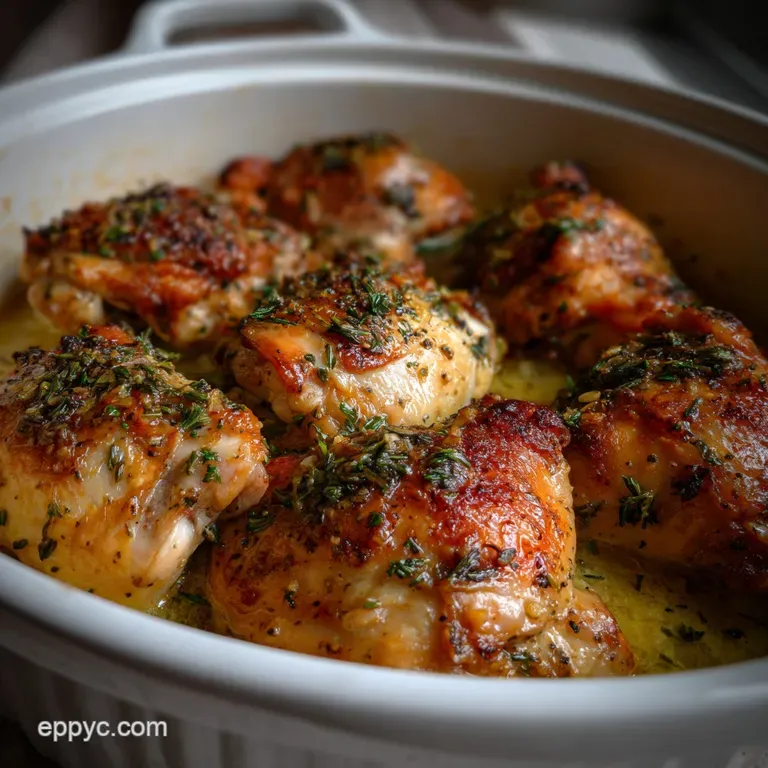
- Effort/Time: Low-effort prep / 1 hour 50 mins total
- Flavor Hook: Smoked paprika and garlic-infused compound butter saturation
- Perfect for: Sunday-roast enthusiasts and time-crunched meal-preppers
- The Thermal Dynamics of the Dutch Oven Chicken Recipe with Garlic and Herbs
- Precision Metrics for Reliable High-Performance Results
- The Architecture of Flavor: Sourcing Your Components
- Digital Tools and Essential Heavy-Bottomed Vessels
- The Assembly Protocol for a Seamless Roast
- Physics of Failure: Correcting Common Poultry Pitfalls
- Iterative Design: Customizing Your Roasted Chicken
- ⚗️ The Scaling Lab: The Physics of Quantity
- Common Myths Regarding with Garlic and Herbs Poultry
- Degradation Prevention and Preservation Strategies
- The Final Presentation and Flavor Pairings
- Recipe FAQs
- 📝 Recipe Card
There is nothing more demoralizing than pulling a 5 kg bird out of the oven only to realize you’ve essentially roasted a sponge. I’ve seen home cooks waste €40 on high end poultry, only to subject it to an uneven heating environment that leaves the breast like sawdust and the thighs undercooked.
Discover how to make a delicious Dutch oven chicken recipe with garlic and herbs that's sure to impress.
I’ll be the first to admit that early in my cooking journey, I was a "lid-lifter." I couldn't stop checking the progress, which caused the internal temperature of my heavy bottomed pot to plummet every five minutes.
The result was a pale, rubbery skin that looked more steamed than roasted, proving that patience is a physical requirement for the Maillard reaction to take hold. Empowering yourself with a digital meat thermometer and a heavy lid is the only way to escape the cycle of mediocre poultry.
The scientific revelation that changed everything for me was understanding the "Roast-to-Steam" hybrid environment. By utilizing a Le Creuset Dutch Oven, we create a micro climate where the chicken’s own juices provide a self basting steam, while the radiating heat from the cast iron walls creates a mahogany crust.
This Dutch Oven Chicken Recipe with Garlic and Herbs works because we are managing thermal mass to prevent the protein from drying out before the connective tissues have fully broken down.
The Thermal Dynamics of the Dutch Oven Chicken Recipe with Garlic and Herbs
- Maillard Reaction Optimization: The heavy cast iron walls of the vessel radiate intense, even heat that browns the skin far more effectively than thin stainless steel.
- Collagen Hydrolysis: Maintaining a stable internal temperature of 74°C in the thickest part of the thigh allows tough connective tissues to transform into silky gelatin.
- Fat-Soluble Infusion: The essential oils in the 1 tbsp fresh rosemary and 1 tbsp fresh thyme leaves are fat-soluble, meaning they bond with the 8 tbsp unsalted butter to penetrate the meat rather than just sitting on the surface.
- Vapor Pressure Control: The heavy lid traps moisture initially, preventing the breast meat from drying out during the first phase of the roast before we finish with the lid off for that shattering skin.
Ingredient Chemistry Breakdown
| Ingredient | Chemical/Physical Role (Science) | The Pro Secret (Why This Matters) |
|---|---|---|
| Whole Chicken (4 5 lbs) | Collagen hydrolysis via bone-in roasting | Bone-in protein retains moisture better and provides a structural heat conductor. |
| 8 tbsp Unsalted Butter | Lipid based flavor carrier | Butter acts as a vehicle for the garlic and herbs, ensuring deep flavor penetration. |
| 0.5 cup Dry White Wine | Acid based deglazing and steam generation | The tartaric acid in the wine breaks down surface proteins for a more tender result. |
| 6 Cloves Garlic | Sulfur based aromatic infusion | Mincing increases surface area, releasing more allicin for a sharper, more complex profile. |
Precision Metrics for Reliable High Performance Results
To achieve the "Masterclass" status, we must respect the physics of the kitchen. This Dutch Oven Chicken Recipe with Garlic and Herbs requires an understanding of how mass affects time. We aren't just "cooking until it looks done"; we are aiming for specific checkpoints that guarantee safety and texture.
- Checkpoint 1 (Internal Temp): 74°C (165°F) in the thickest part of the thigh, not touching the bone.
- Checkpoint 2 (Sizzle Factor): The liquid in the bottom of the pot should be at a rolling simmer, not a violent boil, to prevent the vegetables from disintegrating.
- Checkpoint 3 (Resting Period): A mandatory 15 minutes of resting allows the muscle fibers to reabsorb the juices that were pushed toward the surface during the roast.
While this Oven Chicken Recipe with Garlic and Herbs is designed for a 1 hour 30 mins cook time, variations in oven calibration can change the outcome. If you are using a fan-forced (convection) oven, reduce the temperature by 20°C to avoid scorching the herbs before the internal meat reaches safety.
The Architecture of Flavor: Sourcing Your Components
When selecting your bird for this Chicken Recipe with Garlic and Herbs, look for air-chilled poultry if possible. Conventional water chilled chickens often carry excess moisture in the skin, which creates steam and prevents that sought after crunch.
- 1 whole chicken (4 5 lbs): Why this? Larger birds have a higher fat-to-meat ratio, leading to a juicier result.
- 1 lb baby Yukon Gold potatoes, halved: Why this? High starch content allows them to absorb chicken fat without falling apart.
- 8 tbsp unsalted butter, softened: Why this? Butter allows for a higher fat compound rub than oil, creating better skin texture.
- 3 large carrots, peeled and cut into 2 inch chunks: The size ensures they cook through at the same rate as the potatoes.
- 1 large yellow onion, peeled and wedged: Acts as a natural trivet, lifting the bird off the bottom of the pot.
- 6 cloves garlic, finely minced: Use a microplane for the most intense flavor extraction.
- 1 tbsp fresh rosemary, finely chopped: Fresh is mandatory; dried rosemary can feel like needles in the final sauce.
- 1 tbsp fresh thyme leaves: Strip them from the woody stems to avoid bitterness.
- 1 tsp smoked paprika: Adds a subtle "wood fired" depth that mimics an outdoor rotisserie.
- 2 tsp Diamond Crystal Kosher salt: The larger grain size makes it easier to season the cavity evenly.
- 1 tsp coarsely ground black pepper: Coarse grind provides a sensory "pop" of heat.
- 1 head of garlic, sliced crosswise: Provides a massive aromatics base for the pan juices.
- 1 large lemon, halved: The acid balances the heavy lipids of the butter and chicken fat.
- 1 bunch fresh parsley: Adds a hit of chlorophyll and freshness to the finish.
- 0.5 cup dry white wine: A crisp Sauvignon Blanc or Pinot Grigio works best for deglazing.
| Original Ingredient | Substitute | Why It Works |
|---|---|---|
| Unsalted Butter | Ghee (Clarified Butter) | Higher smoke point; same rich dairy flavor profile. |
| Dry White Wine | Low-sodium Chicken Broth | Adds depth without the acidity. Note: Results in a slightly flatter flavor profile. |
| Yukon Gold Potatoes | Red Bliss Potatoes | Similar waxy texture that holds shape during long roasts. |
| Fresh Rosemary | Fresh Sage | Offers a different earthy/musky note that pairs well with poultry. |
Digital Tools and Essential Heavy Bottomed Vessels
For this Dutch Oven Chicken Recipe with Garlic and Herbs, the tool is just as important as the technique. You need a 5.5 to 7 quart enameled cast iron Dutch oven (like a Lodge or Le Creuset).
The thickness of the cast iron provides the thermal inertia required to maintain a steady temperature even when you open the oven door.
You will also need a digital instant read thermometer. Relying on "clear juices" is a myth that often leads to overcooked, stringy breast meat. If you want to expand your skill set to other high integrity proteins, this same equipment is used in our Stuffed Bell Peppers recipe to ensure the rice and beef cook perfectly in tandem.
Chef's Tip: Freeze your butter for 10 minutes before grating it into your herb mixture. This creates tiny "fat pockets" that melt slowly, creating a self basting effect under the skin.
The Assembly Protocol for a Seamless Roast
- Pat the chicken dry using paper towels until the skin feels like parchment. Note: Surface moisture is the enemy of the Maillard reaction.
- Combine 8 tbsp butter with minced garlic, rosemary, thyme, paprika, salt, and pepper in a small bowl. Note: Creating a compound butter ensures even distribution of aromatics.
- Separate the skin from the breast meat by gently sliding your fingers underneath. Note: This creates a pocket for the fat to baste the leanest part of the bird.
- Spread half the butter mixture directly under the skin and the other half over the exterior. Note: Interior fat prevents the breast from drying out at high heat.
- Stuff the cavity with the lemon halves and the sliced head of garlic. Note: Aromatics inside the bird steam the meat from the inside out.
- Layer the potatoes, carrots, and onions in the bottom of the Dutch oven. Note: The vegetables act as a rack, preventing the chicken from boiling in its own juices.
- Pour 0.5 cup white wine around the edges of the vegetables, avoiding the chicken skin. Note: Liquid provides the steam needed for Phase 1 of the cook.
- Roast at 200°C for 60 minutes with the lid on until the vegetables are tender and the chicken is pale but cooked.
- Remove the lid and continue roasting for 30 minutes until the skin is mahogany brown and the sizzle of the fat is audible.
- Rest the chicken for 15 minutes on a cutting board until the internal temperature stabilizes and juices settle.
Physics of Failure: Correcting Common Poultry Pitfalls
Why Your Chicken Skin is Rubbery
The primary culprit is steam entrapment. If your Dutch oven lid is too tight and you never remove it, the skin will never reach the 150°C required for the Maillard reaction.
Protein denaturation happens at lower temperatures, but the "shatter crisp" texture requires the evaporation of surface moisture.
| Problem | Root Cause | The Fix | Pro Protocol |
|---|---|---|---|
| Pale, Soggy Skin | Excessive moisture/Lid kept on too long | Remove lid for the last 30 mins and increase heat by 15°C. | Pat skin dry with salt 2 hours before cooking to air-dry. |
| Mushy Vegetables | Too much liquid added initially | Reduce wine/broth to 0.5 cup; the chicken will release its own fats. | Use large 2 inch chunks of carrots to resist overcooking. |
| Dry Breast Meat | Chicken was not rested | Mandatory 15 minute rest period under loose foil. | Pull the bird at 72°C; carryover cooking will reach 74°C. |
Why Your Garlic and Herbs Burn
If you notice the herbs on the skin turning black and bitter, it’s likely because they weren't sufficiently "insulated" by the butter. The butter acts as a heat buffer. For another perspective on managing delicate aromatics, see how we treat herbs in our Phyllo Dough Recipes where fat layers protect the greens.
Iterative Design: Customizing Your Roasted Chicken
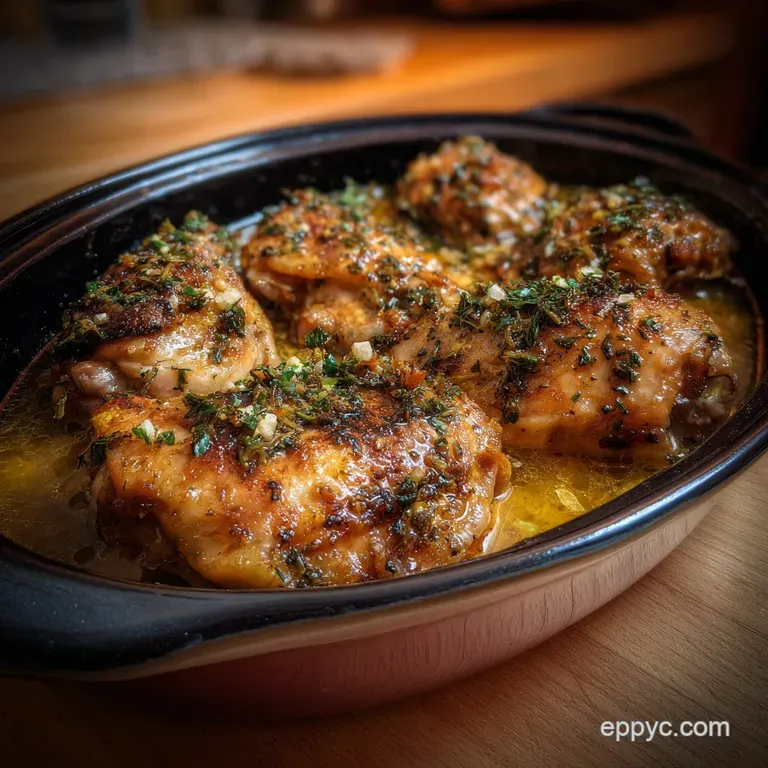
Dutch Oven Chicken Thighs Garlic Herbs
If you aren't ready to tackle a whole bird, you can adapt this Dutch Oven Chicken Recipe with Garlic and Herbs for thighs. Since thighs have more connective tissue (collagen), they are far more forgiving.
Reduce the total cook time to 45 minutes, but keep the lid off for the entire duration to ensure the smaller surface area gets maximum crispiness.
Mediterranean Twist
Swap the rosemary for 1 tbsp dried oregano and the white wine for 0.25 cup lemon juice. Add 0.5 cup Kalamata olives and 200g of feta cheese during the final 15 minutes of roasting. This variation benefits from the salty umami of the olives, which pairs perfectly with the roasted garlic.
⚗️ The Scaling Lab: The Physics of Quantity
When you decide to double this Dutch Oven Chicken Recipe with Garlic and Herbs to feed a crowd, you cannot simply double everything and expect the same results. Physics dictates a different approach:
- The Evaporation Paradox: If you put two chickens in a larger pot, the surface area of the liquid increases, but the volume of the chickens blocks the airflow. You must reduce the added wine by 15% to prevent the pot from becoming a soup.
- Pan Crowding (Maillard Killer): Never overlap the birds. If the skin of one chicken touches another, those spots will stay grey and gummy. Use two separate Dutch ovens if necessary to maintain at least 2cm of space between proteins.
- Carry Over Cooking: A larger mass of meat retains more thermal energy. If you are roasting a 6 lb bird instead of a 4 lb bird, pull it at 70°C rather than 72°C. The internal temperature will rise significantly more during the rest.
Common Myths Regarding with Garlic and Herbs Poultry
Myth: You must baste the chicken every 20 minutes for it to stay moist. Truth: Every time you open the lid, you lose the heat and steam required to break down the collagen.
The Dutch oven is a self basting environment; the condensation on the lid drips back onto the meat naturally.
Myth: Washing the chicken makes it safer. Truth: This actually spreads bacteria like Campylobacter and Salmonella across your kitchen surfaces via aerosolized water droplets. The heat of a 200°C oven is what kills the bacteria.
Degradation Prevention and Preservation Strategies
Storage: This Oven Chicken Recipe with Garlic and Herbs stays fresh in the fridge for up to 4 days. Store the chicken and vegetables in an airtight container to prevent the "fridge smell" from penetrating the fat.
Freezing: You can freeze the cooked meat for up to 3 months. However, do not freeze the roasted potatoes; their cellular structure collapses upon thawing, resulting in a mealy, unpleasant texture.
Reheating: To preserve the skin’s integrity, avoid the microwave. Reheat in a 175°C oven for 15 minutes. If the meat feels dry, add a splash of chicken broth to the pan and cover it with foil for the first 10 minutes.
💡 ZERO WASTE PHILOSOPHY: Don't discard the chicken carcass or the herb stems. Transform: Simmer the bones, herb stems, and onion skins in 2 liters of water for 4 hours to create a collagen rich stock. Science: The heat breaks down the bone marrow and connective tissue into gelatin, which provides a velvety mouthfeel and natural thickening for future soups. If you enjoy fermented flavors, this stock is a great base for a soup served alongside our Sauerkraut recipe.
The Final Presentation and Flavor Pairings
When you're ready to serve this Chicken Recipe with Garlic and Herbs, don't just hack into it. Use a sharp carving knife to remove the legs and wings first, then slice the breast against the grain. This shortens the muscle fibers, making every bite feel more tender.
The pan juices (jus) at the bottom of the pot are liquid gold. If the juices are too thin, strain them into a small saucepan and simmer for 5 minutes to reduce. This concentrates the flavors and creates a "velouté style" sauce without the need for flour.
This high fat, high flavor profile is exactly why this Dutch Oven Chicken Recipe with Garlic and Herbs remains a staple in my household. It's a reliable, heartfelt way to empower any home cook to master the art of the roast.

Recipe FAQs
Is resting the chicken mandatory before carving?
Yes, a 15-minute rest period is mandatory. Resting allows the muscle fibers to relax and reabsorb internal moisture that was pushed outward during high heat roasting. This principle of thermal stabilization is key to preventing juices from flooding the cutting board, a technique also vital for consistent protein texture in our Silky Smooth Homemade Irish Cream Recipe Better Than StoreBought.
Can I skip searing the chicken skin before roasting?
Why did my compound butter burn under the skin?
- Ensure butter is softened, not melted
- Place most butter under the skin pocket
- Do not exceed 200°C for the initial covered phase
Should I use skinless chicken breasts instead of a whole bird?
Does using a thinner metal pot yield the same results as cast iron?
Myth: Washing chicken removes surface pathogens before cooking.
What can I use instead of white wine for deglazing the pan?
Dutch Oven Garlic Herb Chicken
Ingredients:
Instructions:
Nutrition Facts:
| Calories | 718 kcal |
|---|---|
| Protein | 52 g |
| Fat | 42 g |
| Carbs | 24 g |
| Fiber | 4 g |
| Sugar | 3 g |
| Sodium | 845 mg |
