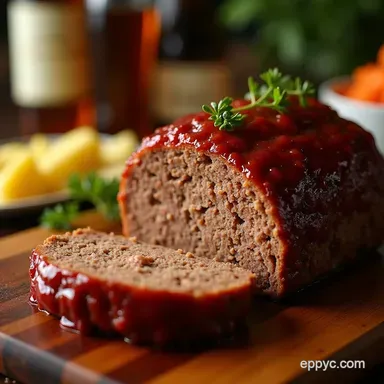
The Ultimate Comfort Classic the Sunday Roast Glazed Meatloaf
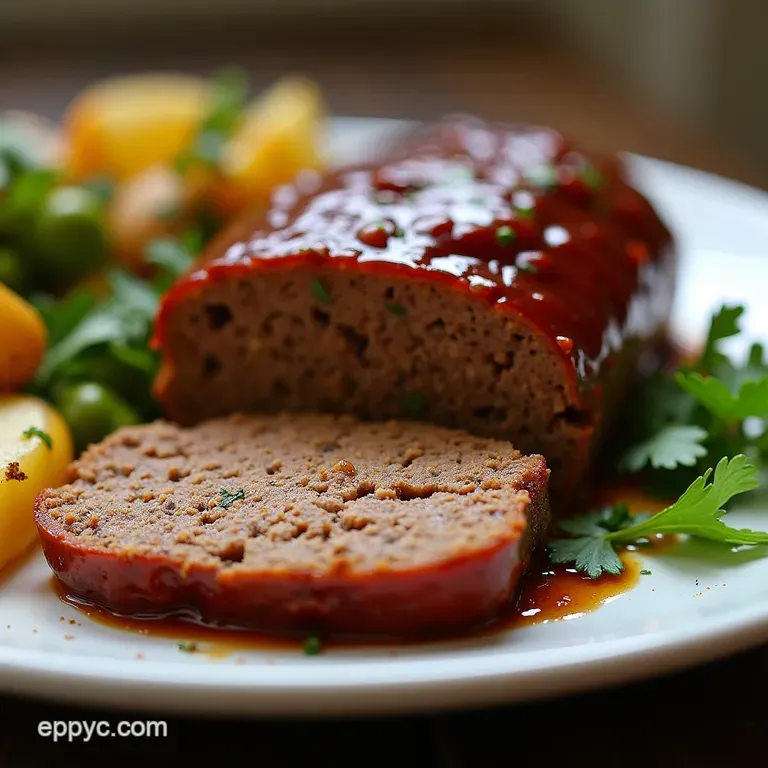
- Unveiling the Secret to Unforgettably Moist Homestyle Meatloaf
- Why This Recipe Outshines Every Other Sunday Classic
- The Essential Component List for Superior Flavour
- Step-by-Step Mastery: Building Your Ultimate Meatloaf
- Maximizing Your Leftover Comfort Food Potential
- Advanced Techniques for Next-Level Meatloaf Variations
- Recipe FAQs
- 📝 Recipe Card
Unveiling the Secret to Unforgettably Moist Homestyle Meatloaf
If the word "meatloaf" conjures images of dry, dense dinner slabs destined for the bottom of the leftovers bin, I have a delicious intervention for you today. This is not your grandmother’s dry, overcooked brick of beef.
We are delving deep into the secrets that transform humble ground meat into the quintessential comfort food experience: a juicy meatloaf that is richly savoury, perfectly seasoned, and topped with a glistening, tangy crust.
This comprehensive guide will walk you through every single step, ensuring your next attempt at this classic meatloaf is your absolute best meatloaf recipe yet. Prepare to master the art of the truly exceptional loaf.
Why This Recipe Outshines Every Other Sunday Classic
The fundamental goal when crafting any great meatloaf recipe is moisture retention coupled with deep flavour infusion. Many recipes fail because they treat the mixture like something to be overworked or baked too long.
Our approach focuses on creating a 'panade', a binding mixture, that locks moisture in from the first mix to the last slice. On top of that,, the careful balance in our topping elevates the entire dish from simple fare to spectacular.
Setting the Stage: The Pursuit of Perfect Texture
Achieving that coveted tender texture starts long before the meat hits the oven. It begins with the binder. We use a combination of Panko breadcrumbs soaked thoroughly in milk, along with two eggs.
This soaking process ensures the breadcrumbs swell and create a soft, cushiony matrix within the meat, rather than dissolving into a tough paste. On top of that,, using a 2:1 ratio of ground beef to pork adds essential fat content (we recommend 80/20 beef) that renders during cooking, basting the loaf internally and guaranteeing richness.
A Tangy Topping that Defines the Experience
No truly great Meatloaf is complete without its iconic glaze. Our signature topping is designed to be slightly sharp to cut through the richness of the meat blend.
Combining ketchup with brown sugar provides the necessary sweetness, while a healthy splash of apple cider vinegar introduces the required tanginess. A hint of Dijon mustard emulsifies the sauce and deepens the overall flavour profile.
As this Meatloaf glaze recipe caramelizes under heat, it forms a sticky, flavourful shell that is utterly irresistible.
Why Baking vs. Frying Makes All the Difference Here
For an easy meatloaf recipe , baking is the only way to go. While pan-frying might work for smaller patties, a full loaf requires gentle, even heat distribution. Baking allows the internal temperature to rise slowly, enabling the binders to set properly without scorching the exterior.
Placing the loaf in a standard 9x5 inch pan contains the juices, but for those who prefer a crispier exterior crust, forming it free-form on a baking sheet is a fantastic alternative, ensuring every bite has textural contrast.
The Essential Component List for Superior Flavour
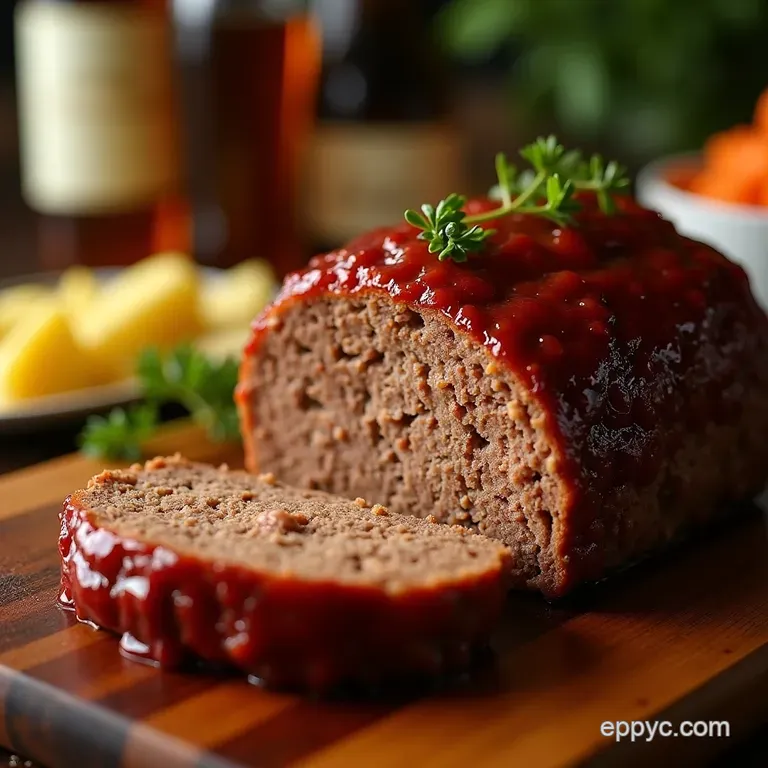
Creating a masterpiece requires the right building blocks. We’re focusing on high-quality staples paired with thoughtful additions that guarantee deep, homestyle flavour without requiring obscure ingredients.
You’ll need roughly 3 lbs of total meat (a blend is best) to yield 6 satisfying servings from this recipe.
Selecting the Optimal Blend of Ground Meats
While pure ground beef is traditional, the most flavourful and juicy meatloaf utilizes a trifecta or at least a duo of meats. Our standard calls for 2 lbs of 80/20 ground beef for flavour and fat, paired with 1 lb of ground pork.
Pork adds a necessary tenderness that balances the heartiness of the beef. If pork isn't available, ensure you use at least 85/15 beef to avoid a disappointing dry result.
Aromatics and Binders: The Moistness Guarantee
The texture success hinges on two non-meat components: the soaked breadcrumbs and the aromatic base. We insist on using Panko breadcrumbs soaked in half a cup of whole milk for at least five minutes prior to mixing.
For aromatics, finely diced white onion (about one cup) and three cloves of minced garlic provide foundational savoury depth. Don’t forget fresh parsley and a teaspoon of dried thyme to introduce herbaceous brightness.
Crafting the Signature Tangy Glaze Ingredients
The Meatloaf sauce is deceptively simple. You’ll need half a cup of ketchup, a quarter cup of packed light brown sugar, two tablespoons of sharp apple cider vinegar, and one teaspoon of Dijon mustard.
This mixture provides the signature sticky, sweet-and-sour topping that sets this dish apart from plainer versions.
Measuring Tools Required for Precision Cooking
While this is an easy meatloaf recipe , precision matters for the glaze and seasoning. Ensure you have accurate measuring spoons for the salt (1 ½ teaspoons kosher) and thyme.
Most importantly, to monitor the Meatloaf cooking time accurately and ensure safety, a reliable instant-read thermometer is non-negotiable for checking the Meatloaf internal temp .
Step-by-step Mastery: Building Your Ultimate Meatloaf
The process of assembly must be approached with a light hand. Think of it as gently folding ingredients together, not aggressively kneading dough. This mindful mixing is central to producing a tender final product rather than a dense, chewy brick.
Prepping the Flavour Base: Sautéing the Soffritto
While some simply toss raw onion into the mix, we highly recommend softening the diced onion first. Sautéing the onion with the minced garlic in a tiny bit of butter for about 5 to 7 minutes until translucent mellows their sharp bite, allowing their sweetness to permeate the loaf evenly.
Once sautéed, set them aside to cool slightly before incorporation; introducing hot vegetables into the raw meat mixture can prematurely begin the cooking process of the exterior proteins.
The Gentle Mixing Technique to Avoid Tough Loaves
Once your breadcrumb panade is formed and your cooled aromatics are added, it’s time for the meat. Add the ground beef and pork to the bowl. Now, using clean hands, gently fold the ingredients together. Stop mixing the moment you no longer see streaks of white, usually about 20 to 30 gentle turnovers.
The mixture should look somewhat loose; resist the urge to compact it further before shaping.
Glazing Strategy: When and How to Apply the Topping
The timing of the glaze application is critical for optimal caramelization. We bake the loaf without the glaze for the first 35 minutes. This initial bake allows the meat structure to set, preventing the glaze from sliding off into the pan.
Apply the first half of the Meatloaf glaze recipe at this point, returning it to the oven for the next phase.
Determining Doneness: Internal Temperature Milestones
The most crucial measurement for this Meatloaf recipe is the internal temperature. Place your thermometer probe into the absolute center of the thickest part of the loaf, ensuring you avoid touching the bottom of the pan.
For ground meats, the safe and ideal Meatloaf internal temp is 165° F ( 74° C). This usually takes between 60 to 75 minutes total, depending on your oven calibration and the pan depth.
Remember, resting the loaf post-bake is as important as the cooking itself!
Maximizing Your Leftover Comfort Food Potential
A whole Meatloaf yields plenty of delicious leftovers, a cornerstone of satisfying home cooking. Allow the loaf to cool completely before tightly wrapping and refrigerating.
The flavour of cold meatloaf, often enhanced overnight, makes for fantastic sandwiches the next day, perhaps layered with sharp cheddar and pickled onions. Don't toss any residual glaze or pan juices; these can be drizzled over cold slices or whisked into a simple brown gravy for reheating.
Advanced Techniques for Next-Level Meatloaf Variations
Once you’ve mastered this fundamental Classic Meatloaf , the sky’s the limit for customization. Experimentation with different meats, herbs, and even vegetable additions can keep this staple exciting for years to come.
Freezing Guidelines: Preserving Freshness for Later
This Meatloaf recipe freezes beautifully. You have two options: freeze the raw, shaped loaf, or freeze the cooked loaf. For raw freezing, wrap the shaped loaf tightly in plastic wrap, then aluminum foil, and freeze for up to three months.
To cook from frozen, remove the plastic, leave the foil on, and increase the Meatloaf cooking time by about 50% before unwrapping and glazing for the last half hour.
Pairing Perfection: Sides that Complement the Loaf
To create a truly balanced plate, lean into creamy and slightly acidic sides. Creamy mashed potatoes are the perfect vehicle for soaking up the juices. Alternatively, a rich macaroni and cheese pairs wonderfully.
For something bright, consider a simple coleslaw or roasted asparagus, which provides a nice textural counterpoint to the soft loaf.
Incorporating Roasted Vegetables for Added Depth
To boost nutrition and flavour without compromising the texture, try adding finely chopped, pre-roasted vegetables into the meat mixture. Roasted red peppers or finely diced mushrooms that have been thoroughly sautéed to remove moisture work exceptionally well.
Ensure they are cool before mixing them in, just like the onions.
Troubleshooting: Fixing a Crumbly or Dry Result
If your loaf turns out crumbly, it usually means you skimped on the binder (milk/eggs) or didn't mix enough to distribute the binding agents evenly. If it’s dry, it was overcooked; next time, pull the loaf out immediately upon reaching that 165° F Meatloaf internal temp and ensure you use fattier meat.
A little extra splash of milk or beef broth stirred in right before baking can often salvage a loaf that seems slightly dry upon initial inspection.
Recipe FAQs
Why does my meatloaf always turn out dry? I want that moist result you promised!
That's the classic pitfall! The key to moisture lies in two places: ensuring you soak the breadcrumbs in milk first (the panade), and definitely not overmixing the meat. Overworking the beef and pork toughens the proteins, squeezing out all the lovely juices during baking.
How long should I cook the meatloaf, and how do I know it’s truly done?
For this recipe, aim for about 60–75 minutes at 375°F (190°C), but the internal temperature is your true benchmark. Stick a meat thermometer right into the centre; it’s perfectly safe and ready when it hits 165°F (74°C).
If you bake past this, it’ll dry out quicker than a biscuit left out overnight!
Can I use just one type of meat, like only ground beef, for this meatloaf?
Absolutely, you can! While the pork adds fantastic richness and fat content, if you only have ground beef, use 3 lbs of 80/20 beef. If you opt for leaner beef (90/10), consider adding an extra tablespoon of olive oil to the mix so you don't lose that comforting succulence.
I’m short on time; can I prepare the meatloaf mixture ahead of time?
Yes, you certainly can! You can mix the entire meatloaf base up to a day in advance, cover it tightly, and keep it in the fridge. Just remember to let it sit out on the counter for about 20 minutes before baking so it warms up slightly, this helps it cook more evenly.
My glaze always burns before the meatloaf is cooked; what’s the trick?
That tangy glaze has sugar, so it caramelises fast! Make sure you apply only about half of the glaze before the meatloaf has cooked for at least 30–35 minutes. Brush the remaining half on only during the last 10–15 minutes of baking to get that gorgeous colour without burning the edges.
How should I store leftover meatloaf and is it any good cold?
Leftover meatloaf stores beautifully in an airtight container in the fridge for up to four days. It is brilliant cold, actually, slice it thinly and serve it on buttered bread with a smear of that leftover glaze or some good English mustard. Proper comfort food for the next day!
The Best Juicy Meatloaf Recipe with Tangy Glaze