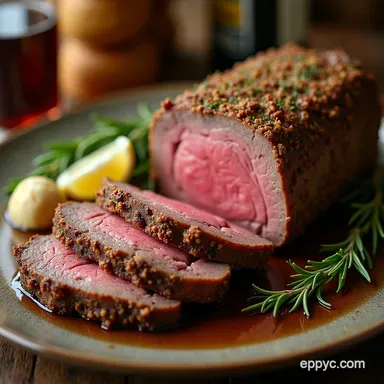
The Sunday Dinner Showstopper Perfect Ovenroasted Prime Rib with Garlic Rosemary Crust
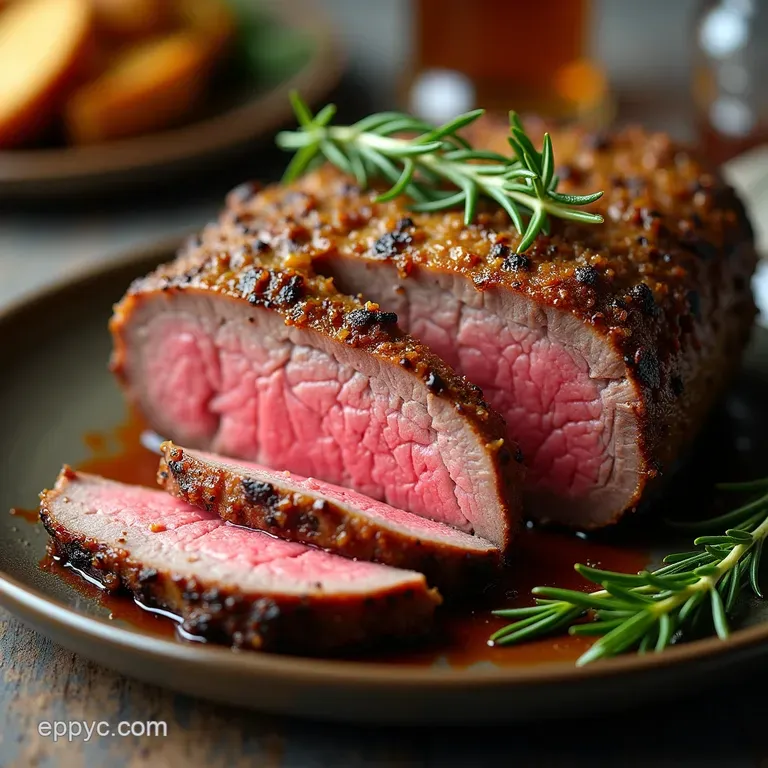
- Elevating the Holiday Centrepiece: Why This Prime Rib Roast Method Reigns Supreme
- Unlocking Edge-to-Edge Rosiness: Our Secret to Tender Meat
- Assembling the Flavour Arsenal for the Perfect Prime Rib Roast
- Mastering the Herb Crust Rub: Ingredient Ratios Explained
- The Preparation Phase: Tempering and Tying for Uniform Cooking
- The Slow Roast Journey: Achieving Internal Temperature Nirvana
- The Grand Finale: Achieving the Ultimate Crust Sear
- Serving Suggestions: Perfect Pairings for Your Magnificent Roast
- Troubleshooting Common Roasting Pitfalls
- Recipe FAQs
- 📝 Recipe Card
Elevating the Holiday Centrepiece: Why This Prime Rib Roast Method Reigns Supreme
There are dishes that feed the body, and then there are dishes that feed the soul. The Prime Rib Roast , or standing rib roast, squarely falls into the latter category. It is the undisputed monarch of the festive table, a centerpiece demanding respect, patience, and the right technique.
Achieving that elusive combination, a deeply caramelized, flavorful crust giving way to meat that is perfectly rosy from edge to edge, can seem like the domain of master butchers, but I assure you, it is entirely within your grasp.
We are moving past dry, overcooked roasts toward a succulent, flavourful experience. This definitive guide lays out the exact roadmap for creating the perfect prime rib roast using a low-and-slow approach, ensuring every slice is a triumph of texture and taste.
Unlocking Edge-to-Edge Rosiness: Our Secret to Tender Meat
The key difference between a good roast and a legendary one lies in controlling the temperature gradient within the meat. We want the entire interior, from the centre to the very edges, to be evenly cooked, avoiding the grey band of overcooked meat beneath the surface that plagues traditional high-heat roasting.
Defining 'Prime': Understanding Your Cut of Meat
When shopping for this magnificent cut, you will often see it labeled as "Standing Rib Roast." While "Prime" refers to the highest USDA grade (indicating superb marbling), you can achieve spectacular results with a Choice-grade roast if the marbling looks generous.
Look for a roast with excellent fat distribution throughout the muscle, this fat melts during cooking, basting the meat internally and delivering unparalleled moisture. A good 4 to 5-pound roast, typically yielding three ribs, is perfect for serving 6 to 8 appreciative guests.
The Magic of Slow Roasting: A Textural Promise
To achieve that sought-after, uniform rosy center prime rib roast , we must employ the slow-roasting method, often achieved by starting high and dropping the temperature, or utilizing a true low-and-slow cook right from the start.
By maintaining a lower oven temperature for the majority of the Prime Rib Roast cooking time , the muscle fibers contract gently, retaining moisture rather than seizing up and expelling their juices prematurely.
This patience rewards you with a tender, buttery texture that is simply unmatched by faster cooking methods.
Setting the Stage: Essential Equipment for Success
Success in how to cook prime rib roast hinges not on complex steps, but on precise measurement. The single most crucial piece of equipment you need is a high-quality, reliable digital meat thermometer.
Forget the unreliable pop-up timers; you must monitor the prime rib roast temperature in the thickest part of the meat, ensuring the probe avoids contact with any bone. On top of that,, use a sturdy V-rack placed inside a heavy roasting pan.
Elevating the roast allows hot air to circulate completely around the entire roast, which is essential for developing that glorious outer crust evenly.
Assembling the Flavour Arsenal for the Perfect Prime Rib Roast
A roast this magnificent requires seasoning that complements the rich beef flavour, not overwhelms it. Our approach focuses on drawing moisture to the surface initially to build the exterior crust while deepening the beef’s inherent taste profile.
We use a combination of coarse salt, fresh herbs, and Dijon mustard to achieve both flavour penetration and crust adherence.
Mastering the Herb Crust Rub: Ingredient Ratios Explained
The crust is where the magic truly happens, providing a textural contrast to the tender interior. For a 4 to 5-pound roast, you need a generous coating. We begin with three tablespoons of coarse kosher salt mixed with one tablespoon of freshly cracked black pepper.
This heavy salting is key; much of it will form the crisp exterior, while some will permeate the outer layers of the meat. We then introduce aromatics to build our flavorful prime rib roast crust .
The Herb Bouquet: Fresh vs. Dried Considerations
For this recipe, we highly encourage the use of fresh herbs. The aromatic oils released by fresh thyme and rosemary when heated contribute significantly to the final aroma and taste. Finely chop one tablespoon of fresh rosemary and one teaspoon of fresh thyme leaves.
If you must substitute dried herbs, reduce the quantity by half, as dried versions carry a much more concentrated intensity.
Procuring the Ideal Standing Rib Roast: Tips for Selection
When speaking with your butcher about the Prime Rib Roast recipe , specifically ask for a "standing rib roast" (which means the bones are still attached). These bones act as natural insulation, helping the roast cook more evenly.
If you have to transport it a significant distance, consider asking the butcher to ‘Frenched’ the bones (cleaning the meat and fat off the ends of the bones) for easier carving later, though it is purely cosmetic.
Beyond Salt and Pepper: Enhancing the Base Seasoning
To bind the dry ingredients and provide a subtle tang that cuts through the richness of the fat, we rely on Dijon mustard. Two tablespoons, liberally brushed over the entire surface after the initial tempering phase, acts as a sticky binder for the herb and salt mixture.
Crucially, this mustard flavour bakes off completely, leaving behind only depth of flavour and a superior crust texture.
Related Recipes Worth Trying
- Ultimate Country Style Beef Ribs Recipe Oven Smoker — Learn the lowandslow secrets to unbelievably tender Country Style Beef Ribs that melt in your mouth Get the foolproof dry rub and finish instructions
- Whipped Feta Roasted Pepper Dip The Easiest Party Dip — Looking for quick and easy dips This 10minute Whipped Feta Dip is a creamy party dip that beats anything storebought Perfect for chips
- The Ultimate SlowCooked Chuck Roast Dishes Red Wine Braise — Stop settling for dry pot roast This simple Dutch oven recipe yields truly tender chuck roast dishes slowbraised in red wine for deep savoury flavour Get...
The Preparation Phase: Tempering and Tying for Uniform Cooking
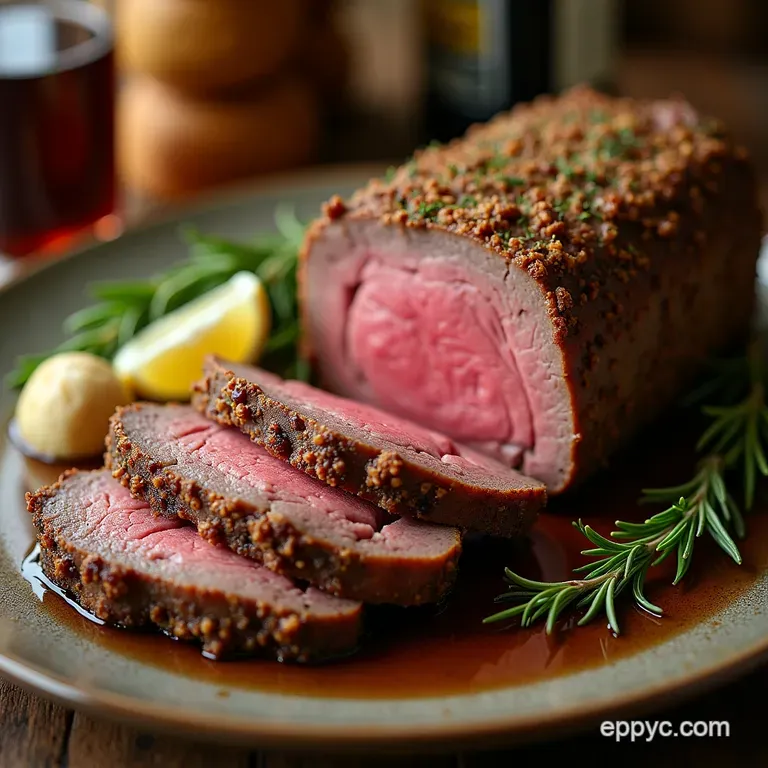
Before this beautiful hunk of beef even thinks about entering the oven, it needs time to acclimate. This is called tempering. Remove your Prime Rib Roast from the refrigerator at least two to three hours before you plan to start cooking.
Placing cold meat directly into a hot oven guarantees that the outside will overcook while the centre remains raw, the very uneven cooking we strive to avoid. Pat the roast completely dry with paper towels after tempering; moisture is the enemy of a good sear, as it steams the surface instead of browning it.
After patting dry, apply the Dijon binder, followed by a thorough massage with your prepared salt and herb rub, ensuring every exposed surface is coated.
The Slow Roast Journey: Achieving Internal Temperature Nirvana
This Prime Rib Roast in oven method involves a dual-temperature approach for optimal results. First, we blast it with high heat to initiate that crust formation.
Preheat your oven to 450° F ( 230° C) and roast for 15 to 20 minutes. Then, immediately reduce the oven temperature significantly to about 250° F ( 120° C).
This lower temperature is where the bulk of the cooking occurs. Insert your probe thermometer into the thickest part, avoiding the bone, and let the low heat work its magic slowly.
The Grand Finale: Achieving the Ultimate Crust Sear
While we initiated the crust with the high heat blast, the slow roasting time is what truly perfects the internal texture. Your primary goal during this lengthy cooking phase is monitoring the internal temperature closely.
Crafting the Infused Garlic and Rosemary Paste
Although we incorporated garlic and rosemary into the primary rub, a secondary application of flavour near the end can intensify the aroma. Mix two tablespoons of olive oil with one tablespoon of minced garlic and one teaspoon of finely chopped rosemary.
Brush this mixture lightly over the exterior of the roast about 30 minutes before it hits its final pull temperature. This slight increase in fat and aromatics ensures a vibrant, fragrant exterior.
Calculating Cooking Duration: Oven Settings and Monitoring
Because every roast varies in size and density, there is no set Prime Rib Roast cooking time . A general estimate for a 4 to 5-pound roast cooked at 250° F ( 120° C) is about 15–20 minutes per pound for medium-rare, but this is only a starting point.
Rely on your thermometer! For the recommended medium-rare finish, you must remove the roast when the internal temperature hits 125° F to 130° F ( 52° C to 54° C).
Remember, carry-over cooking will raise the internal temperature by another 5 to 8 degrees during the resting period, bringing you perfectly into the medium-rare zone.
Resting Protocol: Why 30 Minutes Makes All the Difference
The most frequently skipped, yet most critical, step in roasting any large cut of beef is resting. Once the roast reaches its target pull temperature, carefully transfer it to a cutting board.
Tent it loosely with aluminum foil, loose so that the foil does not compress the crust, and allow it to rest for a minimum of 60 minutes for a roast this size. During this time, the pressurized juices redistribute throughout the muscle fibres.
If you slice prematurely, those juices flood your cutting board, leaving you with dry meat. This resting time is essential for the best prime rib roast recipe outcome.
Serving Suggestions: Perfect Pairings for Your Magnificent Roast
Serving a roast of this calibre demands side dishes that offer balance. A phenomenal pairing for the richness of the beef is a sharp, cooling condiment like a homemade horseradish cream sauce, which cuts through the fat beautifully.
For starch, opt for something creamy and deeply satisfying, such as potatoes au gratin or traditional Yorkshire puddings, which are designed to soak up the delicious drippings.
Troubleshooting Common Roasting Pitfalls
If you find your roast has developed a thicker grey band than anticipated, it usually points to one of two issues: either the meat was cooked directly from the refrigerator, or the initial oven temperature was too low for the entire duration.
If the crust hasn't caramelized enough, you can always place the roast back into a 500° F ( 260° C) oven for a final 5 to 10 minutes after resting (though this slightly risks warming the interior too much).
Precision Carving Techniques: Maximizing Yield and Presentation
Once rested, the carving process begins. If your roast was bone-in, gently slide a thin, flexible carving knife between the bones and the meat, working carefully to separate the roast cleanly from the rack. This should be the very first step.
Next, place the boneless roast on its side and always slice against the grain. Look closely at the muscle fibres; they should run horizontally or diagonally across the roast, and your knife should cut perpendicular to them to ensure maximum tenderness in every slice.
How to Craft an Impromptu Au Jus from the Drippings
Even if you are serving a rich sauce, a light au jus made from the pan drippings elevates the entire experience. After removing the roast, drain off most of the rendered fat from the roasting pan, leaving about two tablespoons of drippings. Place the pan over medium heat on your stovetop.
Whisk in a tablespoon of flour or cornstarch slurry, then slowly deglaze with a dry red wine or beef stock, scraping up all the caramelized bits (fond) from the bottom. Simmer briefly until slightly thickened.
Storage Guidelines for Savoring Every Last Morsel
Leftovers from a Prime Rib Roast are a treasure. Store sliced or whole pieces in airtight containers in the refrigerator for up to four days. For longer storage, slice the remaining meat thinly and freeze it flat between layers of parchment paper in heavy-duty freezer bags; it will maintain excellent quality for up to three months.
Maximizing Leftovers: Reimagining Your Prime Rib
The next day’s meal should be as exciting as the first! Thinly sliced leftover roast is perfect for elevated French Dip sandwiches served with the reserved au jus for dipping, or folded into savory breakfast hash with potatoes and eggs.
Never underestimate the flavour power of quality roast beef used cold in gourmet sandwiches the following day.
Recipe FAQs
What’s the secret to avoiding a dry Prime Rib Roast?
The absolute game-changer is using a reliable meat thermometer and relying on carry-over cooking. Pull the roast out of the oven when it's 5–10 degrees below your final target temperature, then let it rest, tented, for a full hour.
That resting time allows the internal temperature to climb safely while redistributing the juices, ensuring edge-to-edge succulence.
How long does a 4lb Prime Rib Roast actually need to cook for?
For a 4-5 lb roast aiming for medium-rare (130°F final temp), expect around 3 to 3.5 hours using the slow-roast method. However, oven temperatures vary wildly, so please treat that timing as a rough guide only.
Always prioritize the internal temperature reading over the clock; that’s how the seasoned pros do it.
Can I cook my Prime Rib Roast bone-side down, or must it always be fat-side up?
You should roast it fat-side up, preferably on a rack within the pan. The fat cap acts as a natural insulator, protecting the meat underneath from the direct heat of the oven element. If you’re using bones, keep them intact as they also help insulate the roast and keep it steady!
My roast is massive; how should I store leftovers?
Leftovers are fantastic, but you must slice them off the bone and store them in an airtight container. For the best flavour retention, try to store the sliced meat submerged slightly in a little beef stock or the leftover jus, this keeps it from drying out in the fridge. It should keep well for 3–4 days.
Is there a way to get a darker, crispier crust on my Prime Rib Roast?
Yes, the key is a dry surface and a blast of high heat! Make sure you pat the meat bone-dry before applying the rub, and consider salting it overnight in the fridge uncovered to dry the surface.
You can also start the roast at a very high temperature (450°F/230°C) for the first 15 minutes before dropping the heat down for the slow roast.
Best Prime Rib Roast Recipe Rosy Center Flavorful Crust