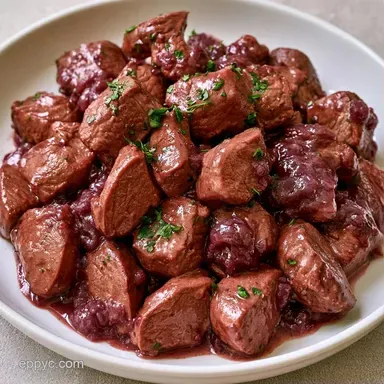
Sautéed Beef Kidney with Grape Juice Sauce
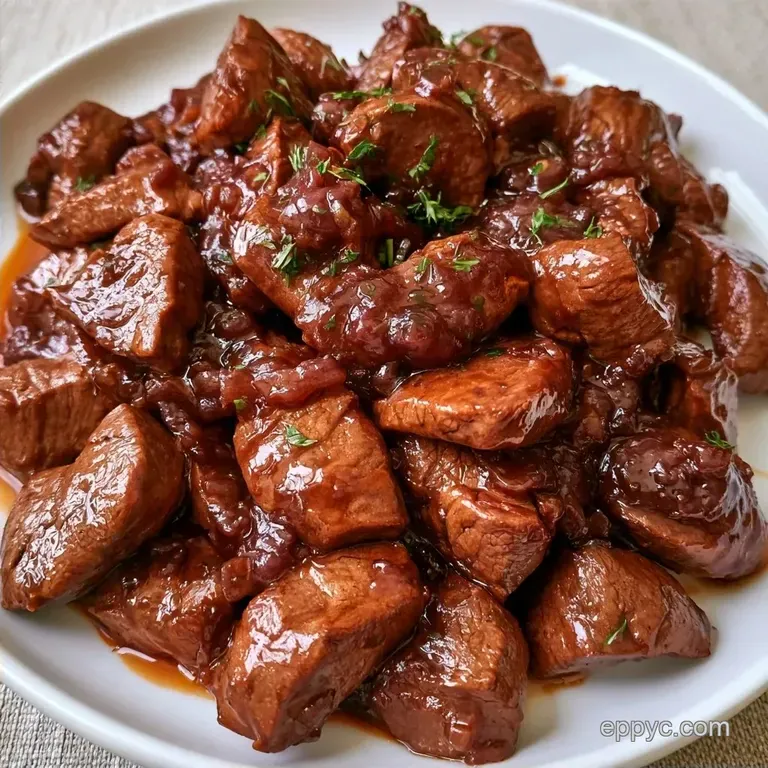
The combination of a milk soak and a high heat sear keeps the meat tender and mild, while the grape juice creates a glossy, fruity glaze. Sautéed Beef Kidney with Rich Grape balances earthy organ meat with a bright, sweet acidity.
- Time: 20 min active + 30 min soaking + 40 min cooking
- Flavor & Texture: Earthy and rich with a glossy, fruit driven sauce
- Perfect for: An adventurous weeknight dinner
Sautéed Beef Kidney with Rich Grape
Hearing that kidney hit a hot pan results in a loud, intense sizzle. Done right, it produces a dark, caramelized crust and a succulent interior. While it evokes a classic bistro feel, it's remarkably simple to prepare at home using just one pan.
Many steer clear of beef kidney, fearing a gamey taste or assuming it needs hours of simmering to be edible. However, a fast sear over high heat keeps the texture ideal, while a brief soak eliminates the strong offal notes without making the meat tough.
Precision is key here. The goal is to reach a precise internal temperature and remove the meat from the heat immediately. The grape juice provides the balance, its vibrant, tart sweetness cutting through the intense richness of the organ meat.
How the Texture Works
- The Milk Soak: The proteins in milk and the acidity of lemon juice help pull out impurities and blood. This leaves you with a clean, mild flavor.
- High heat Searing: A fast cook at high temperatures builds a crust quickly. This prevents the meat from simmering in its own juices, which is what usually makes kidney rubbery.
- Cold Butter Finish: Whisking in cold butter at the end creates a velvety emulsion. It thickens the sauce and gives it a professional shine.
| Method | Time | Texture | Best For |
|---|---|---|---|
| Sauté | 1 hour | Tender and snappy | Quick dinners |
| Braised | 3 hours | Soft and fall apart | Slow cooking |
Gathering Your Essentials
The choice of juice is the most important part of the sauce. Unsweetened grape juice provides the necessary fruit sugars to caramelize without adding the cloying sweetness of a corn syrup-based drink.
- Beef Kidney (450 g): Slice these into bite-sized pieces. Why this? Maintains a consistent cook across all pieces.
- Whole Milk (480 ml): Used for the initial soak. Why this? Neutralizes strong flavors.
- Lemon Juice (15 ml): Adds a touch of acidity to the soak.
- All-Purpose Flour (30 g): For a very light dredging. Why this? Helps the crust form and thickens the sauce.
- Salt (3 g) and Black Pepper (1 g): Basic seasoning.
- Unsalted Butter (30 g + 15 g cold): Used for searing and the final glaze.
- Neutral Oil (15 ml): Prevents the butter from burning.
- Shallots (50 g): Finely minced for a sweet, oniony base.
- Garlic (9 g): Minced fresh.
- Unsweetened Grape Juice (240 ml): The heart of the sauce.
- Beef Broth (120 ml): Adds savory depth.
- Fresh Thyme (2 g): Earthy herbs that pair well with beef.
Equipment Needed
Just a few basic tools are required for this. A heavy-duty cast iron or stainless steel pan is ideal, as it retains heat well and allows the "fond" (those browned bits) to develop on the base. You'll also need a fine-mesh strainer and some paper towels to get the meat thoroughly dry.
The Cooking Process
Preparing the Meat
Put the kidney pieces into a bowl and cover them with the milk and lemon juice. Let them soak in the refrigerator for 30 minutes. Drain the kidney through a fine mesh colander and pat them completely dry with paper towels.
Note: Excess moisture will cause the meat to steam rather than sear, ruining the mahogany crust.
Searing the Meat
Season the kidney with salt and black pepper, then toss them in flour until lightly coated. Over medium-high heat, warm the oil and 30 g of butter in your skillet. Wait for the butter to foam and begin to brown.
Arrange the kidney in a single layer. Avoid overcrowding the pan to prevent the temperature from dropping. Cook for 2–3 minutes per side without moving the pieces. Aim for a deep mahogany crust and a center that reaches 160°F/71°C. Transfer the meat to a plate to rest for 3 minutes.
Reducing the Sauce
Turn the heat down to medium. Sauté the shallots for 2 minutes until translucent, then stir in the garlic for 30 seconds until fragrant.
Pour in the grape juice, using a wooden spoon to deglaze the caramelized residue from the skillet. Stir in the beef broth and thyme. Simmer for 8–10 minutes until the liquid has reduced by half and resembles a thick syrup.
The Final Glaze
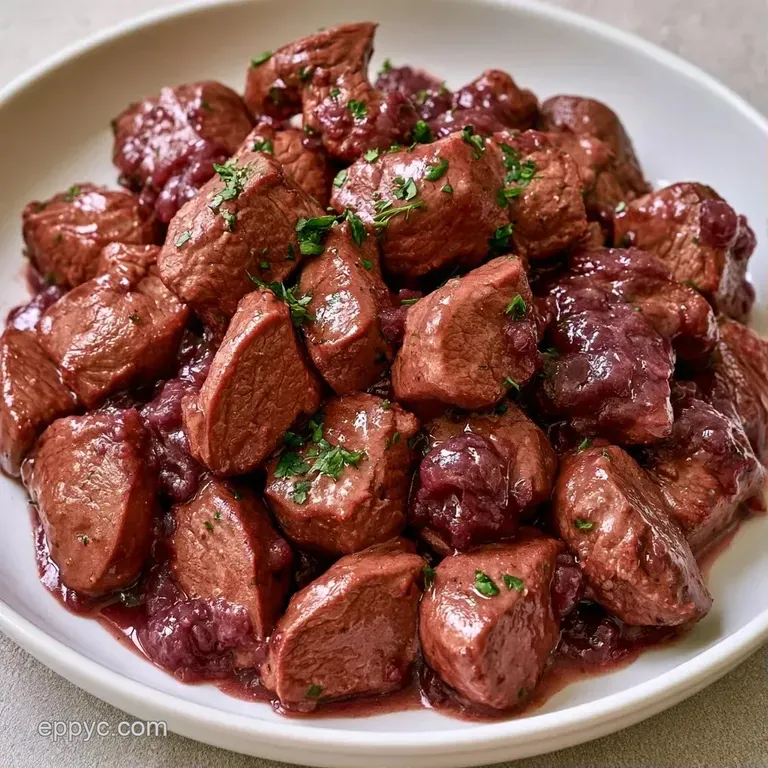
Return the seared kidney and any juices from the plate back into the pan. Toss the meat in the sauce for 2 minutes. Remove the pan from the heat and whisk in 15 g of cold butter until the sauce is glossy. Serve immediately.
Avoiding Kitchen Disasters
Rubbery Meat
This occurs if the kidneys are overcooked. Organ meats can transition from tender to tough very quickly, so use a meat thermometer to reach exactly 160°F/71°C. Alternatively, the meat should feel springy to the touch, not firm.
Sauce is Too Tart
If the grape juice creates too much acidity, stir in a touch of sugar or a bit of extra butter. This mellows the sharp edges and creates a more balanced flavor.
Strong Offal Flavor
An overly intense taste usually means the meat wasn't soaked long enough or wasn't patted dry. For a more subtle flavor next time, increase the milk soak to 1 hour.
Serving Suggestions
This dish is rich, so it pairs well with something that can soak up the sauce. Mashed potatoes or a buttery polenta work great. I also like serving it alongside roasted carrots or sautéed spinach to add a bit of freshness. If you are looking for other hearty beef ideas, a beef lasagna recipe is a great way to use similar savory profiles.
Storage and Leftovers
Store any remaining portions in a glass container in the fridge, where they will stay fresh for three days. To reheat, warm them gently on the stove over low heat. Stir in a splash of beef broth to thin the sauce, as the flour and butter cause it to thicken while chilled.
This dish is not recommended for freezing, as the sauce can separate and the kidneys may lose their proper consistency.
Flavor Twists
- Balsamic Glaze: Swap half of the grape juice for a premium balsamic vinegar to introduce a richer, more acidic flavor.
- dairy-free: Opt for a coconut-based butter substitute during the searing process and for the final glaze. While the taste varies slightly, the glossy finish remains.
Recipe FAQs
How do I properly clean and prepare beef kidney for cooking?
Soak the sliced pieces in a mixture of milk and lemon juice for 30 minutes. Drain them through a fine-mesh colander and pat them extremely dry with paper towels before seasoning.
What’s the best way to cook beef kidney to achieve tenderness?
Quickly sear over medium-high heat until it hits 160°F/71°C. To avoid a rubbery texture from overcooking, let the meat rest for 3 minutes after searing.
Can I substitute beef kidney with other types of kidney?
Yes, lamb kidneys are a viable alternative. They offer a similar texture but typically have a slightly milder flavor profile.
How should I store leftover cooked beef kidney?
Keep leftovers in a glass container in the fridge. They stay good for three days.
What do I do with beef kidney fat?
Trim excess fat away before slicing. This ensures the meat sears properly and the sauce remains glossy rather than greasy.
How to best cook beef kidneys?
Dredge in flour and sear in foaming butter and oil. Cook in a single layer for 2–3 minutes per side to create a deep mahogany crust.
Sautéed Beef Kidney with Grape Juice Sauce