Goat Cheese Tartlets with Whipped Filling
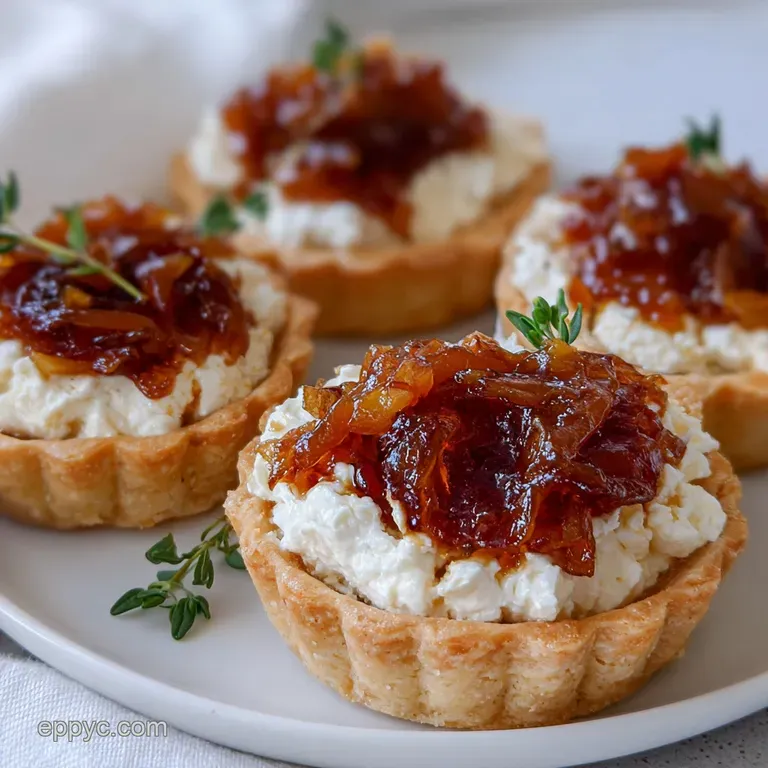
- Tangy Temptation: Why These Whipped Chèvre Tartlets Are Essential
- Gathering Your Components: Essential Ingredients for the Perfect Filling
- The Method: Crafting Elegant Caramelised Onion and Goat Cheese Tartlets
- The Science of Flavor: Balancing Earthiness and Sweetness
- Achieving Perfection: Pro Tips and Troubleshooting for Tartlets
- Maximizing Freshness: Storing Your Baked Goods
- What to Pair with Tangy Chèvre Tartlets
- Recipe FAQs
- 📝 Recipe Card
Tangy Temptation: Why These Whipped Chèvre Tartlets Are Essential
Oh my word, stop everything. The aroma of warm, caramelised onions mingling with the bright, sharp tang of fresh Goat Cheese —it is pure heaven. These little tartlets are my secret weapon when I need something that looks like I spent all weekend perfecting it, but secretly takes less than two hours, most of which is inactive waiting time.
Seriously, forget those fussy canapés that crumble before they reach your mouth. This recipe is simple, relatively cheap if you skip the fancy pre-made pastry, and delivers an incredible flavour punch that screams sophistication.
The key, which I will share, is whipping the Goat Cheese until it’s almost like a cloud; it completely transforms the filling texture.
I’ve made every mistake possible with baked Goat Cheese starters soggy bottoms, dry filling, burnt edges. But I finally cracked the code, combining slow, deep sweetness with the airy structure of whipped dairy.
Ready to ditch the stress and start making starters that actually impress? Let’s crack on and talk about why this exact approach to Goat Cheese tarts works.
The Difference Whipping Makes: Achieving the Lightest Filling
This isn’t just about mixing ingredients; it’s about incorporating air. If you just mix standard fresh Goat Cheese with an egg and bake it, you end up with a dense, rubbery filling bleh.
By using an electric whisk and whipping the Goat Cheese and crème fraîche together for a solid two minutes, you inject air. This aeration allows the filling to rise lightly and set into a delicate, almost soufflé like pillow when baked.
It’s what makes the difference between a heavy starter and a truly elegant Goat Cheese appetizer recipe.
Simplifying Sophistication: An Effortless Starter for Entertaining
You want food that tastes complex, not food that is complex to make, right? Absolutely. By using good quality store-bought shortcrust pastry (I won’t tell anyone), the only active work involves slicing the onions and whipping the fresh Goat Cheese .
The components the pastry, the onions, and the filling can all be prepped ahead of time, making assembly on the day of the party utterly seamless. This is the secret to stress free hosting that looks like a major culinary feat.
Why Fresh Chèvre is the Best Choice for this Recipe
We need a young, soft Goat Cheese for this application the kind you buy in a log, usually labeled "chèvre." We aren't looking for aged, hard cheese here. That intense tang and high moisture content is perfect for whipping and blending smoothly.
If you opt for an aged variety, you’ll end up with granular lumps, and your final filling won't achieve that required, smooth 'pillow' texture we are after.
Gathering Your Components: Essential Ingredients for the Perfect Filling
The ingredient list is deceptively short, but the quality of each component matters immensely when you’re dealing with a star ingredient like Goat Cheese . Don't skimp on the butter for the onions; that fat carries all the flavour.
Selecting the Right Fresh Goat Cheese Density
As mentioned, fresh, soft Goat Cheese (chèvre) is mandatory. It should be pliable at room temperature, making it easy to whip. If you accidentally bought a very firm log, let it sit out longer than you think you should.
Do not use the hard, crumbly type of Goat Cheese in this recipe.
| Ingredient | Role | Viable Substitute | Notes on Swap |
|---|---|---|---|
| Goat Cheese (Soft Chèvre) | Main flavour, structure | Cream Cheese + Feta Crumble | Use 6 oz Cream Cheese + 1 oz crumbled Feta for tang. |
| Crème Fraîche | Richness, stabilizer | Heavy Cream or Full Fat Greek Yogurt | If using yogurt, drain it first to prevent a runny filling. |
| Yellow Onions | Sweet contrast | Shallots | Shallots caramelise faster and offer a milder sweetness. |
| Shortcrust Pastry | Base | Puff Pastry | Puff pastry requires less blind baking time and offers a flakier bite. |
Pastry Perfection: Choosing Between Homemade and store-bought Shortcrust
Look, I’m a home cook, not a pastry chef. While I love the texture of homemade shortcrust, sometimes speed wins. For these individual tartlets, a good quality, all-butter store-bought shortcrust is absolutely fine.
It gives you a beautiful, buttery base that stands up well to the moisture of the caramelised onions and the baked Goat Cheese filling. If you want to go full DIY, ensure your base is well chilled before baking.
Dairy Swaps: Alternative Cream and Softener Options
Crème fraîche adds that necessary richness and helps prevent the filling from separating while baking. I prefer it to double cream because of its slight inherent tang, which complements the Goat Cheese beautifully.
If you're out, double cream works just fine, or for a lighter, sharper note, use full fat Greek yogurt, but please, please remember to drain it first. We need structure, not moisture, for this gorgeous baked Goat Cheese filling.
The Method: Crafting Elegant Caramelised Onion and Goat Cheese Tartlets
The real work here is patience. Don't rush the onions.
Mastering the Slow Cook: Technique for Deeply Caramelised Onions
This is non-negotiable. If your onions are just browned and limp, the tartlets will taste bland and slightly sulfuric. You must cook them low and slow, over medium low heat, with plenty of oil and butter for at least 30 minutes.
When they are ready, they should look like a dark, glossy jam, packed with deep, sugary sweetness. This profound sweetness is essential to balance the sharp notes of the fresh Goat Cheese .
Chef’s Note: The caramelised onions must be fully cooled before they touch the pastry. Warm onions will steam the pre-baked shell, guaranteeing a soggy bottom, and we simply can't allow that.
Blind Baking the Shells: Avoiding the Soggy Bottom Syndrome
Soggy bottoms are the bane of the tart maker’s existence. After lining your tins and trimming the edges, prick the base all over with a fork this is called docking. The trick is blind baking with weights (baking beans or rice) for the first 15 minutes, followed by 5– 7 minutes without the weights.
This two-stage bake ensures the base dries out completely and sets before the filling goes in. Nobody wants a wet-bottomed Goat Cheese tartlet.
Incorporating the Whipped Filling and Final Assembly
Once the onions are cool and spread evenly into the shells, it’s time for the star: the whipped Goat Cheese . Ensure your electric whisk has done its job until the mixture looks airy. Spoon the filling carefully over the onions.
Don't press or flatten it; you want that light, puffy texture to remain. A light hand and gentle baking are all that stand between you and the perfect finished Goat Cheese tart.
The Science of Flavor: Balancing Earthiness and Sweetness
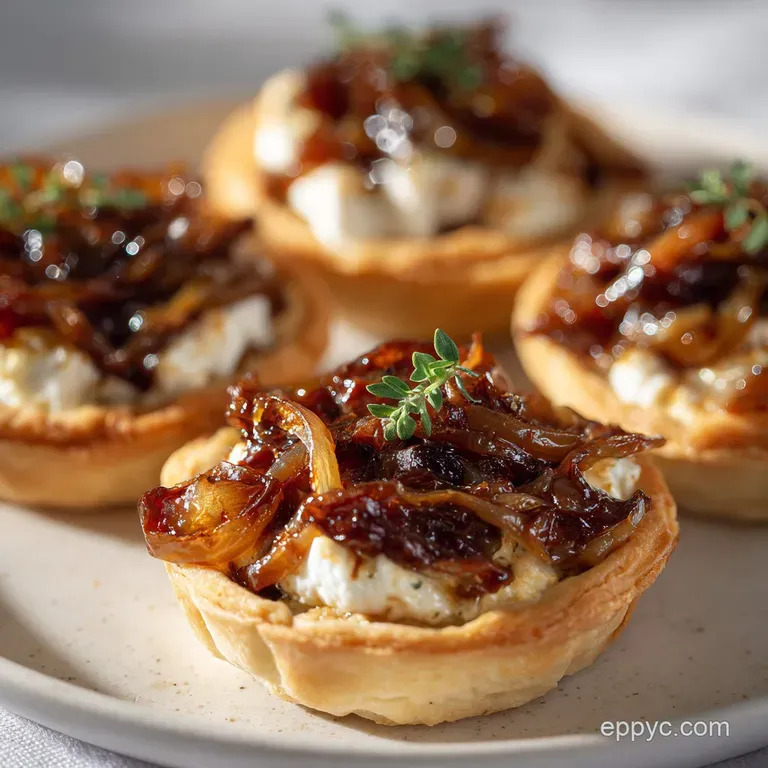
The brilliance of this particular Goat Cheese recipe lies in the contrast. Fresh chèvre, particularly a good soft one, carries a distinct barnyard earthiness and high acidity. If you served it naked, it might overwhelm.
However, when paired with the deep Maillard reaction sweetness of the caramelised onions, those opposing flavours create harmony. The small amount of lemon zest in the filling doesn't add sourness; it lifts the dairy notes, making the whole dish taste brighter and more sophisticated.
It’s why this Goat Cheese appetizer recipe is always such a huge hit.
Achieving Perfection: Pro Tips and Troubleshooting for Tartlets
I’ve ruined entire batches, so learn from my mistakes!
The Maillard Reaction and Onion Caramelisation
Mistake: Turning the heat up too high. The result is scorched, bitter onions. Fix: Keep the heat low (seriously low). You aren't frying them; you are slowly cooking the moisture out and allowing the natural sugars to concentrate and brown over half an hour.
That time investment guarantees flavour payoff.
Achieving the Perfect 'Pillow' Texture for the Filling
Mistake: Using cold Goat Cheese or under whipping. This results in a heavy, solid filling. Fix: The cheese must be room temperature.
Whip the mixture for a full 2– 3 minutes until it looks visibly airy and slightly increased in volume. You are essentially making a light mousse to hold its shape when baked.
Cutting Through the Richness: The Role of Vinegar and Thyme
Pro Tip: Don’t skip the balsamic vinegar in the onions! It enhances the colour and adds a necessary layer of complexity, preventing the onions from tasting just sweet.
Similarly, fresh thyme is the perfect earthy match for fresh Goat Cheese —it's far superior to dried thyme here.
Preventing Curdling in Soft Dairy Fillings
If your oven is too hot, the eggs in the Goat Cheese filling will seize up, causing a grainy, curdled texture. We are baking these lightly and quickly (8– 10 minutes) at a moderate temperature (350°F / 175°C) just until the centre is set and puffed.
Do not overbake.
The Importance of Cooling the Filling Before Baking
This applies to the onions, but also the filling itself. If your whipped Goat Cheese mixture sits too long at room temperature before baking, the air you incorporated will deflate. Assemble the tartlets quickly and bake immediately after filling for maximum puff.
How to Repair Cracked Shortcrust Tart Shells
If your pastry cracks when lining the tin, don't panic! Grab a scrap piece of leftover pastry, moisten the edges slightly with a tiny bit of water, and press the patch over the crack.
This little bit of TLC saves the base and ensures your precious whipped Goat Cheese doesn't leak out during the final bake.
Maximizing Freshness: Storing Your Baked Goods
These tarts are truly best served warm, or at least at room temperature on the day they are made.
Fridge Storage: Leftovers can be kept in an airtight container in the refrigerator for up to 3 days. They tend to lose a little crispness on the base after the first day, but the Goat Cheese filling remains delicious.
Reheating: To enjoy them again, place them directly on a baking sheet and reheat in a moderate oven (300°F/150°C) for about 5– 8 minutes until warmed through. Avoid the microwave, which turns the pastry into sad, chewy sadness.
Freezing: I generally don't recommend freezing small baked goods like this, as the moisture from the onions can really ruin the pastry texture upon thawing. If you must freeze, bake them fully, cool them completely, wrap them tightly in foil and then place them in a freezer bag for up to 1 month.
Thaw overnight in the fridge and reheat as directed above.
What to Pair with Tangy Chèvre Tartlets
Because this particular Goat Cheese appetizer is rich and tangy, you need something bright alongside it.
- A Simple Green Salad: A peppery rocket (arugula) salad with a sharp, vinaigrette is the perfect counterpoint. The pepperiness of the rocket cuts through the richness beautifully.
- Soup Course: If serving as a starter for a formal meal, pair it with a light, clear vegetable broth or a vibrant tomato soup.
- Contrast in Texture: If you're planning a cheese heavy meal, maybe save this recipe for a different occasion! If you need another cheese dish that’s equally impressive but different, you might love my Foolproof Easy Queso Dip Creamy PubStyle Cheese Sauce in 20 Mins for an entirely different experience.
- Wine Pairing: Look for a crisp, dry white wine like Sauvignon Blanc. The acidity mirrors the tang of the Goat Cheese while cleansing the palate.
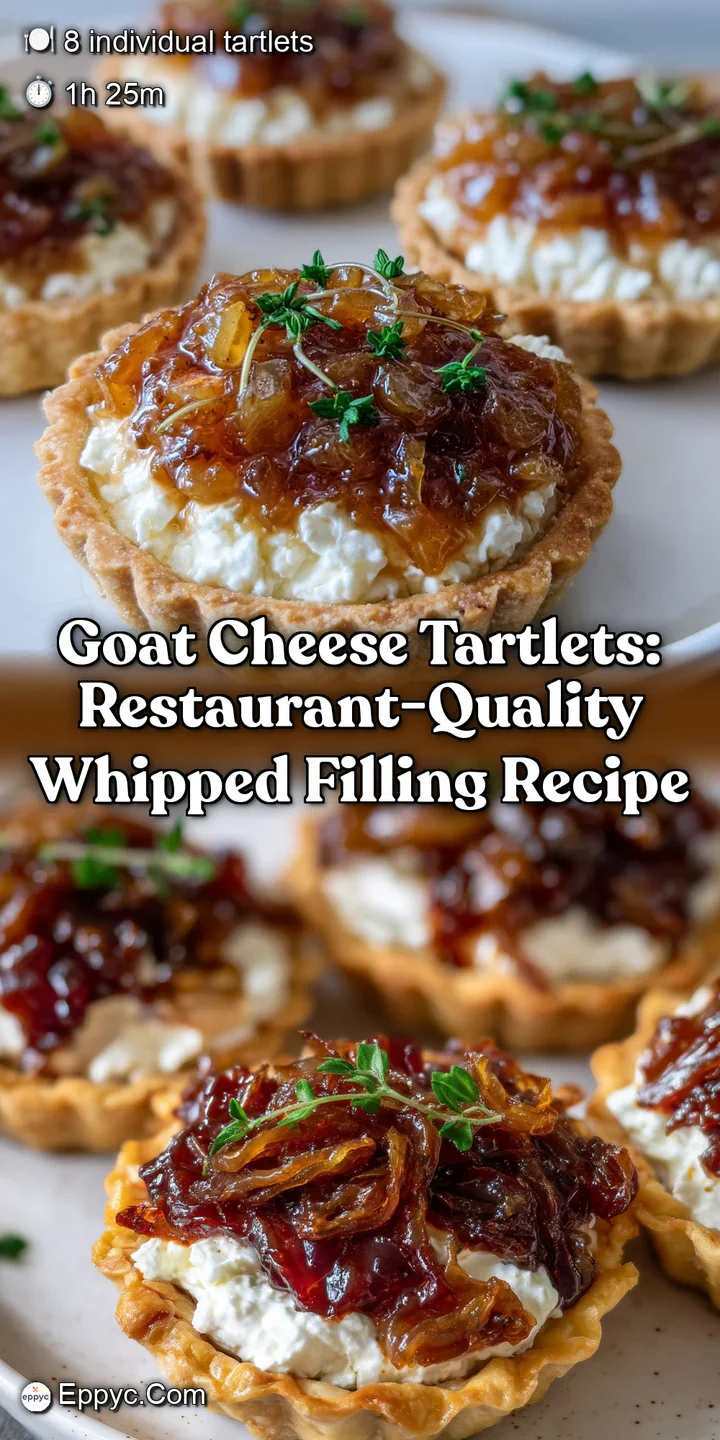
Recipe FAQs
How do I prevent a soggy bottom on my tartlets?
Blind baking the pastry shells thoroughly until they are light golden brown before adding the filling is the most crucial step. Also, ensure the caramelised onions are drained of any excess liquid or oil before layering them into the shells, as moisture is the enemy of crisp pastry.
Can I use aged or hard goat cheese instead of fresh chèvre?
Fresh, soft chèvre is essential for achieving the required "whipped" texture and the necessary tangy balance against the sweet onions. Harder goat cheeses will not whip properly and will result in a gritty or lumpy filling.
If you must substitute, use a high-quality fresh cream cheese, like Boursin, for a similar spreadable consistency.
How far in advance can I prepare these tartlets, and how should I store them?
You can bake the tartlets fully 1 to 2 days ahead and store them tightly covered in the refrigerator. For the best flavour, allow them to come to room temperature for about 30 minutes before serving, as chilling dulls the subtle tang of the chèvre.
Why isn't my goat cheese whipping up smoothly or becoming light and fluffy?
The primary reason is usually that the goat cheese is too cold; it must be at true room temperature before mixing, or it will resist emulsification and remain lumpy. If it is still stiff, add a small splash of heavy cream or full fat milk (about half a teaspoon at a time) to loosen the mixture until it becomes smooth and airy.
Can I make this recipe gluten-free?
Absolutely. Simply substitute the standard shortcrust pastry with a high-quality store-bought or homemade gluten-free shortcrust dough. No other ingredients require modification, but remember that GF pastry is often more delicate to handle when placing it into the tartlet tins.
My onions are burning before they are properly caramelised. What am I doing wrong?
Caramelisation requires very low, slow heat, ideally over 30 to 40 minutes, not 10 minutes. If the pan starts to look dry or the onions are browning too quickly, add a tablespoon of water or a neutral cooking broth to the pan to release any sticky sugars and slow the cooking process.
Is it possible to freeze the finished goat cheese tartlets?
Freezing the finished tartlets is generally not recommended because the delicate whipped cheese filling tends to weep and separate upon thawing. However, you can freeze the unbaked pastry shells or the fully prepared caramelized onions separately for easy assembly later.
Whipped Goat Cheese Tartlets Recipe
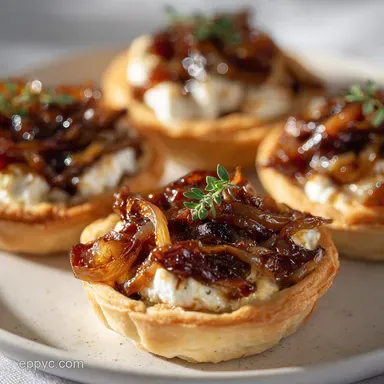
Ingredients:
Instructions:
Nutrition Facts:
| Calories | 300 kcal |
|---|---|
| Fat | 22 g |
| Fiber | 1 g |
