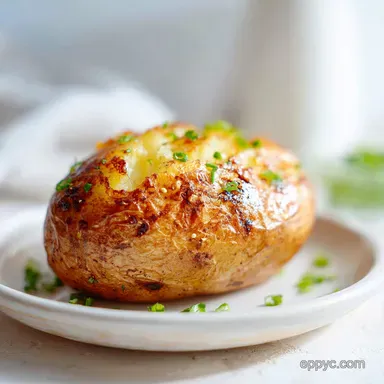
The Ultimate Crispy Baked Potato
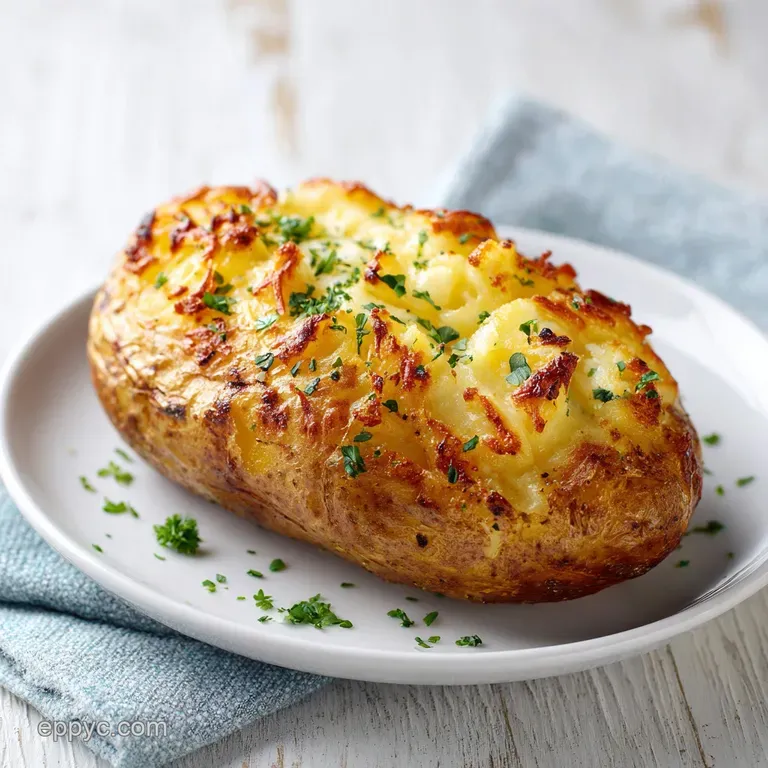
- Time: Active 5 minutes, Passive 55 minutes, Total 1 hour
- Flavor/Texture Hook: Shatter crisp skin with a velvety, cloud like interior
- Perfect for: Stress free weeknight dinners or a steakhouse style weekend feast
- How to Master This Baked Potato Recipe
- Science Behind the Fluff
- Component Analysis for Results
- Necessary Elements for Success
- Equipment for Perfect Results
- Executing the Bake Perfectly
- Avoiding Common Potato Failures
- Adjusting for Different Batches
- Potato Truths Debunked
- Storage and Leftover Innovation
- Serving and Presentation Ideas
- CRITICAL HIGH IN SODIUM
- Recipe FAQs
- 📝 Recipe Card
How to Master This Baked Potato Recipe
The air in my kitchen changes the second these potatoes hit the 218°C heat. There is this distinct, earthy aroma that starts to drift from the oven, a smell that reminds me of Sunday dinners and rainy nights when only comfort food will do.
I remember the first time I actually heard a potato skin crack, it was like a tiny crystalline explosion. For years, I struggled with leathery, dull skins and heavy, dense insides because I followed the old school method of wrapping them in foil. It was a soggy disaster every single time.
Then I started experimenting with the tech side of cooking, treating the oven like a precision tool rather than just a hot box. I realized that the secret to that coveted, crispy shell isn't just heat, it's chemistry. You need to manage the moisture on the surface while protecting the starch on the inside.
When you pull a potato out of the oven and the skin is so tight and crispy that it feels like parchment paper, you know you've won. It’s a heartfelt victory for any home cook who just wants a simple side to be the star of the show.
We are going to empower your kitchen routine today. No more guessing if the middle is soft or if the skin will be chewy. We are using a salt brine technique that I swear by, it's a total shift in how you'll view a basic potato recipe.
We'll use a wire rack for airflow and a digital thermometer to hit that sweet spot of fluffiness. Forget everything you thought you knew about "just throwing it in the oven." We're going for gold here.
Science Behind the Fluff
- Surface Dehydration: The salt brine draws moisture out of the skin cells through osmosis, allowing the skin to crisp up faster without overcooking the interior.
- Starch Gelatinization: High heat at 218°C causes the starch granules inside to swell and burst, creating that characteristic light and airy texture.
- Airflow Dynamics: Placing the potato on a wire rack ensures the hot air hits the bottom, preventing the "flat spot" where steam usually gets trapped.
- Evaporative Cooling: Slicing the potato immediately after baking lets internal steam escape, which prevents the potato from turning gummy as it cools.
| Cooking Method | Total Time | Texture Result | Best For |
|---|---|---|---|
| Oven (This Recipe) | 1 hour | Shatter crisp skin, fluffy center | The ultimate classic experience |
| Stovetop (Cast Iron) | 50 minutes | Deeply browned, thicker crust | Rustic, smoky flavor profiles |
| Air Fryer | 45 minutes | Extremely even crisping | Small batches and energy saving |
Choosing the right method depends on how much time you have and what texture you're chasing. While the stovetop offers a rustic char, the oven provides the most consistent, 360 degree crispness that makes a crispy skin potato truly stand out.
Component Analysis for Results
| Ingredient | Science Role | Pro Secret |
|---|---|---|
| Russet Potatoes | High starch, low moisture | Look for "Norkotah" varieties for the fluffiest results |
| Fine Sea Salt | Dissolves into the brine | Brining creates a uniform salt crust that won't fall off |
| Extra Virgin Olive Oil | Heat conductor for skin | Brush it on after the initial bake to prevent burning |
| Salted Grass fed Butter | Emulsifies with potato starch | Cold butter creates "pockets" of fat in the hot starch |
Necessary Elements for Success
- 4 large Russet Potatoes: Approximately 280 to 340 grams each. Why this? Russets have the high starch content required for a dry, mealy, and fluffy interior.
- 2 tbsp warm water: For the brine base. Why this? Warm water dissolves salt faster than cold water for an even coating.
- 1 tbsp fine sea salt: To season the skin. Why this? Fine grains stick better to the skin than coarse kosher salt.
- 2 tbsp extra virgin olive oil: Or melted ghee. Why this? Fat helps the skin "fry" slightly in the final minutes of cooking.
- 1/2 cup sour cream: For the classic tang. Why this? The acidity cuts through the heavy starch of the potato.
- 4 strips thick cut bacon: Rendered and crumbled. Why this? Adds a smoky, salty crunch that contrasts with the soft potato.
- 1/4 cup chives: Finely minced. Why this? Provides a fresh, onion like bite to brighten the dish.
- 1 cup sharp cheddar cheese: Freshly grated. Why this? Pre shredded cheese has cellulose that prevents a smooth melt.
- 2 tbsp salted grass fed butter: For the melting core. Why this? high-quality butter adds a rich, yellow hue and deep flavor.
- 1 tsp flaky sea salt: For the final finish. Why this? Adds a targeted crunch and pops of salinity at the end.
Equipment for Perfect Results
Using the right technology in your kitchen empowers you to be more consistent. I always reach for my rimmed baking sheet and a stainless steel wire rack. If you place the potato directly on the pan, the bottom will stay moist and turn leathery. The rack is non negotiable for that 360 degree airflow.
You'll also want a digital instant read thermometer. We are looking for a specific internal temperature, and guessing by "poking it with a fork" is a recipe for mediocrity. A pastry brush is also vital for getting that brine and oil into every little nook and cranny of the potato skin.
Executing the Bake Perfectly
- Preheat the oven. Set your oven to 218°C (425°F) and ensure the rack is in the center position. Note: This high heat is essential for a fast skin set.
- Scrub and dry. Wash the Russet potatoes under cold water to remove dirt, then pat them dry with a clean towel. Note: Excess surface moisture will steam the potato instead of roasting it.
- Mix the brine. Whisk 2 tbsp warm water with 1 tbsp fine sea salt in a small bowl until the salt completely dissolves.
- Coat the potatoes. Use a pastry brush to apply the brine to the entire surface of each potato. Note: This creates a micro layer of salt that seasons the skin deeply.
- Set the rack. Place the potatoes on a wire cooling rack set over a rimmed baking sheet.
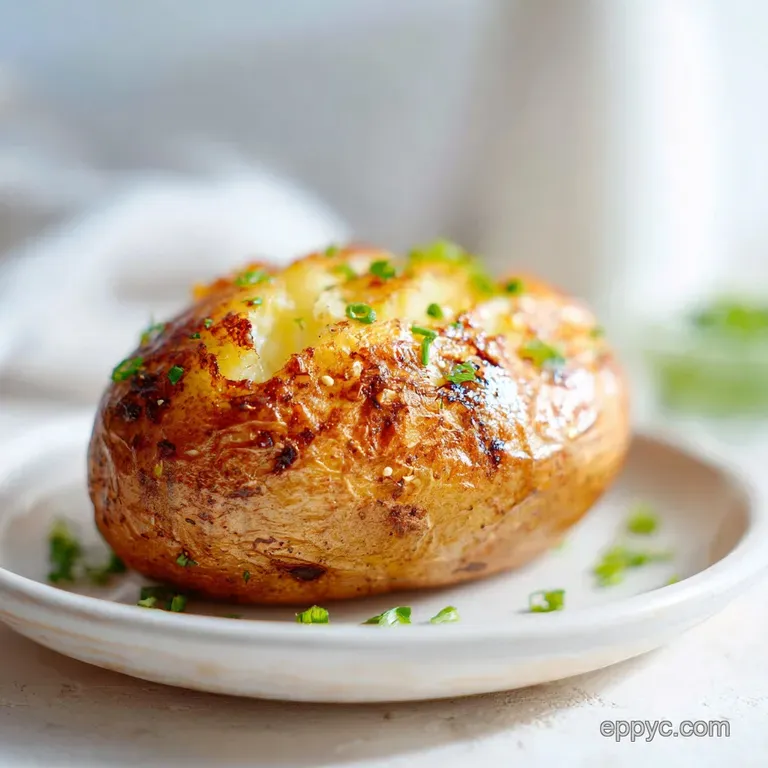
- First bake phase. Slide the sheet into the oven and bake for 45 minutes to 50 minutes until the skin looks matte and slightly wrinkled.
- Apply the fat. Remove the potatoes and brush them liberally with the 2 tbsp of extra virgin olive oil or melted ghee.
- Final crisping phase. Return them to the oven for another 5 minutes to 10 minutes.
- Check the temperature. Ensure the internal temperature is between 96°C and 99°C (205°F and 210°F).
- Vent and load. Remove from the oven and slice open immediately until steam billows out, then top with butter, cheese, bacon, sour cream, chives, and flaky salt.
Avoiding Common Potato Failures
Why Your Potato Sogs
If you've ever bitten into a potato and felt like the skin was wet or limp, you likely skipped the drying phase or used foil. Foil is the enemy of the crispy potato. It traps the moisture escaping from the potato, effectively steaming it inside a silver pouch. To fix this, always bake "naked" on a rack.
If you've already made the mistake, remove the foil and bake at 218°C for another 10 minutes to try and save the skin.
Why Your Interior Stays Dense
Sometimes the outside looks great but the inside feels like a wet rock. This usually happens if the oven wasn't hot enough or the potato was too cold when it went in. Starch needs to reach that 96°C mark to fully "bloom." If you don't hit that temp, the starch granules stay stuck together.
Always use a thermometer to be sure.
| Problem | Root Cause | Solution |
|---|---|---|
| Leathery skin | Brushing oil too early | Only apply oil in the last 10 minutes of baking |
| Gray interior | Oxygen exposure after cutting | Slice and fluff immediately; don't let it sit closed |
| Bursting skins | Trapped internal pressure | Usually caused by extreme heat spikes; use a steady 218°C |
Common Mistakes Checklist
- ✓ Never wrap the potato in aluminum foil (it steams the skin).
- ✓ Always use a wire rack for airflow (prevents soggy bottoms).
- ✓ Don't skip the brine step (it seasons the skin and pulls out moisture).
- ✓ Slice the potato lengthwise immediately after removing it from the oven.
- ✓ Ensure the internal temperature hits at least 96°C for maximum fluff.
Adjusting for Different Batches
When you need to scale this recipe down for a solo dinner, it's incredibly simple. For a single potato, you can often use a toaster oven set to 218°C, which saves energy and heats up faster.
Just make sure the potato isn't too close to the heating elements, or the skin might scorch before the middle is done. The timing remains the same.
Scaling up for a crowd requires a bit more digital planning. If you are baking 12 to 16 potatoes for a party, you'll need multiple baking sheets. Ensure there is at least 5 cm of space between each potato on the rack.
When the oven is crowded, the temperature can drop, so you might need to add 5 to 10 minutes to the initial bake time. I recommend rotating the pans halfway through to account for any hot spots in your oven.
Potato Truths Debunked
Many people believe you must pierce the potato with a fork to prevent it from exploding. While it's technically possible for a potato to burst, it's extremely rare at standard baking temperatures. Piercing actually allows moisture to escape too early, which can lead to a drier, less fluffy interior.
If you follow the 218°C rule, you can skip the fork holes.
Another myth is that you should soak potatoes in water before baking to remove starch. While this works for French fries, it's counterproductive for a baked potato recipe. You want that starch inside to stay put so it can gelatinize and create that velvety texture we love. Save the soaking for the fryer!
Storage and Leftover Innovation
Storage: You can keep leftover potatoes in the fridge for up to 4 days. Store them in an airtight container once they have cooled completely. Avoid wrapping them in plastic wrap while warm, as the condensation will ruin any remaining skin texture.
Zero Waste: Don't you dare throw away those skins! If you find yourself with leftover interiors, use them for silky mashed potatoes or a quick hash. If you only have the skins left, toss them with a little more oil and salt and air fry them at 200°C for 3 minutes for the best potato "chips" you've ever had.
Reheating: To bring a baked potato back to life, avoid the microwave. The microwave turns the skin into rubber. Instead, place it back in a 200°C oven or air fryer for 10 minutes. This will re crisp the skin and heat the center through without making it gummy.
It's the best way to empower your leftovers!
Serving and Presentation Ideas
When it comes to serving, presentation is half the battle. I like to "thump" the potato on the counter once after slicing it open. This helps loosen the starch and makes it easier to fluff with a fork. It’s a very satisfying, rhythmic part of the process.
I always serve the toppings in small, individual bowls if I'm hosting, creating a "build your own" station. It’s a heartfelt way to let everyone customize their experience.
For a modern twist, try a "smashed" presentation. After the final bake, press down on the potato with a heavy spatula until it's about 2 cm thick, then top it and put it under the broiler for 2 minutes. This creates even more surface area for the cheese to melt and the edges to get extra crispy.
It's a technology driven update to a classic that never fails to impress. Whatever you do, make sure the butter goes in first while the potato is at its peak temperature so it can disappear into the fluffy white clouds of the interior. Enjoy the crunch!
CRITICAL HIGH IN SODIUM
2546 mg 2546 mg (111% 111%)
The American Heart Association recommends limiting sodium intake to less than 2,300mg per day, with an ideal limit of 1,500mg for most adults.
Tips to Reduce Sodium
-
Omit Added Salt-30%
Eliminate both the 1 tbsp fine sea salt and the 1 tsp flaky sea salt. Potatoes and other ingredients will still provide flavor, and you can add salt to taste at the table if absolutely necessary.
-
Choose Lower-Sodium Bacon-25%
Opt for reduced-sodium thick-cut bacon. If possible, look for bacon that is labeled as 'uncured' or 'low sodium', which often contains less added salt.
-
Use Low-Sodium Cheese-15%
Select a sharp cheddar cheese that is specifically labeled as 'low sodium' or 'reduced sodium'. Freshly grated cheese generally has less added sodium than pre-shredded varieties.
-
Use Unsalted Butter-5%
Substitute the 2 tbsp salted grass-fed butter with unsalted butter. This prevents adding unnecessary sodium from the butter itself.
-
Boost with Herbs and Spices
Instead of relying on salt, enhance the flavor of your potatoes with fresh herbs like chives, parsley, or dill, and spices like black pepper, garlic powder, or onion powder.
Recipe FAQs
How long does it take to bake a potato at 425°F?
It takes approximately 55 minutes total. Bake the potatoes for 45–50 minutes initially, then brush with oil and bake for another 5–10 minutes to finish.
Are baked potatoes good for diabetics?
They can be part of a balanced diet, but portions matter. Because potatoes have a high glycemic index, pairing them with the fats and proteins found in our smoky baked beans can help moderate the impact on blood sugar levels.
What is the best method for cooking baked potatoes?
Use a wire rack to ensure 360-degree airflow. This method prevents the bottom from getting soggy and ensures the skin crisps evenly.
Should you wrap a potato in foil when baking?
No, avoid foil entirely. Wrapping the potato traps steam, which softens the skin and results in a boiled texture rather than the desired crispy exterior.
How to tell when a baked potato is fully cooked?
Use an instant-read thermometer to check the internal temperature. The potato is ready when the center reaches between 205°F and 210°F.
How to store leftover baked potatoes?
Cool them completely before storing in an airtight container. Keeping them in the refrigerator for up to 4 days preserves their quality, but avoid wrapping them in plastic while warm to prevent condensation from ruining the skin.
Is it necessary to pierce the potato skin with a fork before baking?
No, this is a common misconception. Since we slice the potato open immediately upon removing it from the oven to release steam, the potato will not burst during the baking process.
Baked Potato Recipe: Crispy Skin and Fluffy Interior for 4