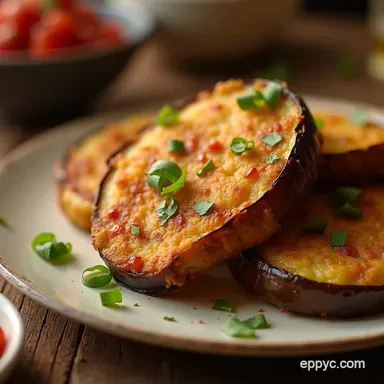
Golden Glory Perfectly Crispy Fried Eggplant Slices
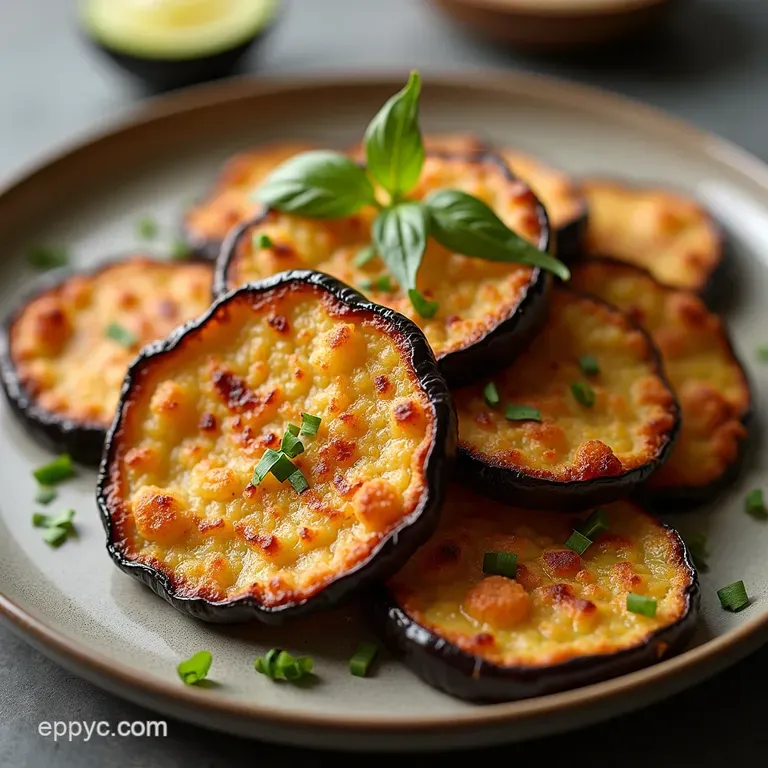
- Unlocking the Secret to Silky Interior, Shatteringly Crisp Fried Eggplant
- Why This Simple Preparation Outshines Complex Eggplant Dishes
- Gathering Your Crispy Coating Components
- The Crucial Pre-Treatment: Removing Moisture for Maximum Crunch
- Mastering the Breading Sequence for Golden Fried Eggplant
- The Art of the Hot Oil Technique
- Elevating Your Fried Eggplant with Flavor Enhancements
- Storage Solutions and Reheating for Later Enjoyment
- Recipe FAQs
- 📝 Recipe Card
Unlocking the Secret to Silky Interior, Shatteringly Crisp Fried Eggplant
There is a particular kind of culinary magic that occurs when a humble vegetable meets perfectly heated oil. In the case of eggplant, this alchemy transforms its sometimes spongy, sometimes bitter texture into something truly sublime.
We are not aiming for heavy, oil-logged bites here; our goal is the pinnacle of Fried Eggplant : slices that boast a shatteringly crisp exterior yielding instantly to a meltingly tender eggplant core.
This Fried Eggplant Recipe focuses on technique, ensuring that every golden round is a testament to simple preparation done exceptionally well. Forget everything you thought you knew about tricky vegetables; mastering these Fried Eggplant Slices is far easier than you might imagine, paving the way for what might become your Best Fried Eggplant dish yet.
Why This Simple Preparation Outshines Complex Eggplant Dishes
While elaborate layered bakes and slow-cooked stews certainly have their place, the true flavor potential of eggplant often shines brightest when treated with simplicity. A well-executed shallow fry respects the natural moisture and subtle sweetness of the vegetable while locking in flavor with a light coating.
This straightforward approach makes it incredibly versatile. We are creating an addictive Fried Eggplant Starter that requires minimal specialized equipment, relying instead on careful timing and material preparation.
The Weeknight Wonder: Fast Flavor for Any Meal
One of the greatest appeals of this recipe is its speed. With only about 20 minutes of active prep time, followed by a quick 15-minute cook, this dish transitions beautifully from a simple side to the star attraction.
You can have beautifully Crispy Fried Eggplant ready to serve before many oven-baked dishes have even warmed up. This speed is what elevates it from a weekend project to a genuine weeknight wonder, perfect alongside grilled proteins or incorporated into quick grain bowls.
Moving Beyond Mush: Achieving Perfect Texture Every Time
The downfall of many home-fried eggplant attempts is sogginess or an unpleasantly mushy interior. Our technique defeats this enemy through two non-negotiable steps: drawing out excess moisture before coating, and maintaining precise oil temperature during the fry.
By following the prescribed salting and drying process, we ensure that when the eggplant hits the oil, it crisps immediately, leading to that coveted light texture rather than absorbing oil and becoming heavy. The resulting Tender Fried Eggplant remains delightful even as it cools slightly.
Gathering Your Crispy Coating Components
Success in frying begins long before the oil heats up. We need a coating that provides texture without tasting raw or pasty. For this recipe, we rely on a seasoned, thin flour dredge, nothing elaborate like a wet batter, to cling tightly to the vegetable.
Selecting the Right Eggplant Variety for Frying Success
For uniform results, select two medium-sized eggplants, aiming for a total weight around 1.3 pounds. Globe or Italian varieties work wonderfully as they hold their shape well when sliced. The key here is consistency: aim to slice all your eggplant rounds to a uniform thickness of about 1/4-inch (6mm).
If you prefer perfect uniformity, a mandoline slicer is an excellent investment; otherwise, a sharp chef’s knife wielded carefully will do the job nicely.
Our Signature Spicy Dusting Mix (Beyond Just Salt)
While salt is crucial for seasoning, we enhance the basic flour dredge with aromatics for depth. Combine 1/2 cup of all-purpose flour with 1/4 cup of coarse salt (this is separate from the initial salting step), 1/2 teaspoon of smoked paprika for color and earthy depth, 1/4 teaspoon of freshly ground black pepper, and a mere pinch of cayenne pepper if you desire a very subtle warmth in the background.
This mix ensures that the crust delivers a flavorful punch.
The Oil Depth Debate: Choosing Your Frying Medium
To achieve true crispness, we opt for shallow frying rather than deep frying, which can be messy and requires significantly more oil. Pour approximately 2 cups of a neutral, high-heat oil, such as canola, sunflower, or refined peanut oil, into your chosen sturdy frying pan.
You are aiming for an oil depth of about half an inch. This depth is sufficient to fully submerge the eggplant slices as they cook, ensuring the crust forms evenly on all sides without the hassle of constantly flipping.
The Crucial Pre-Treatment: Removing Moisture for Maximum Crunch
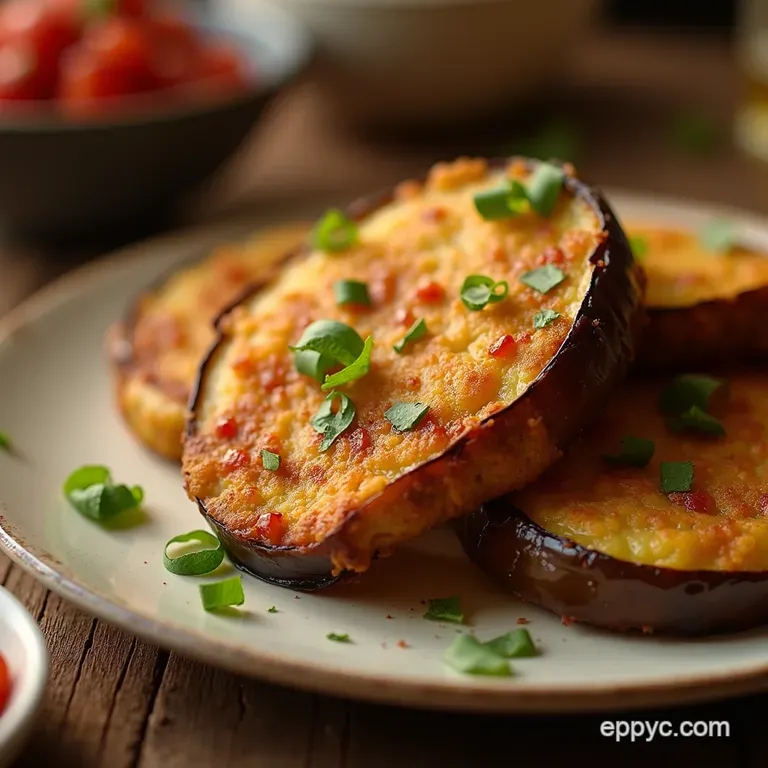
This step is the single most important element in preventing soggy results. Eggplants are sponges for liquid, and that includes the moisture trapped inside their cells. We must coax this water out before coating.
After slicing the eggplant into 1/4-inch rounds, arrange them in a single layer on paper towels or a clean tea towel and sprinkle them generously with 1 teaspoon of kosher salt. Allow them to rest for a full 15 to 20 minutes. You will visibly see beads of moisture rise to the surface.
Once rested, use fresh, dry paper towels to thoroughly pat every single slice bone-dry.
Related Recipes Worth Trying
- The Best Veggie Fried Rice with Cauliflower Under 35 Mins — Ditch the takeaway guilt This Cauliflower Veggie Fried Rice recipe creates light fluffy rice packed with crisp veg A healthy fried rice with cauliflower...
- The Sunday Best Seriously Crispy Buttermilk Fried Chicken — Achieve truly juicy fried chicken with that perfect crunch using this classic buttermilk brine and doubledredge technique Your best homemade fried chicken...
- Best Chicken Fried Rice Recipe Restaurant Style at Home — Stop settling for soggy takeaway This Easy Chicken Fried Rice recipe guarantees perfectly separate grains infused with smoky wok hei flavour Learn how to...
Mastering the Breading Sequence for Golden Fried Eggplant
With your slices dry and your seasoned flour mix ready, it is time to coat. The goal is a light, even coverage that adheres well but sheds excess powder before frying.
Step-by-step: Preparing the Slices for Coating
Set up your station: the dried eggplant rounds on one platter, the seasoned flour mixture in a shallow dish, and a clean, dry platter ready to receive the coated pieces.
Achieving the Triple-Dredge for Superior Crispness
Take each dried eggplant slice and gently dredge it through the seasoned flour mixture, pressing lightly so the flour adheres to both surfaces. Crucially, once coated, lift the slice and gently shake off all the excess flour back into the bowl. You want a thin, dusty coat, not a thick layer of powder.
Place the lightly coated slices onto the clean platter, making sure they are not touching. This light dusting is the secret to a light crust that prevents the Fried Eggplant Sticks from becoming heavy.
Temperature Checks: When is the Oil Ready for Frying?
Heat your oil slowly over medium-high heat until it reaches 350° F ( 175° C), ideally using an instant-read thermometer. If you lack a thermometer, test the oil by dropping a tiny pinch of flour into the pan; if it immediately sizzles vigorously and turns a light golden color within about 30 seconds, the temperature is correct.
If it browns instantly or smokes, the oil is too hot, reduce the heat immediately.
The Art of the Hot Oil Technique
Frying is a dynamic process requiring attention to heat management. When done correctly, the oil will cook the starch coating quickly, sealing the exterior and allowing the interior to steam itself perfectly soft.
Carefully place the coated eggplant slices into the hot oil, working in batches of three or four to avoid overcrowding the pan. Overcrowding causes the oil temperature to plummet, resulting in oil absorption rather than crisping.
Fry for approximately 2 to 4 minutes per side until they achieve a rich, deep golden-brown hue. Use tongs to flip them once. As soon as they are perfectly colored, remove them with the tongs and immediately place them on a wire rack set over a baking sheet.
This racking system is essential, as it allows air to circulate underneath, preventing steam build-up that leads to a soggy bottom. Immediately sprinkle them with a whisper of fine sea salt while they are still scorching hot.
Adjust your heat between batches to ensure the oil consistently returns to 350° F before adding the next set.
Elevating Your Fried Eggplant with Flavor Enhancements
Once drained and seasoned, these golden rounds are ready to shine. For a simple, rustic presentation, perfect for serving as an Fried Eggplant Starter —drizzle them immediately with fresh lemon juice and finely chopped fresh oregano.
A splash of high-quality balsamic vinegar also works wonders, adding a necessary acidic counterpoint to the richness of the oil. If you are planning a larger meal, these crisp slices serve as a fantastic base layer for a deconstructed Eggplant Parmesan Recipe , where you simply layer the hot, fried rounds with marinara and cheese before a quick broil.
Storage Solutions and Reheating for Later Enjoyment
While Fried Eggplant is unequivocally best enjoyed seconds after it leaves the rack, life sometimes calls for leftovers. Store cooled slices in a single layer in an airtight container at room temperature for up to one day. To restore crispness, avoid the microwave entirely.
Instead, reheat them in a 400° F ( 200° C) oven for about 5 to 7 minutes until the crust firms up again. A brief spell in an air fryer is also excellent for revitalization.
Serving Suggestions: From Feta Drizzles to Basil Toppings
These versatile slices pair beautifully with a cooling dairy element. Try serving them alongside a thick dollop of Greek yogurt mixed with garlic and dill (Tzatziki). Alternatively, crumbled salty feta cheese sprinkled over the top, combined with torn fresh basil leaves, offers a wonderful salty-herbal balance.
They are also excellent layered within pita bread sandwiches.
Troubleshooting Common Frying Issues (Soggy Bottoms)
If you notice the eggplant absorbing too much oil or looking pale rather than golden, the oil temperature is too low, turn up the heat slightly. If the crust burns before the center softens, the oil is too hot, reduce the heat immediately.
If the bottom layer gets soggy after removal, you likely drained them directly onto a solid plate or paper towel stack; always use a wire rack for airflow.
Making This Recipe gluten-free or Vegan Friendly
This recipe is inherently vegetarian, but making it gluten-free is a simple swap. Replace the all-purpose flour in the dredge with an equal amount of a gluten-free 1-to-1 baking blend or, for a more rustic flavor, chickpea flour (besan). Ensure your frying oil remains vegan, which is standard for most vegetable oils.
These adaptations maintain the crisp texture while accommodating dietary needs seamlessly.
Recipe FAQs
Why does my Fried Eggplant always end up greasy, even when I follow the steps?
More often than not, greasiness comes down to oil temperature being too low, usually around 300°F (150°C). If the oil isn't hot enough when the eggplant hits the pan, the coating soaks up the oil like a sponge instead of crisping instantly.
Make sure you’re hitting that sweet spot of 350°F (175°C) and never overcrowd the pan!
Is salting the eggplant really necessary, or can I skip it if I'm in a rush?
While we all love cutting corners, skipping the initial salting step is like leaving the house without your keys, you’ll regret it later! Salting draws out the bitter moisture. If you skip it, your final Fried Eggplant slices will be spongier, cook unevenly, and potentially taste a bit dull.
Give it the full 15 minutes to work its magic.
Can I bake or air fry these instead of shallow frying for a healthier option?
You absolutely can, though the texture won't be identical to a proper fry. For baking, toss the dredged slices lightly with a spray of oil and bake on a rack at 400°F (200°C) until golden.
For air frying, aim for 380°F (195°C) and flip halfway through, it mimics the crispness quite nicely, though you might need to work in smaller batches.
How should I store leftover Fried Eggplant, and can I reheat it?
For the best results, they should be eaten immediately, fresh from the rack, they are best served piping hot! If you must store leftovers, pop them in an airtight container in the fridge for no more than a day.
Reheating them in the oven or an air fryer for a few minutes is best to bring back some crispness; the microwave tends to make them quite sad and soggy.
I want to serve this as a main course. What can I add to the flour mix to boost the flavour?
To elevate your dredging mix from sidekick to superstar, try adding grated hard cheese like Parmesan, a teaspoon of dried Italian herbs like oregano or basil, or a generous pinch of garlic powder along with your paprika. This creates a far more robust, savoury crust that stands up well as a vegetarian main dish!
The Best Crispy Fried Eggplant Slices Recipe Meltingly Tender