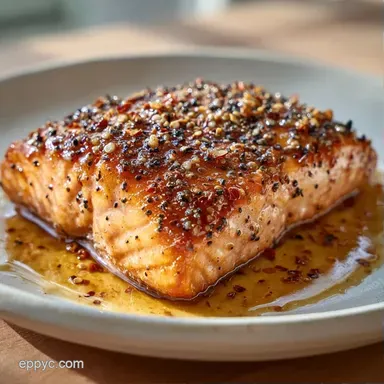
Pepper Crusted Glazed Salmon: Sweet and Spicy
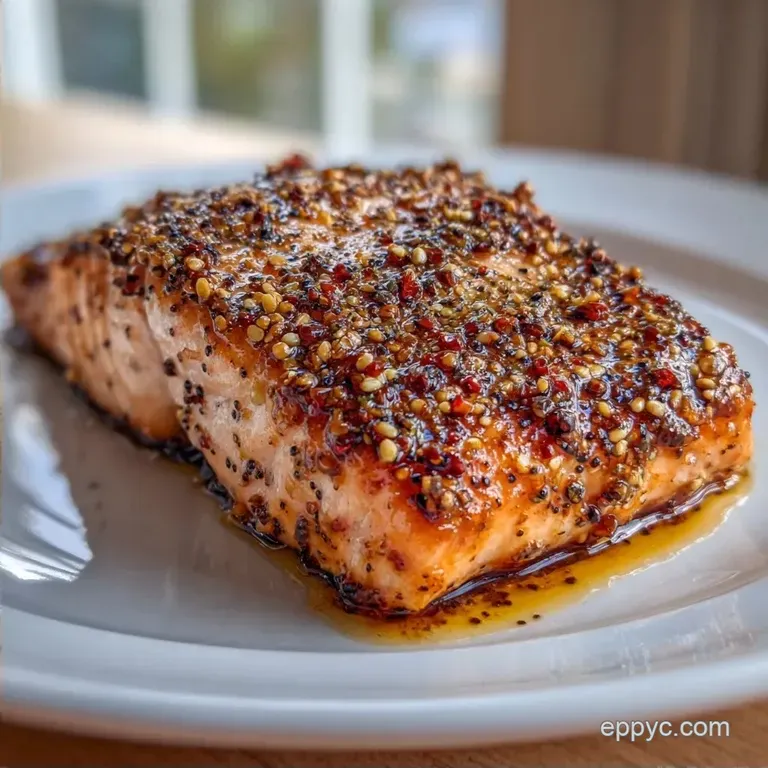
- Time: 5 min active + 15 min cook
- Flavor/Texture Hook: Shatter crisp pepper crust with a velvety, sweet glaze
- Perfect for: A fast weeknight dinner that looks like a date night meal
Ever wonder why some salmon just tastes like... fish? I used to just throw a fillet in the oven and hope for the best, but the results were usually bland, pale, and slightly dry. I remember one night trying to impress a guest by following a "fancy" recipe that called for a light dusting of pepper, and it just didn't do anything.
It was boring.
Then I started experimenting with coarse, cracked peppercorns and a over high heat cast iron sear. The first time I heard that aggressive sizzle and saw the crust turn a deep, dark mahogany, I knew I was on to something.
It wasn't just about the taste, it was about that specific contrast between the spicy, biting pepper and the sticky maple glaze.
That's where this Pepper Crusted Glazed Salmon comes in. It's not about being a pro; it's about using a few basic rules of heat and sugar to get a restaurant style result. We're talking about a crust that actually has some bite and a glaze that clings to the fish instead of sliding off into the pan.
Better Pepper Crusted Glazed Salmon
When you first hit the pan with this dish, you'll smell the peppercorns toasting. It's a sharp, woody aroma that fills the kitchen. Most people are afraid of using too much pepper, but that's the mistake. You want a thick, visible layer of cracked pepper on the top of the fillet.
This creates a barrier that protects the delicate flesh while adding a punch of flavor that stops the maple syrup from being too cloying.
The real magic happens in the last five minutes. As you spoon the glaze over the salmon, the sugars in the maple syrup and soy sauce start to bubble and thicken. It turns from a thin liquid into a velvety syrup that coats every nook and cranny of the fish.
If you've ever struggled with salmon that feels "mushy," the sear on this recipe solves that.
I've found that the key is patience during the first sear. If you move the fish too early, you lose that crust. You have to let it sit, undisturbed, until the fish releases itself from the pan.
Once you flip it and add the glaze, it's a race against the clock to get that internal temperature to exactly 130°F. Any further, and you're venturing into "dry" territory.
The Secret To The Sear
I've spent a lot of time figuring out why some salmon fillets get that perfect crust while others just steam in the pan. It usually comes down to a few simple things that happen when the fish hits the hot oil.
Surface Moisture: Water is the enemy of a sear. If the fish is damp, the heat spends its energy evaporating that water instead of browning the pepper, which is why I insist on bone dry fillets.
Sugar Caramelization: The maple syrup contains sucrose, which browns quickly. By adding the glaze after the initial sear, we avoid burning the sugars while still getting that deep, lacquer like finish.
Thermal Mass: Using a cast iron skillet helps maintain a steady heat. When the cold fish hits the pan, a thin aluminum pan would drop in temperature, but cast iron keeps the sizzle going.
Carry Over Cooking: Salmon continues to cook after you take it off the heat. Pulling it at 130°F ensures it hits a medium finish without the white albumin (that weird white stuff) leaking out.
| Method | Time | Texture | Best For |
|---|---|---|---|
| Cast Iron Sear | 20 mins | Crispy crust, juicy center | Maximum flavor punch |
| Oven Baked | 25 mins | Uniformly cooked, softer | Cooking for a crowd |
| Air Fryer | 12 mins | Slightly drier, very fast | Single servings |
What You Need For This
The ingredients here are simple, but the quality of the pepper matters. Don't use the fine powder from a shaker; you want coarsely cracked peppercorns. You can buy them pre cracked or just pulse whole peppercorns in a blender for a few seconds.
| Ingredient | Science Role | Pro Secret |
|---|---|---|
| Coarse Black Pepper | Flavor & Texture | Toasts in oil to release oils |
| Maple Syrup | Glazing Agent | Provides the "stick" and sweetness |
| Soy Sauce | Umami/Salt | Deepens the color of the glaze |
| Avocado Oil | Heat Transfer | High smoke point prevents burning |
For the Pepper Crust
- 4 salmon fillets (6 oz each) Why this? Individual portions cook more evenly.
- 2 tbsp coarsely cracked black peppercorns Why this? Adds texture and a sharp bite.
- 1 tsp kosher salt Why this? Coarser grains distribute better.
- 1 tbsp avocado oil Why this? Won't smoke at high heat.
For the Sweet Glaze
- 3 tbsp maple syrup Why this? More depth than honey.
- 1 tbsp soy sauce Why this? Balances sweetness with salt.
- 1 tbsp fresh lemon juice Why this? Cuts through the fat.
- 2 cloves garlic, minced Why this? Adds a savory punch.
- 1/2 tsp smoked paprika Why this? Adds a hint of wood fire flavor.
Tools For The Job
You don't need a professional kitchen, but a few specific tools make this Pepper Crusted Glazed Salmon much easier. A cast iron skillet is my go to because it holds heat so well. If you don't have one, a heavy stainless steel pan works, but avoid non stick if you want a truly crispy crust, as they often can't handle the high heat needed.
I also recommend an instant read digital thermometer. Guessing the doneness of salmon is a gamble. According to USDA FoodData, the fat content in salmon makes it forgiving, but there's a very narrow window between "silky" and "chalky." A thermometer removes the guesswork.
Finally, have a set of paper towels ready. I can't stress this enough: the fish must be dry. If you're in a rush, you can even leave the fillets uncovered in the fridge for an hour to air dry the surface.
How To Make This
Let's get into the flow. I like to think of this in three phases: the prep, the sear, and the glaze.
Phase 1: The Crust Prep
- Pat the salmon fillets bone dry with paper towels. Note: Any moisture will steam the fish instead of searing it.
- Combine the cracked pepper and salt in a small bowl.
- Press the mixture firmly into the top side of each fillet. Press hard to ensure the pepper sticks and forms a thick layer.
Phase 2: The over High heat Sear
- Heat avocado oil in a cast iron skillet over medium high heat until shimmering.
- Place fillets crust side down. Press gently with a spatula to ensure full contact with the pan.
- Sear for 3–4 minutes without moving them until the crust is deeply browned.
Phase 3: Glazing and Finishing
- Flip the fillets carefully.
- Pour the combined maple syrup, soy sauce, lemon juice, garlic, and paprika directly into the pan around the fish.
- Baste the salmon continuously with a spoon as the glaze bubbles and reduces.
- Remove from heat when the internal temperature reaches 130°F (54°C). Note: It will rise to 135°F while resting.
Fixing Common Problems
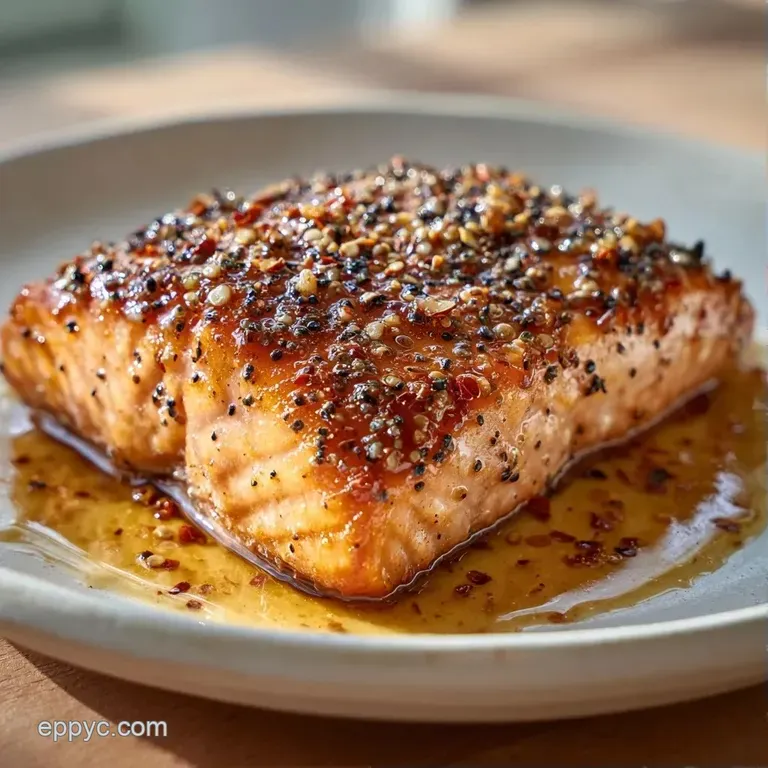
Cooking with sugar and high heat can be tricky. If your glaze turns black before the fish is done, you've likely got the heat too high. Sugar burns quickly, and once it goes from "caramelized" to "burnt," it tastes bitter.
Why Your Glaze Is Burning
This usually happens if the pan is too hot when you pour in the syrup. If you see the glaze smoking immediately, kill the heat for 30 seconds before you start basting. You want a simmer, not a boil.
Why Salmon Sticks To The Pan
Sticking happens when the proteins haven't fully seared or if the oil wasn't hot enough. If the fish feels "glued" to the pan, leave it alone for another 30 seconds. It will release naturally once the crust is formed.
| Problem | Root Cause | Solution |
|---|---|---|
| Bitter Taste | Burnt maple syrup | Lower heat before adding glaze |
| Pale Crust | Not enough heat/Wet fish | Pat dry and use shimmering oil |
| Dry Interior | Overcooked past 140°F | Pull from heat at 130°F |
Common Mistakes Checklist
- ✓ Did you pat the fish dry?
- ✓ Is the pepper coarse, not fine powder?
- ✓ Did you wait 3-4 minutes before flipping?
- ✓ Did you check the internal temperature?
- ✓ Did you baste the fish during the last few minutes?
Swaps and New Flavors
If you don't have maple syrup, honey works well, though it's a bit sweeter and less "woody." For those who want a spicy kick, I love adding a teaspoon of sriracha or red pepper flakes to the glaze. It creates a Pepper Crusted Maple Glazed Salmon vibe that's great for people who like a bit of heat.
For a soy free version, you can use coconut aminos. It's slightly sweeter and less salty, so you might want to add an extra pinch of salt to the crust. If you're looking for something more earthy, try replacing the smoked paprika with a pinch of ground cumin.
If you're planning a full meal and want a different take on fish, you might enjoy my soy sauce glazed salmon which focuses more on the marinade than the crust. Both versions are great, but this one is definitely the move if you want that textural contrast.
| Original Ingredient | Substitute | Why It Works |
|---|---|---|
| Maple Syrup (3 tbsp) | Honey (3 tbsp) | Similar viscosity. Note: Slightly sweeter, less complex flavor |
| Soy Sauce (1 tbsp) | Coconut Aminos (1 tbsp) | Similar salty/umami profile. Note: Lower sodium, sweeter |
| Avocado Oil (1 tbsp) | Grapeseed Oil (1 tbsp) | High smoke point. Note: Neutral flavor |
Adjusting The Batch Size
When you're cooking for more than four people, don't just crowd the pan. If you put eight fillets in one skillet, the temperature will plummet, and you'll end up steaming the fish instead of searing it. Work in batches.
Scaling Down (2 Fillets): Use a smaller skillet to keep the glaze concentrated. Reduce the glaze ingredients by half, but keep the pepper crust ratio the same. The cook time stays roughly the same, but watch the glaze closely as it will reduce much faster in a smaller volume.
Scaling Up (8+ Fillets): Cook in two batches. For the glaze, you can make a double batch, but only add half to the pan at a time. I've found that if you use too much liquid in the pan with too much fish, the fillets just boil in the sauce. To ensure a great sear, check out techniques on Serious Eats for managing pan crowding.
Fish Facts and Myths
There's a lot of bad advice out there about salmon. Let's clear a few things up so you can cook with confidence.
Myth: Searing "seals in" the juices. This is just not true. Searing doesn't create a waterproof barrier. The moisture loss happens regardless of how you start the cook. However, the crust adds a massive amount of flavor and texture that makes the fish feel juicier.
Myth: Salmon must be cooked to 145°F. While that's the official safety guideline for some, most chefs and home cooks prefer it at 130°F-135°F (medium).
At 145°F, the proteins tighten up and squeeze out the moisture, leaving you with a dry fillet.
Myth: You have to remove the skin to get a crust. You can keep the skin on! Just sear the crust side first, then flip and sear the skin side while glazing. The skin acts as a natural insulator, helping the fish stay moist.
Storing Your Leftovers
If you have any Pepper Crusted Glazed Salmon left over, store it in an airtight container in the fridge for up to 3 days. Be warned: the texture of the crust will soften as it absorbs moisture from the fish.
To reheat, avoid the microwave if you can. A microwave will make the fish rubbery and the glaze tacky. Instead, put it in a pan over medium low heat with a tiny bit of butter for 2-3 minutes. This helps revive some of the crust's crispness.
For zero waste, if you saved the salmon skins, you can fry them separately in a bit of oil until they're like chips. They make a great salty snack or a garnish for a salad.
Best Ways To Serve
This dish is bold, so you need sides that can balance the sweetness and spice. I love serving this with something bright and acidic. A simple arugula salad with lemon vinaigrette or some roasted asparagus works beautifully.
For a heartier meal, try pairing it with a lemon pasta to mirror the citrus in the glaze. The creaminess of the pasta balances the sharp pepper crust perfectly. If you prefer grains, a bed of quinoa or wild rice is great for soaking up any extra glaze left in the pan.
Trust me on this: don't overcomplicate the sides. The Pepper Crusted Glazed Salmon is the star of the show. Keep everything else simple, and let that crust do the talking.
Recipe FAQs
How to make a maple glaze reduction for this salmon?
Pour the combined maple syrup, soy sauce, lemon juice, minced garlic, and smoked paprika into the pan. Baste the fillets continuously as the mixture bubbles and reduces until the internal temperature reaches 130°F.
How to cook salmon so it doesn't taste fishy?
Pat the fillets bone dry with paper towels before seasoning. Removing surface moisture prevents the fish from steaming and ensures a clean, searing taste.
Is it true that salmon must be baked to stay moist?
No, this is a common misconception. Pan-searing in avocado oil and basting with a glaze locks in moisture while creating a superior crust.
What is a great and easy salmon recipe for a weeknight?
This Pepper Crusted Glazed Salmon is a perfect choice. It requires only 20 minutes of total time and uses simple pantry staples.
How to ensure the pepper crust doesn't burn?
Sear for 3 4 minutes over medium high heat without moving the fillets. Use a spatula to press gently for even contact and remove from heat once the fish reaches 130°F.
What is the best way to reheat leftover glazed salmon?
Heat in a pan over medium low heat. Avoid the microwave to prevent the fish from becoming rubbery and the glaze tacky.
What side dish pairs well with this pepper crusted salmon?
Serve it with a bright, acidic vegetable. This pairs perfectly with boiled asparagus to balance the richness of the maple glaze.
Pepper Crusted Glazed Salmon